
Roll up door installation starts with a site that matches the approved drawing. For aluminum shutters on commercial or industrial buildings, the work needs a clear sequence: prepare the opening, verify the supplied assembly, check the guides, complete the specified commissioning and hand the door over with usable records.
This guide helps contractors, distributors and facility teams coordinate those stages. Qualified installers must use the instructions supplied for the actual door, drive and controls. It does not provide universal anchor sizes, wiring connections, spring settings or adjustment tolerances. Resolve missing instructions before physical installation begins.
Contents
- 1 Plan roll up door installation around the supplied system
- 2 Confirm site preparation before unloading
- 3 Match each package to its opening
- 4 Check guide rail alignment before powered operation
- 5 Keep mechanical work and electrical release coordinated
- 6 Schedule door commissioning before normal use
- 7 Complete the installation handover
- 8 Discuss your aluminum shutter installation requirements
Plan roll up door installation around the supplied system
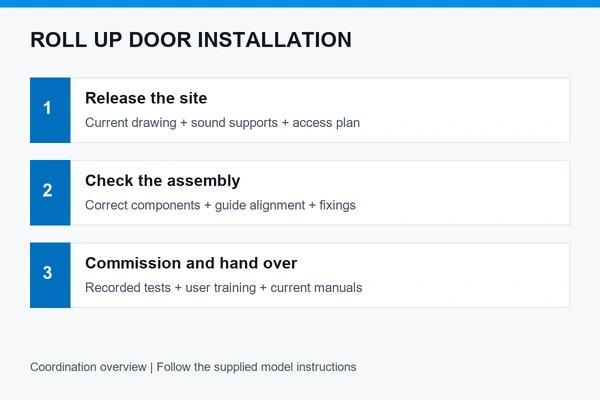
Assign responsibility for the supporting structure, mechanical installation, electrical work, testing and handover. Confirm who can approve a drawing change and who will answer a technical question during the work. A delivery date alone does not establish that the opening is ready for installation.
Keep the approved drawing, opening reference, component schedule and current manuals together. Check the operating arrangement and motor side against the order. Our aluminum roller shutter doors page is a starting point for discussing the configuration; the order-specific documents govern the installation.
For an example of how manufacturers separate these stages, see the SWS commercial shutter installation instructions. That manual distinguishes preparation, mechanical assembly, drive setup and final checks. Its dimensions, components and certification conditions apply to the named SWS products, not automatically to a SEPPES door.
Confirm site preparation before unloading
Arrange a suitable unloading route, protected storage and access to the opening. The installer should plan lifting and work at height for the actual assembly and site conditions. Keep other trades and normal building traffic out of the work area while installation is underway. Agree how the opening will remain secure during a replacement.
Recheck the opening against the approved drawing, including the finished floor and any new services near the mounting area. A pipe, cable tray or wall finish added after the survey can change the available space. Use the roller shutter measurements guide to organise the dimensional record, then have discrepancies reviewed before proceeding.
The responsible installer or structural specialist must confirm that the supporting structure and proposed fixings suit the door loads and substrate. Do not select anchors from a generic online checklist. If an uneven surface requires a subframe or packing arrangement, obtain an approved detail instead of pulling the guides against it with the fixing bolts.
For large roll up door installation projects, identify the access equipment, handling space and storage limits before the shipment arrives. Record any work that another contractor must finish first. This makes the site preparation review useful to the delivery team as well as the installers.
Match each package to its opening
Check the delivery against the packing list and door schedule. Photograph visible transit damage and keep the package labels readable. On a multi-door project, separate components by opening reference so that similar-looking parts do not migrate between assemblies.
Confirm that the curtain, guides, barrel assembly, supports, drive and ordered accessories match the documentation. The exact package varies with the system. Our aluminum roller shutter components guide explains the main part names, which helps the receiving team describe a missing or damaged item accurately.
Do not start roll up door installation with an unresolved component mismatch. Send the supplier the opening ID, package reference, relevant drawing and clear photographs. Keep the affected parts together until the replacement or approved correction is confirmed. A field substitution needs technical review, even when the part appears to fit.
Check guide rail alignment before powered operation
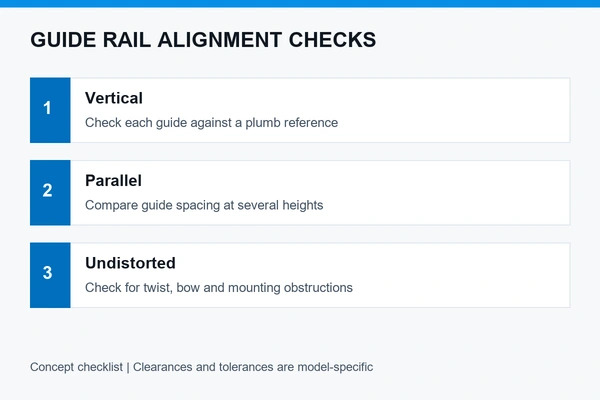
The installer should establish the guide positions from the approved mounting detail. Check that each guide is vertical, that the pair has the specified spacing and that the supporting surfaces do not twist the channels. Use the model instructions for the measurement points, clearance and permitted tolerance.
During roll up door installation, alignment needs another check after the fixings are secured. A guide that was correctly positioned before tightening can move or distort against an uneven support. Record the measurements that the installer uses to confirm the finished geometry, rather than relying on a photograph alone.
The table below is a coordination aid for reporting alignment concerns. It does not identify a fault from a single symptom. The qualified installer must investigate the whole assembly and follow the manufacturer’s procedure before deciding on a correction.
| Observation | Installer review |
|---|---|
| Guide spacing differs along the opening | Record positions against the drawing; review supports and guide geometry. |
| A guide bows near a fixing | Check the support surface and approved fixing detail before further operation. |
| Curtain contacts one side | Report where contact occurs; inspect the full assembly rather than assuming one cause. |
| Bottom bar stops unevenly | Record the condition for the installer; check floor, geometry and setup as applicable. |
Keep mechanical work and electrical release coordinated
Follow the model-specific assembly and lifting sequence. Some shutters arrive with major parts assembled; others require a different installation order. The competent installation team must control suspended loads and stored energy. Do not remove restraints or adjust a spring mechanism using a generic blog procedure.
Before electrical work, the qualified person responsible should confirm the specified supply, isolation arrangements and connection information for the actual drive and controller. Protect cables from moving parts according to the supplied instructions. A control box from another door should not be assumed compatible simply because its terminals look similar.
Treat roll up door installation as incomplete while required controls or protective devices remain unconnected or unverified. Identify who will test each function and how the results will be recorded. Do not bypass a protective device to make a commissioning run possible.
Schedule door commissioning before normal use
Book commissioning with the installer and the people responsible for the building interfaces. Use the door and controller instructions to define the required tests, including travel limits, control response, manual operation where provided and fitted safety functions. Applicable site and destination requirements also need to be addressed by the competent team.
During roll up door installation, repeated binding, abnormal movement or an unexpected stop calls for investigation. Keep the door out of normal use until the cause is resolved. Increasing motor force or repeatedly cycling the shutter is not a substitute for correcting an assembly or control problem.
Door commissioning should leave a record that identifies the tested configuration, the person carrying out the work, the results and any corrective action. A video of one successful opening cycle cannot show that every required safety function or interface has been tested.
Complete the installation handover
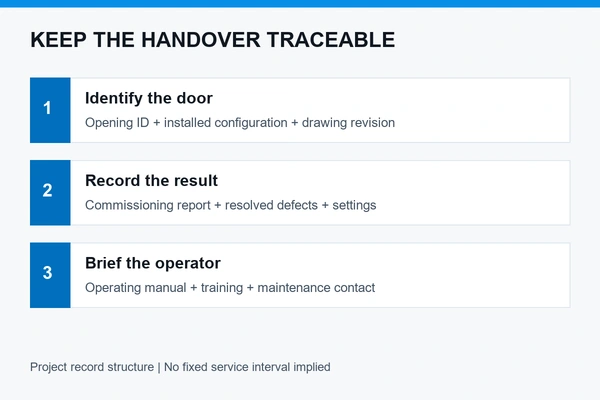
Give the owner the current operating and maintenance documents, commissioning record and relevant installation drawings. Record the installed component references and any approved changes. Link the records to the opening ID so the maintenance team can find the right information later.
The installation handover should include a practical explanation of normal operation, fault reporting and the manual procedure where the door has one. Confirm who may operate the shutter and who should be called if it behaves abnormally. Agree maintenance arrangements from the applicable instructions and operating conditions, without inventing a standard interval for every installation.
Close outstanding installation defects with a named owner and a documented resolution. Keep the full contractual acceptance checklist separate from this installation workflow. Roll up door installation records should make clear what has been completed and what still prevents normal use.
Discuss your aluminum shutter installation requirements
Before ordering, send SEPPES the opening information, mounting arrangement, site photographs and intended operating method. Identify the local installation team and any document or interface requirements. Confirm the supply and support scope in writing; a door supply quotation does not automatically include local installation.
Use the form below or contact SEPPES about roll up door installation requirements. For an existing order, include the order and opening references so the discussion relates to the correct configuration.


