
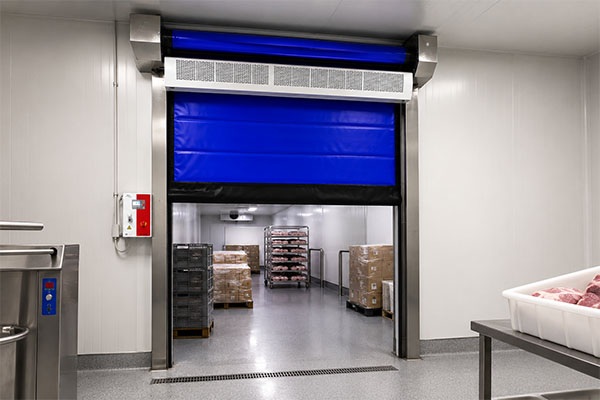
In modern industrial B2B food production, managing the raw material pre-treatment zone requires flawless climate control and uncompromising hygiene standards. Selecting the wrong access solutions for your raw material buffer zones can compromise your entire production line. Installing a premium high speed insulated door at the entrance of your food thawing room is not just a hardware upgrade—it is a critical step to protect your food safety, optimize processing yields, and maximize your factory’s profit margins.
When frozen meat, poultry, or seafood blocks enter the raw material pre-treatment zone, maintaining a precise temperature and humidity curve is vital. Ordinary industrial doors simply cannot handle the extreme environmental differences between a cold thawing room and a warmer processing corridor.
Below, we break down the 5 critical reasons why a specialized high speed insulated door is an absolute necessity for your food plant’s thawing and raw material preparation areas.
Contents
- 1 1. Preventing Condensation and Eliminating “Thermal Bridges”
- 2 2. Minimizing Drip Loss and Maintaining Food Quality
- 3 3. Achieving Strict HACCP Compliance through Cross-Contamination Control
- 4 4. Withstanding Demanding Washdown Protocols with Stainless Steel 304
- 5 5. Reducing Energy Loss in the Cold Supply Chain Buffer Room
- 6 Conclusion: Upgrade Your Pre-Treatment Zone Today
- 7 FAQ
- 7.1 1: How does a high speed insulated door prevent the severe condensation (sweating) commonly seen around food thawing room entrances?
- 7.2 2: Forklifts enter and exit the raw material pre-treatment zone constantly. Can a rapid roll-up door maintain the strict temperature curve needed to reduce drip loss?
- 7.3 3: Thawing rooms require daily high-pressure chemical washdowns. How do your stainless steel insulated fabric doors survive this without rusting or electrical short-circuits?
1. Preventing Condensation and Eliminating “Thermal Bridges”
The raw material pre-treatment zone is a textbook environment for severe condensation. Inside the thawing room, the relative humidity is purposefully kept extremely high (often above 90% RH) paired with controlled low temperatures to defrost frozen products safely. Outside in the corridor, the air is much warmer.
When these two air masses meet due to poor door insulation, a “thermal bridge” occurs. This results in heavy sweating, condensation, and water droplets forming on the door panel and upper frame. In a food factory, dripping water is a critical biohazard that can drop directly onto exposed raw materials, leading to mold growth and immediate failure in food safety audits.
By implementing a high-performance high speed insulated door for food processing, featuring multi-layer thermal foam curtains and broken-run track structures, you eliminate the thermal bridge. The door surface stays completely dry, mitigating moisture accumulation and safeguarding your cleanroom environment.
2. Minimizing Drip Loss and Maintaining Food Quality
In industrial thawing, temperature fluctuations are the enemy of product yield. If a door allows cold air to escape during forklift movements, the ambient temperature inside the room spikes. This uneven temperature distribution accelerates the thawing of the food’s outer surface while the core remains frozen, leading to a massive increase in drip loss.
When cellular juices drain away, the raw material loses weight—which directly cuts into your profits—and the texture of the meat degrades. Utilizing an airtight rapid roll door for thawing room setups ensures that the door opens and closes at blistering speeds (up to 1.5–2.0 m/s). This rapid cycle traps the micro-climate inside, prevents temperature spikes, drastically reduces drip loss, and inhibits surface bacterial proliferation like Salmonella or Listeria.
3. Achieving Strict HACCP Compliance through Cross-Contamination Control
Food safety frameworks demand a strict separation between raw material areas and downstream processing zones. Airflow must be tightly regulated to prevent airborne contaminants, pathogens, and odors from migrating from the raw material zone into high-care cooking or packaging rooms.
A specialized hermetic high speed door condensation control system incorporates a continuous zipper-guide design. Unlike traditional rollers, the curtain edges are tightly zipped into the side tracks, ensuring an almost zero air permeability rating. This robust air-tightness allows factory engineers to maintain proper positive or negative air pressure differentials, providing total peace of mind for QA managers seeking HACCP compliant rapid roll up doors.
4. Withstanding Demanding Washdown Protocols with Stainless Steel 304
The raw material pre-treatment zone is a harsh chemical environment. Thawing processes inevitably leave behind organic residue, blood, and proteins, meaning the area must undergo high-pressure washdowns with aggressive sanitizers every single day.
Standard industrial doors made of galvanized steel or painted aluminum will corrode, pit, and rust within months under these conditions. Rust flakes pose a severe physical contamination hazard. Therefore, outfitting your facility with stainless steel insulated fabric doors is non-negotiable. Engineered with a smooth, washdown-resistant Stainless Steel 304 or 316 chassis and a smooth, pore-free PVC curtain, these doors tolerate harsh chemical washdowns and high-pressure spray without degrading or short-circuiting the IP65-rated electronics.
5. Reducing Energy Loss in the Cold Supply Chain Buffer Room
From an operational cost standpoint, a thawing room demands significant energy to maintain its specialized heating/cooling and humidification cycles. Every second an industrial door sits open or leaks air through its seams, expensive conditioned air escapes into the plant.
Integrating thermal insulation roll up doors for raw material zone management acts as an eco-friendly thermal barrier. When deployed as part of a cold supply chain buffer room doors strategy, the high-speed activation paired with a high R-value insulated curtain dramatically slashes energy consumption. Your refrigeration compressors and industrial humidifiers don’t have to work overtime, resulting in thousands of dollars saved in utility bills annually.
Conclusion: Upgrade Your Pre-Treatment Zone Today
In the competitive food processing market, every percentage point of yield and every audit score counts. Leaving your thawing room unprotected with an outdated, slow, or leaky door is a risk your brand cannot afford. Investing in a tailored high speed insulated door guarantees precise temperature holding, eliminates hazardous condensation, ensures strict compliance, and extends the operational lifespan of your facility infrastructure.
Are you planning a new food processing facility or upgrading your current raw material pre-treatment zone?
Our engineering team specializes in custom, HACCP-compliant industrial door solutions. Contact us via WhatsApp or fill out our inquiry form today to receive a free technical consultation and a personalized quote for your project!
FAQ
1: How does a high speed insulated door prevent the severe condensation (sweating) commonly seen around food thawing room entrances?
The entrance of a food thawing room is highly prone to “sweating” because the interior relative humidity is maintained at >90% RH while the outside corridor is significantly warmer. Traditional single-layer or non-insulated doors create a cold bridge, causing hot, moist air to liquefy instantly upon contact with the door panel or steel frame.
Our high speed insulated door for food processing solves this through a dual-action system: double-layer foam-infused insulated curtains that block thermal transfer, combined with a built-in thermal break design in the stainless steel tracks. By completely isolating the internal cold from the external warmth, the door surface temperature remains above the dew point, eliminating water droplets and mitigating severe HACCP compliance risks.
2: Forklifts enter and exit the raw material pre-treatment zone constantly. Can a rapid roll-up door maintain the strict temperature curve needed to reduce drip loss?
Yes, absolutely. In industrial defrosting, every second a door stays open, the micro-climate fluctuates, causing uneven surface thawing and a spike in expensive drip loss (meat juice drainage).
By implementing an airtight rapid roll door for thawing room management, the door operates at speeds up to 2.0 m/s, reducing the open-and-close cycle to just a few seconds. Furthermore, our doors utilize an advanced zipper-guide sealing technology (rather than traditional gap-leaving rollers). When the door is closed, the curtain edges are completely locked into the side tracks, ensuring near-zero air permeability. This robust sealing locks in the moisture and temperature curves, ensuring your raw meat or seafood retains its cellular structure and product weight.
3: Thawing rooms require daily high-pressure chemical washdowns. How do your stainless steel insulated fabric doors survive this without rusting or electrical short-circuits?
Organic residues, proteins, and blood from raw thawing require rigorous daily sanitization. Standard industrial doors quickly fail because chemical sanitizers corrode galvanized steel and water ingress fries standard motors.
Our stainless steel insulated fabric doors are specifically engineered for these heavy washdown environments. The entire frame and track system are constructed from premium Stainless Steel 304 (or 316 upon request), which features seamless welding to eliminate bacteria-harboring crevices. Additionally, the drive system is fully enclosed in a waterproof IP65/IP66 rated housing, allowing your sanitation crew to blast the door frame and the non-porous, mold-resistant PVC curtain with high-pressure water and aggressive sanitizers without risking corrosion or operational downtime.


