
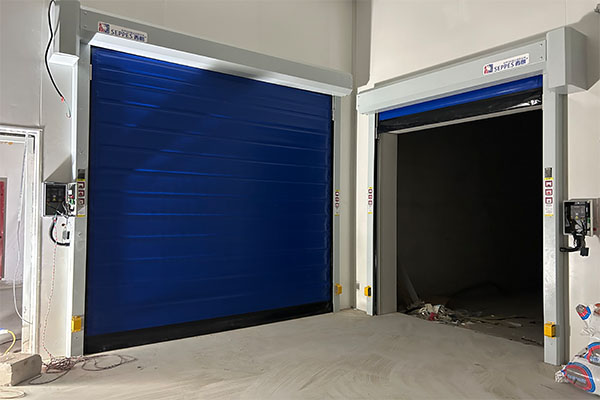
Food cold storage high-speed doors play an extremely vital role in the logistics flow of modern food processing enterprises. When we focus our attention on the critical transitional zone—the “raw material cold storage to processing area isolation doors”—the massive temperature differences and high-frequency forklift traffic often render traditional industrial doors useless. If your facility struggles with temperature difference condensation, massive cold air loss, or doors constantly freezing shut, understanding the core differences between food cold storage high-speed doors and standard thermal insulation high-speed doors for food processing plants will save you from staggering energy consumption control failures.
This article reveals 5 perfect reasons proving exactly why upgrading to specialized food cold storage high-speed doors is an absolutely critical move for your facility’s operational success.
Contents
- 1 Why is This Specific Transitional Scene So Demanding?
- 2 5 Perfect Reasons: How Food Cold Storage High-Speed Doors Completely Solve Temperature Control Challenges
- 2.1 1. Completely Eradicate Frost and Ice: Guide Rail Heating Wire Systems
- 2.2 2. Ultimate Cold Locking: Zipper-Type Full Sealing Structure
- 2.3 3. Flexible and Durable: Extreme Low-Temperature Curtains
- 2.4 4. Boost Logistics Efficiency: Millisecond Response and Automation
- 2.5 5. Absolute Industrial Safety Protection and Interlock Logic
- 3 How to Make the Right Choice for Your Food Factory
- 4 Conclusion
- 5 FAQ
Why is This Specific Transitional Scene So Demanding?
In the processing of meat, dairy, or pre-washed vegetables, a significant temperature barrier exists between the raw material staging area (typically 0℃ to 4℃) and the core processing zone (usually 10℃ to 15℃). Furthermore, the cold storage is often a lower-tier clean zone, while the processing area demands strict clean area isolation (such as a 100,000-class dust-free workshop). This high-frequency interaction across different temperatures and hygiene levels creates three fatal pain points:
Temperature Difference Condensation: Warm air meeting cold air generates immense moisture, creating slippery floors and severe forklift hazards.
Cold Chain Breakage Risks: Slow-moving doors cause temperature fluctuations in the staging area, threatening food freshness and violating HACCP standards.
Equipment Failure: If standard food-grade thermal insulation high-speed doors lack heating functions in sub-zero zones, their tracks will frost over, inevitably burning out the motor.
5 Perfect Reasons: How Food Cold Storage High-Speed Doors Completely Solve Temperature Control Challenges
Here are the 5 absolutely critical design advantages that determine whether your plant operates efficiently or burns through cash:
1. Completely Eradicate Frost and Ice: Guide Rail Heating Wire Systems
Unlike standard insulated doors, professional cold room high-frequency forklift channel doors feature low-voltage heating systems inside the tracks and bottom edges. When sensors detect freezing temperatures, the heating system automatically engages. This prevents frost buildup entirely, ensuring food cold storage high-speed doors never jam in extreme temperature variations.
2. Ultimate Cold Locking: Zipper-Type Full Sealing Structure
To prevent cold air loss and warm air intrusion, zipper-type cold storage door anti-icing solutions abandon traditional brush seals. The edges of the curtain utilize a zipper-like structure to achieve a 100% physical interlocking seal with the track. This exceptional airtightness not only perfects energy control but also brilliantly blocks cross-contamination between the processing and pre-processing zones.
3. Flexible and Durable: Extreme Low-Temperature Curtains
In environments below 0℃, standard PVC becomes as brittle as glass. Premium food cold storage high-speed doors from top anti-freezing cold storage high-speed door manufacturers utilize specially formulated cold-resistant curtains or panels insulated with high-density polyurethane foam. This guarantees they retain peak flexibility and endure thousands of high-speed cycles daily without cracking.
4. Boost Logistics Efficiency: Millisecond Response and Automation
Raw materials must flow seamlessly in automated production lines. Radar or geomagnetic sensors accurately track forklift trajectories, allowing the door to open at speeds exceeding 1.5m/s and close immediately after passage. This minimized open time is the physical foundation for maintaining thermal stability and maximizing logistics efficiency.
5. Absolute Industrial Safety Protection and Interlock Logic
Safety is the foremost priority in any food factory. Beyond standard bottom edge airbags and photoelectric sensors, food cold storage high-speed doors integrate deeply with surrounding production machinery. A crucial element of this safety logic is that the doors remain securely closed during the machine operation cycle. Rather than opening simply because a worker approaches, the safety interlock mechanism forces the door to stay shut while automated processing machinery is active, only releasing the lock once the hazardous processing cycle has completely stopped. This closed-loop logic provides true industrial safety.
How to Make the Right Choice for Your Food Factory
When planning your facility layout, establish clear boundaries. If you are merely separating two ambient or constant-temperature processing rooms, standard thermal insulation high-speed doors are perfectly adequate. However, the moment your logistics route involves a 0℃ (or below) raw material staging zone, investing in food cold storage high-speed doors equipped with anti-freeze heating systems becomes the only viable choice.
Installing the correct high-speed doors ensures you meet strict global food safety standards. More importantly, as HACCP certified workshop dedicated doors, the massive savings they generate in electricity and maintenance will quickly cover your initial investment.
Conclusion
Navigating the complex transition between raw material staging and highly controlled processing zones is no easy task. The extreme temperature variations, relentless forklift traffic, and strict hygiene requirements demand an industrial door solution that goes beyond basic insulation.By upgrading to specialized food cold storage high-speed doors, you are not just buying a barrier; you are investing in a comprehensive temperature control system. With zipper-type full sealing for ultimate cold locking, extreme low-temperature flexible curtains, and reliable anti-freezing heating systems, you can completely eradicate condensation hazards, secure your cold chain, and drastically reduce your energy bills. Optimize your food processing facility today by choosing the precise equipment built to withstand your most demanding environments.
FAQ
1. What is the main difference between standard thermal insulated doors and food cold storage high-speed doors?
The most critical difference lies in the anti-freezing heating system. Standard thermal insulated doors are designed only to maintain temperature in ambient or constant-temperature zones (above 0℃). However, when operating in sub-zero raw material staging areas, specialized food cold storage high-speed doors are required. They come equipped with low-voltage heating wires inside the guide rails to prevent condensation from freezing, which would otherwise jam the door and burn out the motor.
2. How do zipper-type door tracks prevent cross-contamination in food processing?
Traditional brush seals leave micro-gaps that allow air and particulates to pass through. Zipper-type tracks create a 100% physical interlocking seal between the curtain and the guide rail. This completely blocks air exchange, dust, and aerosols between the “low-clean” staging area and the strictly controlled, high-hygiene processing zone, ensuring compliance with FDA and GMP standards.
3. Are these high-speed doors safe for areas with automated processing machinery?
Absolutely. Specialized industrial doors are designed with rigorous safety interlock logic. Rather than simply opening when a worker is detected, the door’s control system integrates with the facility’s machinery. If an automated machine in the processing zone is running a hazardous cycle, the door will remain strictly closed and locked until the machine completely stops, ensuring absolute operational safety and preventing accidental entry into active danger zones.


