
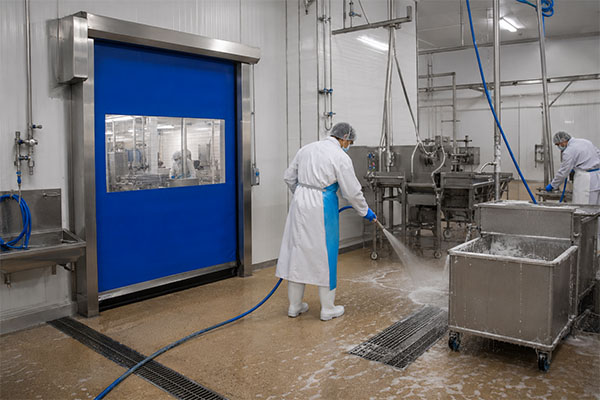
When designing a food processing facility, selecting the right Washdown High Speed Doors for the raw material pre-processing and storage area is not just a structural choice—it is a critical food safety defense. The pre-processing zone is often the wettest and most vulnerable point in a food plant. It is where soil-covered vegetables or raw meat transition into the clean facility, requiring constant, aggressive cleaning. If the entryway separating this zone from the core production area is not equipped with the correct sanitary barriers, the risk of a mass contamination event skyrockets.
To successfully prevent cross-contamination in food plants, facility managers must understand the unique threats present in this environment and why investing in specialized Washdown High Speed Doors is the only viable solution.
Contents
- 1 The 5 Fatal Hygiene Risks in the Raw Material Washdown Area
- 2 Why Standard Doors Fail (And Why Washdown High Speed Doors Win)
- 3 Key Features to Look For in Hygienic High Speed Doors for Pre-processing
- 4 Protect Your Facility and Pass HACCP Audits
- 5 3 Scenerio-Focused FAQs for the Raw Material Washdown Area
- 5.1 Q1: My sanitation crew uses high-pressure hot water (up to 80°C) to clean the raw material zone. Will direct spraying short out the door’s motor?
- 5.2 Q2: During pre-processing washdowns, mud, vegetable soil, or meat scraps often get blasted everywhere. How do we prevent this debris from rotting inside the door’s tracks?
- 5.3 Q3: Can the door frame and curtain withstand daily exposure to the heavy alkaline foams and chlorine-based sanitizers we use in the pre-processing area?
The 5 Fatal Hygiene Risks in the Raw Material Washdown Area
The raw material intake and washing area faces extreme environmental challenges. If you are using standard industrial doors in this space, you are exposing your facility to these five fatal risks:
1. Aerosol Contamination from High-Pressure Cleaning
During the washdown process of raw ingredients and tote bins, high-pressure water jets atomize dirt, blood, and bacteria into microscopic water droplets. If the door separating the wash zone from the clean zone is slow or poorly sealed, this bacteria-laden aerosol mist will drift into your high-risk processing areas.
2. Hidden Hygiene Dead Zones in Guide Rails
Standard zipper doors feature tightly closed guide rails. When dirty water, meat scraps, or sugar residues are blasted by high-pressure hoses, they get forced into these narrow track crevices. Because the water cannot drain, these hidden pockets become breeding grounds for Listeria and E. coli within days.
3. Severe Chemical Corrosion
Picture your sanitation team performing a deep clean at 2:00 AM. They are applying heavy alkaline foams and chlorine-based sanitizers to every surface. Standard galvanized steel or aluminum doors will quickly oxidize, rust, and eventually flake off directly into the food stream.
4. Water Pooling on Flat Surfaces
Water accumulation is the enemy of HACCP compliance. Standard doors often have flat top covers or motor housings where moisture from the humid environment condenses and pools, dripping stagnant, contaminated water onto personnel and products passing below.
5. Material Degradation of Standard Curtains
Many facility managers mistakenly assume that any PVC curtain is waterproof. However, standard PVC strips and generic door fabrics are not manufactured to withstand constant chemical exposure. Unlike standard PVC strips, specialized door curtains used in true sanitary environments require a completely different manufacturing process—utilizing non-porous, reinforced extrusion techniques to prevent chemical absorption and odors.
Why Standard Doors Fail (And Why Washdown High Speed Doors Win)
Traditional doors simply cannot survive the brutal conditions of the pre-processing wash room. This is exactly where Washdown High Speed Doors change the game.
One of the most revolutionary advancements in these specialized systems is the introduction of openable track washdown doors. Instead of trapping debris, the side tracks of premium Washdown High Speed Doors feature a hinged or clip-on design. During sanitation shifts, workers can easily flip open the guide rail covers, exposing the entire internal mechanism. This allows the cleaning crew to use high-pressure hoses to flush out all debris directly. The water drains instantly, leaving zero hygiene dead zones.
Furthermore, the rapid open-and-close speeds (up to 2.5 meters per second) act as a physical shield, keeping the door fully sealed during automated equipment cycles and instantly blocking airborne aerosol drift when washing is actively happening.
Key Features to Look For in Hygienic High Speed Doors for Pre-processing
When evaluating stainless steel rapid doors for food processing, you must look past basic “waterproof” claims and demand strict industrial certifications. A genuine sanitary door must feature:
IP69K Rating: The motors and control panels of high-quality Washdown High Speed Doors must be fully IP69K rated. This guarantees the electrical components can withstand 80°C (176°F) hot water and 100-bar high-pressure jets from a distance of just 10-15 cm without short-circuiting.
304/316 Stainless Steel Construction: The entire frame, motor cover, and hardware must be built from 304 or 316-grade stainless steel to resist harsh chemical foaming agents.
Sloped Design Elements: To meet GMP standards, the top roll cover and any horizontal structures must feature a sloped profile (usually 15 to 30 degrees) to ensure water runs off immediately, eliminating pooling.
FDA Compliant Washdown Door Curtains: The curtain material must be FDA-approved, perfectly smooth, and resistant to both tears and harsh cleaning chemicals.
Protect Your Facility and Pass HACCP Audits
While the initial investment in IP69K washdown roll up doors is higher than installing a standard commercial door, the long-term ROI is undeniable. When you install certified Washdown High Speed Doors, you drastically reduce maintenance costs, eliminate electrical failures caused by water ingress, and most importantly, you secure your facility against devastating audit failures and product recalls.
Every food facility’s layout and cleaning protocol is unique. Upgrading the raw material washdown area doors requires precise engineering to ensure a perfect fit and maximum seal.
Need a tailored sanitary solution for your raw material washdown zone? Contact our engineering team directly on WhatsApp for a custom project evaluation and quote within 24 hours.
3 Scenerio-Focused FAQs for the Raw Material Washdown Area
Q1: My sanitation crew uses high-pressure hot water (up to 80°C) to clean the raw material zone. Will direct spraying short out the door’s motor?
Not if the door is equipped with true IP69K-rated electrical components. Standard waterproof doors (like those with IP65 or basic NEMA 4 enclosures) will eventually fail under these conditions. However, an IP69K motor and control box are specifically engineered and hermetically sealed to withstand continuous, close-range, high-pressure water jets and high-temperature spray (up to 80°C / 176°F). Your team can safely power-wash the entire door structure without pausing to cover the electrical housings.
Q2: During pre-processing washdowns, mud, vegetable soil, or meat scraps often get blasted everywhere. How do we prevent this debris from rotting inside the door’s tracks?
This is exactly why standard zipper doors fail HACCP audits. To solve this, premium washdown doors feature an Openable Track System (or hinged guide rails). Before beginning the washdown, your sanitation workers can simply unlatch and swing open the side columns. This fully exposes the internal tracks, allowing them to blast away trapped soil, meat fragments, and dirty water directly into the floor drains. Once flushed, the tracks dry quickly, completely eliminating hidden breeding grounds for Listeria.
Q3: Can the door frame and curtain withstand daily exposure to the heavy alkaline foams and chlorine-based sanitizers we use in the pre-processing area?
Yes, provided the materials are correctly specified. Standard aluminum or galvanized steel frames will severely oxidize and pit when exposed to heavy alkaline cleaners. A specialized washdown door utilizes a full 304 or 316-grade stainless steel structure that resists pitting and chemical corrosion. Furthermore, the curtain is manufactured using a specialized, non-porous extrusion process (unlike standard warehouse PVC strips) that prevents the fabric from absorbing harsh chemicals, odors, or contaminated liquids during daily sanitation cycles.


