
Cooking Area Rapid Doors are the ultimate frontline defense for food processing facilities looking to maintain strict hygiene, control extreme temperatures, and prevent moisture transfer. If your thermal processing zones or baking areas are still using standard industrial access systems, you are likely battling steam leaks, soaring energy bills, and constant sanitation headaches. In this guide, we dive deep into the specific challenges of thermal processing environments and explore why upgrading to specialized systems is a non-negotiable step for modern food plants.
Contents
- 1 The Hidden Dangers in Thermal Processing Zones
- 2 How Cooking Area Rapid Doors Solve Thermal Processing Pain Points
- 2.1 1. Stopping Steam and Controlling Moisture
- 2.2 2. Preventing Lethal Condensation Drips
- 2.3 3. Resisting Extreme Chemical Washdowns
- 2.4 4. Eliminating Airborne Cross-Contamination
- 2.5 5. Securing Automation Lines with Smart Interlock Logic
- 2.6 6. Optimizing Thermal Insulation
- 2.7 7. Reliability Backed by Global Manufacturing Standards
- 3 Upgrade Your Plant’s Hygiene Strategy
- 4 FAQ
The Hidden Dangers in Thermal Processing Zones
The cooking and boiling zones in meat processing plants, commercial kitchens, and bakeries are extreme micro-climates. They are defined by intense heat, dense steam, and the rigorous use of harsh chemical washdowns. Standard doors simply cannot survive here. They rust, they warp, and worse—they allow airborne moisture to escape into cooling zones, risking severe cross-contamination and compromising food safety.
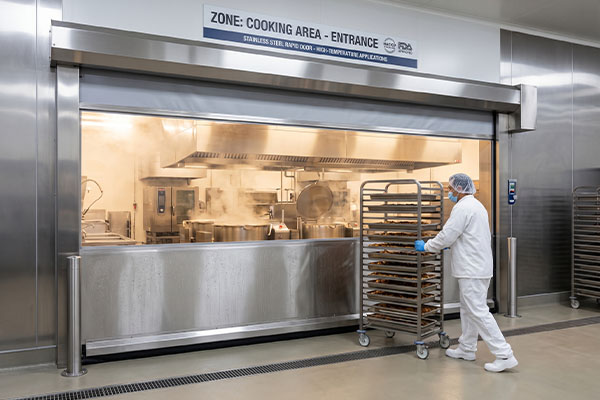
How Cooking Area Rapid Doors Solve Thermal Processing Pain Points
To combat these extreme conditions, dedicated technical teams and in-house production lines have engineered targeted solutions. Here are seven ways these advanced access systems resolve the most frustrating challenges in boiling and baking zones, meticulously verified against current GMP and FDA industry standards.
1. Stopping Steam and Controlling Moisture
When a forklift transitions between the cooking zone and the packaging area, slow-moving doors allow massive clouds of steam to escape. Thermal processing zone rapid doors open and close in fractions of a second. This lightning-fast operation traps the steam where it belongs, providing vital moisture control and drastically reducing the workload on your HVAC and refrigeration systems in adjacent rooms.
2. Preventing Lethal Condensation Drips
One of the biggest compliance nightmares is condensation. When hot steam hits a cold, poorly insulated door curtain, water droplets form and can drip onto exposed food products passing underneath. Premium steam resistant industrial doors feature anti-condensation curtain designs and heated side guides. This condensation prevention ensures that moisture does not accumulate and drip, aligning seamlessly with strict FDA guidelines.
3. Resisting Extreme Chemical Washdowns
Food processing requires absolute cleanliness. High-performance stainless steel rapid doors for cooking areas are manufactured with full SUS304 or 316L stainless steel frames and sloped, IP69K-rated waterproof motor covers. Built from the ground up by source manufacturers, these structures eliminate flat surfaces where water or bacteria could pool, withstanding daily high-pressure washdowns and highly acidic foam cleaners without a single spot of rust.
4. Eliminating Airborne Cross-Contamination
By utilizing tight perimeter sealing technology, bakery zone rapid doors act as a physical barrier against airborne particulates, flour dust, and odors. This ensures that the distinct environments of raw material prep, cooking, and cooling remain strictly isolated, a core requirement of strict hygiene and HACCP compliance.
5. Securing Automation Lines with Smart Interlock Logic
In modern food processing facilities, Cooking Area Rapid Doors integrate directly into automated conveyor and processing systems. Following standard industrial safety protocols, these doors are programmed to remain closed during continuous operation to seal off the thermal environment, rather than dropping only when a hazard is detected. This continuous closed-state logic ensures absolute isolation of the cooking micro-climate during the entire production cycle.
6. Optimizing Thermal Insulation
Investing in food grade high speed doors goes far beyond simple access control. By completely isolating your high-temperature zones, you achieve significant thermal insulation. Trapping the heat inside the cooking area prevents energy bleed, lowering overall facility energy consumption and protecting the integrity of nearby cold storage environments.
7. Reliability Backed by Global Manufacturing Standards
When selecting high-temperature washdown doors, sourcing directly from a dedicated manufacturer guarantees superior quality control and rapid technical support. These robust systems are currently trusted by over 70 Fortune 500 companies and deployed in more than 6,600 enterprises globally, proving their resilience in the most demanding food production environments.
Upgrade Your Plant’s Hygiene Strategy
Do not let outdated access systems compromise your product quality. Cooking Area Rapid Doors are specifically engineered to fight steam, resist extreme cleaning chemicals, and maintain your strict temperature gradients. By securing your thermal processing zones with purpose-built technology, you protect your production line’s profitability and ensure uncompromising food safety.
FAQ
Q1: Can Cooking Area Rapid Doors be installed at entrances equipped with overhead meat rails?
A: No. High-speed roll-up doors are structurally incompatible with overhead meat rail systems. The door’s upper roll-up housing mechanism directly interferes with the continuous track required for the meat rails to function. For thermal processing entrances that utilize overhead rail networks, you must use specialized manual swing doors or specific contact doors rather than a rapid roll-up system.
Q2: How do these doors prevent condensation from contaminating the food production line?
A: In high-humidity thermal processing zones, standard access systems create cold surfaces where steam quickly condenses. Cooking Area Rapid Doors solve this by utilizing advanced anti-condensation door curtains and heated side guides. This targeted moisture control prevents water droplets from forming and dripping onto exposed products, which is critical for maintaining your HACCP compliance and preventing cross-contamination.
Q3: Are the motor and electronic components safe during high-pressure chemical washdowns?
A: Absolutely. Premium stainless steel rapid doors for cooking areas are engineered specifically for extreme washdown environments. They feature IP69K-rated waterproof enclosures and sloped motor covers. This specialized design ensures that neither high-temperature water jets nor highly acidic foam cleaners can pool on the equipment, completely eliminating rust and bacterial harborage points.


