
A food-grade cleanroom high-speed door is not just an operational upgrade; it is the ultimate defense line for your facility’s survival. In today’s hyper-regulated food processing industry, the physical separation between the raw materials zone and the cooked product zone is the absolute top priority during FDA and HACCP audits.
When animal fats, blood, and airborne pathogens in the raw zone threaten to infiltrate the sterile environment of the cooked zone, standard industrial doors simply fail. Today, we are breaking down the critical pain points of raw-to-cooked separation and revealing how highly specialized food-grade cleanroom high-speed doors can eliminate fatal compliance risks and secure your production line.
Contents
- 1 Why is Raw and Cooked Zone Cross-Contamination a Food Plant’s Worst Nightmare?
- 2 5 Core Features of a Food-Grade Cleanroom High-Speed Door for Perfect Zone Isolation
- 3 Case Study: Eliminating Re-Contamination in a High-Volume Poultry Plant
- 4 How to Customize Your Raw to Cooked Product Workshop Isolation Solutions
- 5 FAQ
Why is Raw and Cooked Zone Cross-Contamination a Food Plant’s Worst Nightmare?
For Quality Assurance (QA) managers and facility engineers, the transition point between raw and cooked processing areas is a high-stress bottleneck. Failing to control this environment leads to catastrophic consequences:
Airborne Pathogen Transfer: Aerosol transmission of Listeria and Salmonella from raw meat dust and splashing water can easily ride air currents into the cooked area if the barrier is compromised. The result? Devastating product recalls and facility shutdowns.
The Condensation Crisis: Raw and cooked zones operate under drastically different temperatures and humidity levels. Slow-moving doors allow warm, humid air to clash with cold air, causing severe condensation. This dripping water becomes a direct breeding ground for bacteria right at the threshold.
Failed Cleaning Protocols: Traditional rolling doors feature stiff bottom profiles, exposed hinges, and deep guide rails. Daily high-pressure washdowns simply push raw meat scraps and grease deeper into these crevices, creating rotting biological hazards that standard cleaning cannot reach.
To combat these extreme threats, facilities must move beyond basic barriers and implement cross-contamination prevention doors in food plants specifically engineered for this punishing environment.
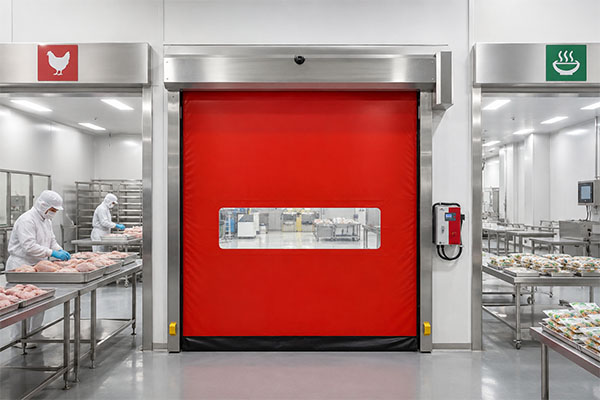
5 Core Features of a Food-Grade Cleanroom High-Speed Door for Perfect Zone Isolation
When evaluating industrial doors meeting HACCP standards, discard generic features. In the raw-to-cooked transition zone, every component must serve a hygienic or isolation purpose. Here is what a true food-grade cleanroom high-speed door must deliver:
1. Superior Airtightness & Positive/Negative Pressure Control
Cooked zones must maintain positive pressure to push air away from the sterile environment, while raw zones are often under negative pressure. A standard door flaps and leaks under this pressure differential. A premium food-grade cleanroom high-speed door utilizes a zipper-like seamless guide rail system, creating a near-100% airtight seal. This ensures contaminated raw-zone air never forcefully drafts into the cooked area.
2. IP69K Waterproofing for Aggressive CIP Washdown
In meat and poultry plants, doors face a daily barrage of foaming chemicals, 180°C hot water, and extreme pressure hoses. Easy-to-clean stainless steel cleanroom roll-up doors must feature IP69K-rated motors and slanted, sloped hoods (so water and debris slide off). There can be no hidden pockets where blood or fat can pool.
3. Ultra-Fast Cycle Speeds to Stop Air Mixing
When a forklift carrying bins of meat passes through the threshold, every second the door is open is a risk. Opening at speeds up to 2.0 meters per second, these doors drastically minimize the air exchange window, lock in the specific temperature of the GMP workshop, and eliminate the condensation risks associated with slow-moving doors.
4. Self-Repairing Auto-Reset After Forklift Impacts
Traffic between raw and cooked zones is relentless. If a forklift strikes a traditional door, the door breaks, leaving the zone completely exposed to cross-contamination until maintenance arrives. Advanced doors feature a flexible, soft bottom edge and a track-jumping design. If hit, the curtain pops out of the guide and automatically re-threads itself on the next cycle, keeping your isolation barrier intact with zero downtime.
5. Touchless Activation Sensors
A door handle or push-button is a massive vector for bacteria. Implementing radar, microwave, or wave-to-open sensors ensures that employees in bio-hazard suits pushing meat carts never physically touch the food-grade cleanroom high-speed door, cutting off contact contamination at the source.
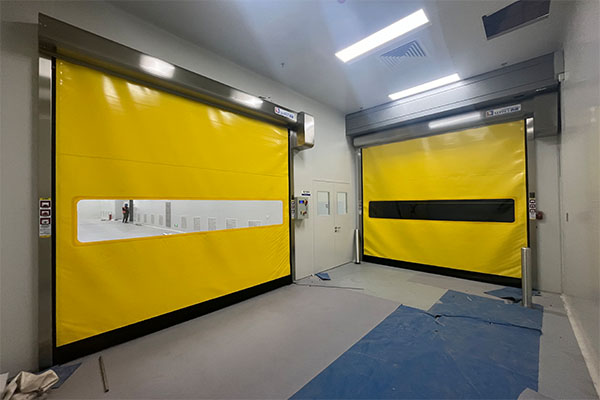
Case Study: Eliminating Re-Contamination in a High-Volume Poultry Plant
The Challenge: A major poultry processor struggled with recurring Salmonella spikes in their packaging (cooked) zone. Investigations revealed that their standard strip curtains and slow PVC doors were allowing negative-pressure drafts from the raw evisceration room to pull aerosols into the cleanroom. Furthermore, forklift drivers were slowing down heavily, disrupting the logistics flow.
The Solution: Based on expert food-grade cleanroom high-speed door manufacturer recommendations, the plant replaced the existing barriers with two interlocked high-speed doors for raw and cooked zone separation featuring 316L stainless steel and full airtight zipper tracks.
The Result:
| Metric | Before Installation | After Installation |
| HACCP Audit Score (Separation) | Marginal / At Risk | Perfect Score (Zero Deficiencies) |
| Passage Efficiency | Frequent forklift bottlenecks | 30% increase in traffic flow |
| Daily Cleaning Time | 2 Hours (dismantling tracks) | 45 Minutes (direct CIP washdown) |
How to Customize Your Raw to Cooked Product Workshop Isolation Solutions
No two food plants are identical. To specify the perfect food-grade cleanroom high-speed door, your facility engineering team must evaluate the following before procurement:
Pressure Differential: What is the exact Pascal (Pa) difference between your raw and cooked zones?
Chemical Exposure: What specific cleaning agents (chlorine, alkaline, acidic) are used during your washdown process?
Traffic Volume: How many times per shift will forklifts or personnel pass through the threshold?
By addressing these specific criteria, you ensure that your investment actively protects your product integrity.
FAQ
Q: Can a food-grade cleanroom high-speed door withstand daily chemical foaming?
Yes. When customized with 304 or 316L stainless steel frames and fully enclosed, IP69K-rated motors, the door is specifically engineered to endure daily high-pressure, high-temperature chemical CIP washdowns without rusting or electrical failure.
Q: Does the door have a rigid bottom bar that can trap bacteria?
No. The best food-grade cleanroom high-speed doors designed for food safety feature a “soft bottom edge.” This removes the rigid metal bar found in traditional doors—which is notorious for harboring raw meat scraps and water—ensuring 100% cleanability.
Q: How does this door help with HACCP compliance?
HACCP requires strict physical barriers to prevent cross-contamination. This door acts as an active environmental control system, maintaining necessary pressure differentials, preventing aerosol spread, and ensuring compliance with FDA and global food safety standards.


