
When operating a food processing plant, the inner packaging and sterile filling rooms are the undisputed frontlines of food safety. In these ultra-hygienic zones, exposed liquid or delicate food products are transferred into their final containers. A single airborne microbe, a brief drop in positive air pressure, or a minor hygiene breach can result in massive product recalls, severe financial losses, and unrepairable brand damage.
To mitigate these terrifying risks, investing in a specialized cleanroom high-speed door is not just an operational upgrade—it is a mandatory requirement for modern food safety. In this article, we will explore exactly why traditional industrial doors fail in these sensitive environments and detail the seven critical reasons your sterile packaging lines absolutely require a purpose-built cleanroom high-speed door.
Contents
- 1 The Unique Nightmares of the Sterile Filling Environment
- 2 1. Absolute Control Over Positive Air Pressure
- 3 2. FDA and GMP Compliance Embedded in the Design
- 4 3. Zero Crevices: Eliminating Bacterial Harbors
- 5 4. Preventing Cross-Contamination in High-Traffic Flow
- 6 5. Self-Repairing Features for Uninterrupted Production
- 7 6. Tailored Solutions for Unique Filling Liquids
- 8 Conclusion: Securing the Core of Your Food Facility
- 9 FAQ
The Unique Nightmares of the Sterile Filling Environment
Before diving into the solution, QA managers and facility engineers must recognize the specific pain points of a high-hygiene inner packaging area:
- Air Pressure Instability: Sterile rooms require constant positive pressure to keep unfiltered air out. Slow doors cause massive pressure drops.
- Microbial Harbors: Standard doors have tracks, bristles, and hinges where bacteria (like Listeria or Salmonella) thrive.
- Harsh Washdown Destruction: Daily high-pressure cleaning with caustic chemicals quickly rusts or destroys standard door mechanisms.
Here is how a dedicated cleanroom high-speed door solves these specific sterile filling nightmares.
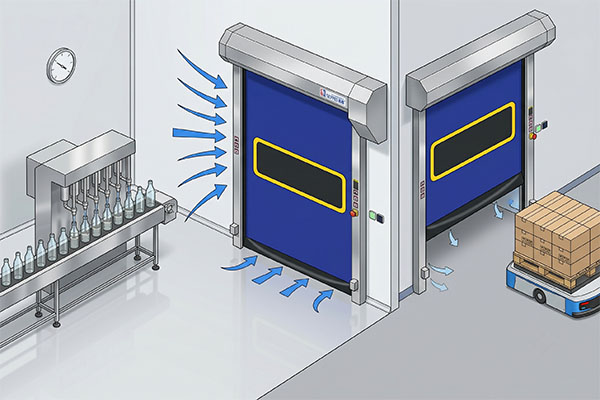
1. Absolute Control Over Positive Air Pressure
In a sterile filling room, positive air pressure is your invisible shield against microbial contamination. When a door opens for an automated guided vehicle (AGV) or a hygienic worker to pass, the protective positive pressure rushes out.A standard door takes crucial seconds to open and close, allowing unfiltered, potentially contaminated air from lower-hygiene zones to rush in.
A cleanroom high-speed door operates at lightning-fast speeds (often exceeding 2.0 meters per second). By drastically minimizing the door’s open time, it preserves the delicate air pressure differentials between your high-care filling room and the adjacent processing areas. Furthermore, the tight peripheral sealing of a high-quality door ensures minimal air leakage even when closed, ensuring your HVAC and HEPA filtration systems don’t have to work in overdrive.
2. FDA and GMP Compliance Embedded in the Design
Navigating strict food safety audits is a constant stress for QA/QC supervisors. Auditors from the FDA, or those checking for HACCP, IFS, or BRC compliance, will scrutinize every square inch of your sterile filling room. Standard equipment often raises red flags.By installing an FDA compliant cleanroom high-speed door, you proactively eliminate audit anxiety. These doors are constructed using FDA-approved fabrics and materials that do not emit volatile organic compounds (VOCs) and are safe for incidental food contact. The very presence of a GMP-compliant door demonstrates to auditors a facility-wide commitment to highest-level hygiene protocols, turning a potential audit failure into a guaranteed pass.
3. Zero Crevices: Eliminating Bacterial Harbors
Take a close look at a standard warehouse door. You will see fuzzy brush seals, exposed mechanical cables, and complex side tracks. In a high hygiene packaging area, these crevices are essentially luxury resorts for bacteria and mold. Spilled organic liquids from the filling line can easily splash into these tracks, rotting over time and completely destroying your sterile environment.
A specialized cleanroom high-speed door for food processing is defined by its “clean-design” philosophy. Instead of fibrous brushes that trap dirt and moisture, these doors utilize smooth, FDA-grade rubber lip seals. The side columns are perfectly smooth and easily accessible for thorough cleaning. There are no exposed fasteners, hollow spaces, or sharp edges where pathogens can hide, ensuring a 100% sterile transition zone.
4. Preventing Cross-Contamination in High-Traffic Flow
Sterile filling rooms are not static; they require a constant flow of sterilized packaging materials entering and sealed products exiting. Managing this high-traffic flow without causing cross-contamination is incredibly difficult.Using touchless activation sensors (such as microwave radar, infrared, or wave-to-open switches), a cleanroom high-speed door allows personnel and forklifts to pass seamlessly without ever physically touching the door’s surface. This completely eliminates the risk of transmitting contaminants via human hands or gloves. Furthermore, two doors can be interlocked (forming a hygienic airlock system), guaranteeing that the door to the non-sterile zone is securely closed before the door to the sterile filling room can open.
5. Self-Repairing Features for Uninterrupted Production
In a bustling food packaging plant, accidental collisions between carts or automated machinery and the door curtain are inevitable. In a standard setup, a damaged door means a breached sterile room, leading to an immediate shutdown of the filling line until repairs are made—costing thousands of dollars per minute in downtime.Advanced models of a sterile filling cleanroom high-speed door feature self-repairing zipper technologies. If a forklift accidentally knocks the curtain out of its side guides, the next operational cycle automatically feeds the curtain back into the track. This self-reinsertion happens without any human intervention, ensuring that your high-speed filling line continues to operate smoothly while maintaining the integrity of the hygiene boundary.
6. Tailored Solutions for Unique Filling Liquids
Whether you are filling dairy products, highly acidic juices, thick syrups, or sensitive pharmaceutical-grade liquids, the environmental requirements of your inner packaging area will vary. Off-the-shelf doors simply cannot adapt to these nuanced demands.
Partnering with experienced manufacturers to procure a customized cleanroom high-speed door allows you to tailor the solution. Need highly transparent curtains for complete visibility and safety monitoring in a tight filling corridor? Need specific anti-static properties to prevent dust from clinging to the door near powder filling machines? A custom approach ensures that the door perfectly aligns with your specific food processing application, completely stripping away generic features that your facility does not need and focusing purely on your hygiene goals.
Conclusion: Securing the Core of Your Food Facility
The sterile filling room is the beating heart of your food processing plant. It is where the product is most vulnerable and where the stakes are highest. Relying on outdated, unhygienic, or slow doors in this critical area is a recipe for cross-contamination, failed hygiene audits, and catastrophic product recalls.
By integrating a state-of-the-art cleanroom high-speed door, you are not just buying an entranceway; you are investing in a comprehensive hygiene defense system. It stops air pressure loss, withstands aggressive chemical washdowns, provides zero hiding spots for bacteria, and guarantees seamless GMP and HACCP compliance.
When it comes to the safety of your inner packaging zone, compromise is simply not an option. Upgrade your facility’s hygiene infrastructure today and lock contaminants out for good.
FAQ
Q1: How does a washdown cleanroom high-speed door handle daily chemical sanitation?
A: Unlike standard industrial doors that rust or degrade, a purpose-built washdown cleanroom high-speed door is engineered specifically for harsh cleaning regimens. The frames are typically constructed from high-grade 304 or 316L stainless steel with sloped hoods to prevent water accumulation. Furthermore, the curtain materials are non-porous and resistant to highly corrosive foam sanitizers and hot water, ensuring the door remains structurally intact and microbiologically safe even after years of daily high-pressure washdowns.
Q2: Can a cleanroom high-speed door truly maintain the positive air pressure in my sterile filling room?
A: Yes, maintaining air pressure differentials is one of its primary functions. Because a cleanroom high-speed door opens and closes at rapid speeds (often exceeding 2.0 meters per second), the time the doorway remains open is reduced to absolute milliseconds. Combined with airtight FDA-grade rubber lip seals—which replace traditional, leaky brush seals—the door effectively locks in your heavily filtered positive air, significantly reducing the load on your facility’s HVAC and HEPA systems.
Q3: Will installing this door help my facility pass FDA and HACCP food safety audits?
A: Absolutely. A cleanroom high-speed door for food processing is designed with strict compliance in mind. Auditors look for potential harboring zones for bacteria, such as exposed tracks, porous materials, or rust. By utilizing a “clean-design” structure with zero hidden crevices, FDA-approved non-toxic curtain fabrics, and touchless activation sensors to prevent cross-contamination, these doors directly support HACCP, GMP, and IFS protocols, turning potential audit liabilities into demonstrable hygiene assets.


