
Sectional dock doors are the ultimate frontline defense for your food facility’s loading bay. When a freight truck backs up to your finished goods warehouse, the next 40 to 60 minutes are the most critical period in your entire logistics chain. This loading dock is the singular point where your highly secured, sanitary indoor environment meets the unpredictable outdoor world. If you rely on standard, flimsy closures during this high-frequency transfer, you risk immediate facility vulnerabilities. Physical security breaches, severe weather infiltrations, and wind-blown dust lead to compromised food safety, contaminated cartons, and ultimately, rejected loads by your retail partners. By upgrading to purpose-built barriers, facility managers can eliminate these hidden profit drains.
Contents
The Hidden Risks at the Food Facility Loading Bay
The finished goods warehouse is a demanding environment. Every time a forklift moves a pallet of packaged goods onto a truck, the facility faces massive external threats. Heavy winds, torrential rain, and airborne contaminants colliding with your staging area create severe hygiene and operational challenges.
During the loading process, delays are inevitable. Trucks wait, forklifts maneuver, and the bay remains vulnerable. Without a robust physical barrier, extreme weather can easily breach the facility, blowing debris directly onto food packaging. Furthermore, a weak or easily bypassed bay door acts as an open invitation for pests, birds, and even unauthorized personnel. In the highly regulated food processing industry, a single breach in your food defense plan or a compromised pallet can lead to a failed hygiene audit and catastrophic product recalls.
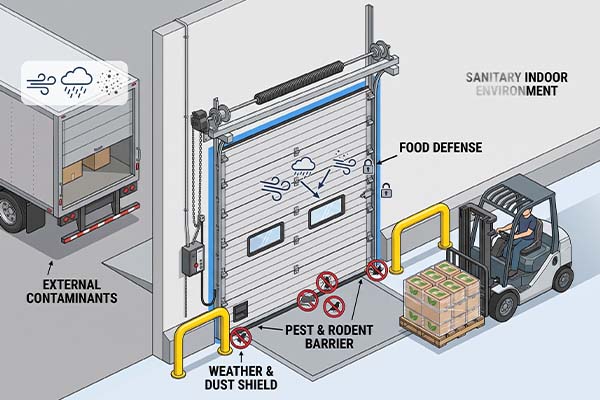
How Sectional Dock Doors Fortify Security and Weather Resistance
To combat these severe external threats, sectional dock doors act as an impenetrable physical and structural barrier. Unlike basic metal closures that rattle and bow under pressure, these heavy-duty panels are engineered specifically for the rigorous security and weather demands of modern logistics.
Heavy-Duty Construction for Food Defense
At the heart of the defense is the robust steel construction of the door panels. In modern food manufacturing, preventing intentional tampering and unauthorized access—often referred to as Food Defense—is just as critical as sanitation. A high-quality sectional door features reinforced commercial-grade steel skins and heavy-duty internal locking mechanisms that provide maximum security against break-ins. This rigid physical barrier ensures that sensitive food products remain safely locked inside your finished goods warehouse during off-hours, protecting your inventory from theft and external tampering.
High Wind Load Resistance and Structural Integrity
A crucial feature for facilities in severe weather zones is wind load reinforcement. Standard doors can buckle or derail under high wind pressure, instantly exposing the pristine warehouse interior to storms and dust. Sectional dock doors equipped with integrated steel struts and heavy-duty hinges are designed to withstand hurricane-force winds. This structural integrity ensures the door remains firmly in its tracks, completely stopping weather infiltration and protecting your packaged goods from environmental damage.
Defeating Pests: Hygiene and Facility Compliance
Achieving HACCP, FDA, or GMP compliance requires meticulous attention to facility perimeters. A well-designed sectional overhead door leaves absolutely no room for compromise when the bay is closed.
These doors utilize advanced sealing systems, featuring heavy-duty EPDM weather seals along the bottom edge, sides, and top header. When the sectional door lowers, it conforms seamlessly to the uneven surfaces of the concrete loading pit, crushing out any gaps. This tight perimeter seal ensures that rodents, insects, and wind-blown debris cannot enter the staging area overnight or between shipments. Additionally, the smooth, galvanized, or stainless-steel track components are designed to withstand aggressive, chemical wash-downs required in food processing environments, preventing rust and ensuring long-term sanitary compliance.
Built for Forklift Traffic: Adapting to Your Loading Bay Architecture
Food processing loading docks are fast-paced, high-stress zones. Forklifts carrying heavy pallets speed back and forth, and the physical infrastructure must accommodate this aggressive workflow.
When outfitting a bay, ceiling space is often obstructed by HVAC ducts, overhead conveyors, or pallet racking. In these scenarios, a high lift sectional door is the perfect solution. The tracks guide the door up the wall closer to the ceiling before running horizontally, providing maximum clearance for tall forklift masts and ensuring smooth loading operations.
Conversely, if the bay has high ceilings but limited depth, a vertical lift overhead door is implemented. This design slides straight up parallel to the wall, requiring zero horizontal ceiling space. By keeping the tracks completely out of the way, you drastically reduce the risk of forklift operators accidentally backing into and damaging the guide rails. Even if a minor collision occurs, a quality sectional overhead door is resilient enough to absorb light impacts, minimizing costly downtime and keeping your dispatch schedule on track.
Why Upgrading Your Loading Bay is the Ultimate ROI
Investing in specialized closures for your finished goods warehouse is not just a structural upgrade; it is a direct financial strategy. Every breach of security translates to potential liability. Every dust-covered or moisture-damaged pallet translates to lost revenue. By deploying sectional dock doors, you immediately stabilize your facility’s perimeter defense. The reduction in contaminated inventory, combined with the peace of mind during rigorous food safety audits, ensures that this equipment pays for itself rapidly, making it the smartest ROI for any modern food logistics operation.
FAQ
1. Do these doors meet strict food safety and facility defense requirements?
Yes. A properly configured sectional overhead door utilizes heavy-duty steel panels for maximum security, along with food-grade EPDM weather stripping to seal out pests and dust. This combination effectively prevents unauthorized access and cross-contamination, strictly aligning with HACCP, GMP, and Food Defense audit standards.
2. When should I choose a high lift sectional door for my food warehouse?
A high lift sectional door is highly recommended when your loading bay has elevated ceilings but requires the overhead space to remain clear for tall forklift operations, lighting rigs, or pallet racking systems. It pushes the horizontal track higher up the wall, maximizing your operational clearance safely.
3. What is the main advantage of a vertical lift overhead door at the loading dock?
A vertical lift overhead door travels straight up the wall without bending horizontally. This is the safest and most efficient choice for warehouses with extremely high ceilings, as it completely removes the door tracks from the forklift’s turning radius, virtually eliminating the risk of accidental collision and costly track damage during busy dispatch hours.


