
Contents
- 1 Why a Cleanroom High-Speed Door is Crucial for Primary Packaging Areas
- 2 The Unique Vulnerability of the Primary Packaging Zone
- 3 1. Maintaining the Vital Positive Pressure Gradient
- 4 2. Eliminating Hidden Breeding Grounds for Bacteria
- 5 3. Surviving Aggressive Washdown Protocols
- 6 4. Preventing Cross-Contamination via Touchless Operation
- 7 5. Meeting FDA and GMP Audit Requirements
- 8 6. Fast-Paced Logistics Without Compromising Safety
- 9 7. Self-Repairing Features for Uninterrupted Operations
- 10 Conclusion: Securing Your Most Vital Asset
- 11 FAQ
Why a Cleanroom High-Speed Door is Crucial for Primary Packaging Areas
A cleanroom high-speed door is the absolute first line of defense when it comes to safeguarding the most vulnerable section of any food processing facility: the primary packaging area. In this highly critical zone, food products are entirely exposed to the surrounding environment just before being sealed into their final packaging. Even the slightest breach in environmental control can lead to catastrophic consequences, including pathogenic cross-contamination, failed BRC audits, and devastating product recalls. For facility managers and quality assurance directors, relying on standard industrial doors at the entrance of high-hygiene zones is no longer an acceptable practice.
This comprehensive guide explores exactly why integrating a specialized cleanroom high-speed door into your primary packaging room entrance is not merely a structural upgrade, but a mandatory requirement for modern food safety, GMP compliance, and strict environmental isolation. We will delve deeply into the unique challenges of the primary packaging environment and how targeted door technologies solve these specific pain points.
The Unique Vulnerability of the Primary Packaging Zone
Before understanding the solution, we must define the problem. The primary packaging room is classified as a high-hygiene or high-care zone. Unlike general raw material handling or cooking areas, the food here is fully processed, cooled, and ready for consumption, yet it remains exposed to the air.
If airborne particles, bio-aerosols, or unfiltered moisture enter this room from adjacent low-care areas, the food acts as a perfect magnet for bacteria such as Listeria or Salmonella. Standard doors operate too slowly, leaving the entrance gaping open for seconds at a time. This allows a massive exchange of unfiltered air. Furthermore, traditional rolling doors feature bulky tracks, complex hinges, and exposed cables—all of which serve as hidden breeding grounds for microbial life. This is precisely why installing a specifically engineered cleanroom high-speed door for food packaging is the only logical step for risk mitigation.
1. Maintaining the Vital Positive Pressure Gradient
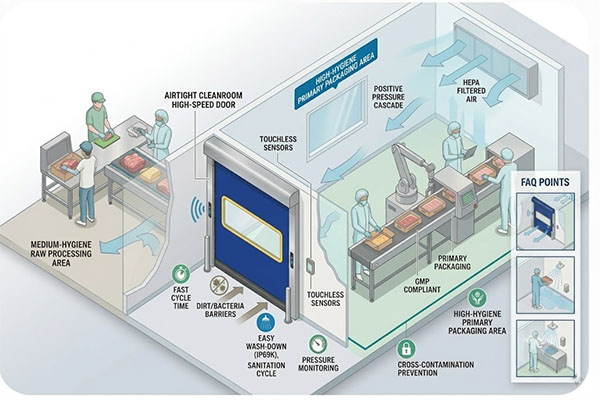
One of the most critical roles of a cleanroom high-speed door in a primary packaging scenario is its ability to lock in the positive pressure gradient. High-hygiene zones are structurally designed to have higher air pressure than the surrounding raw processing areas. This ensures that when a door opens, clean air pushes outward, preventing contaminated air from flowing inward.
However, generating and maintaining this conditioned, purified air via complex HVAC systems is incredibly expensive. When an entrance utilizes a slow-moving door, the positive pressure escapes rapidly, forcing the HVAC system to overwork to restore the balance. A positive pressure cleanroom high-speed door solves this immediate pain point. Operating at speeds exceeding 2.0 meters per second, the door minimizes the open-time exposure to mere fractions of a second. Additionally, its fully sealed side guides and specialized bottom gaskets ensure that when the door is closed, the airlock is perfectly maintained. This rapid cycling and tight sealing drastically reduce energy loss and guarantee that the positive pressure cascade remains unbroken during shift changes and material transfers.
2. Eliminating Hidden Breeding Grounds for Bacteria
In the food industry, flat is clean, and smooth is safe. General-purpose industrial doors fail in high-hygiene zones because they contain deep tracks, brushes, and wind-bars where dust, meat proteins, and moisture inevitably accumulate. For the primary packaging entrance, every square inch of equipment must be easily inspectable and fully cleanable.
A true food grade cleanroom high-speed door is designed with a “hygiene-first” philosophy. To excel in this specific environment, these doors are manufactured without horizontal wind-resistance bars or stiffeners, which are notorious for collecting airborne particles. The door curtain itself is perfectly smooth, non-porous, and typically made from FDA-approved PVC or polyurethane materials. The side frames are constructed from high-grade 304 or 316L stainless steel, featuring sloped top covers so that water and sanitizing chemicals slide right off rather than pooling on top. By utilizing this minimalist, crevice-free design, the door eliminates the microbial breeding grounds that standard doors introduce into the packaging room.
3. Surviving Aggressive Washdown Protocols
High-hygiene areas are subjected to brutal sanitation routines. Every night, the entire room—including the walls, floors, and equipment—is blasted with high-pressure hot water and aggressive chemical foams to eliminate biofilms. This process destroys standard electrical equipment and corrodes standard metals.
A targeted washdown cleanroom high-speed door is engineered explicitly to survive these harsh daily realities. The control box, motor housing, and sensor systems of a specialized cleanroom door possess IP65 or even IP69K waterproof ratings. This means your sanitation crew can directly spray the door’s mechanical and electrical components with high-pressure hot water without causing short circuits or operational failures. Furthermore, the stainless steel frame structure resists the corrosive effects of chlorine-based or alkaline cleaning agents. If the door at your primary packaging entrance cannot withstand your daily washdown protocol, it becomes a liability rather than an asset.
4. Preventing Cross-Contamination via Touchless Operation
In a high-care packaging zone, human hands are one of the primary vectors for cross-contamination. If forklift drivers, operators, or hygiene staff must physically push a button or pull a cord to open the door between the medium-care processing area and the high-care packaging area, they are actively transferring pathogens from one zone to another.
Integrating a cleanroom high-speed door equipped with touchless activation sensors completely eradicates this risk point. By utilizing advanced microwave radar, infrared motion detectors, or touchless hand-wave sensors, the door anticipates the arrival of personnel or automated guided vehicles (AGVs) and opens seamlessly. The personnel enter the primary packaging room without ever making physical contact with the door structure or surrounding walls, thereby preserving the sanitary integrity of their protective clothing and gloves.
5. Meeting FDA and GMP Audit Requirements
For food manufacturers looking to supply global retail chains, passing rigorous third-party safety audits (such as BRC, IFS, or SQF) is non-negotiable. Auditors intensely scrutinize the transition points between different hygiene zones. If an auditor notices a slow, dirty, or poorly sealed door leading into the area where exposed food is packaged, it can result in an immediate major non-conformance penalty.
Investing in an FDA compliant cleanroom high-speed door provides immediate peace of mind during these high-stress inspections. These doors signal to auditors that your facility takes zone isolation seriously. The documentation accompanying these specialized doors—certifying the food-grade nature of the curtain, the stainless steel grade of the frames, and the exact sealing capabilities—acts as tangible proof of your commitment to HACCP guidelines and GMP standards. Choosing high-speed cleanroom doors for primary packaging transforms your facility’s entrances from compliance liabilities into demonstrable compliance assets.
6. Fast-Paced Logistics Without Compromising Safety
While the primary focus at the packaging entrance is hygiene, operational throughput cannot be ignored. The transition from processing to packaging is a massive bottleneck in many factories. Pallets of finished product must move rapidly into the primary packaging room to prevent temperature abuse or exposure delays.
A cleanroom high-speed door balances these seemingly contradictory needs: absolute environmental isolation and rapid logistical flow. Because the door clears the opening in under a second, forklifts and pallet jacks do not need to brake and wait. This prevents traffic jams outside the cleanroom and ensures that the perishable food products move from the processing line into the protective packaging materials as quickly as possible. The speed of the door ensures that operational efficiency remains high, but because it closes just as swiftly, the hygiene of the room is never compromised for the sake of speed.
7. Self-Repairing Features for Uninterrupted Operations
Accidents happen in fast-paced food processing facilities. Occasionally, a rushing forklift or a misaligned pallet jack will strike the door curtain. In standard doors, this causes severe damage, resulting in the door remaining stuck open for hours or days while awaiting repairs. During this downtime, the primary packaging area is completely exposed to the adjacent lower-hygiene zones, forcing production to halt entirely to prevent contamination.
A modern cleanroom high-speed door typically features an innovative “self-repairing” or “breakaway” track system. If the door curtain is accidentally struck by a vehicle, it safely derails from its stainless steel side guides without tearing the fabric. Then, upon the very next opening cycle, the curtain automatically feeds itself back into the tracks. This ingenious feature ensures that an accidental impact does not lead to a catastrophic breach of your hygiene zones. The door heals itself, the airlock is restored immediately, and the primary packaging line continues to operate without exposing the food to unconditioned air.
Conclusion: Securing Your Most Vital Asset
The entrance to your primary packaging room is the final gateway before your product meets the consumer. It is the most critical junction in your entire facility. Utilizing generic factory doors in this highly sensitive transition zone leaves your operation incredibly vulnerable to pressure loss, airborne contamination, and audit failures.
By upgrading to a highly specialized cleanroom high-speed door, you are fundamentally altering the safety profile of your plant. You eliminate the hidden crevices where bacteria breed, you lock in the expensive positive pressure gradient, and you empower your sanitation teams to perform aggressive washdowns without fear of damaging the equipment. Whether you are packaging dairy, meat, pharmaceuticals, or ready-to-eat meals, selecting the precise cleanroom high-speed door for food packaging is the ultimate step in protecting your brand’s reputation, ensuring strict regulatory compliance, and guaranteeing the highest standard of food safety for your end consumers. Focus on isolating your hygiene zones today, and safeguard the integrity of your packaging process for the future.
FAQ
Q: Why can’t I use a standard high-speed door with wind-resistant bars in a primary packaging room?
A: Standard high-speed doors often use horizontal wind-resistant bars and side brushes to maintain curtain tension. However, in a high-care primary packaging area, these components are severe contamination hazards. Brushes and rigid bars create deep, hard-to-reach crevices where moisture, food particles, and bacteria inevitably accumulate, making thorough sanitation nearly impossible. A specialized cleanroom high-speed door utilizes a completely smooth, bar-less curtain and tightly sealed side guides to ensure strict hygiene isolation without harboring any hidden microbes.
Q: How does the door’s operating logic work to maintain environmental separation?
A: When it comes to blocking bacteria, odors, and airborne particles, the core operating logic of the door is strict environmental isolation. To maintain the vital positive pressure gradient of the primary packaging room, the cleanroom high-speed door remains fully closed at all times during standard factory operation. It is programmed to trigger via touchless sensors, opening for merely a fraction of a second to allow authorized personnel or material transfers to pass, before instantly sealing shut again. This rapid cycle effectively minimizes the air exchange between high-care and low-care zones.
Q: Can a cleanroom high-speed door withstand aggressive daily chemical washdowns?
A: Yes, provided the door is specifically engineered for washdown environments. High-hygiene packaging zones require daily sanitation using high-pressure hot water and chemical foams, which would quickly destroy standard industrial door components. A true food-grade cleanroom high-speed door features slanted, crevice-free stainless steel (304 or 316L) frames, along with control boxes and motor housings that carry high waterproof ratings (such as IP65 or IP69K). This ensures your sanitation crew can aggressively clean the entire entrance without causing electrical shorts or metal corrosion.


