
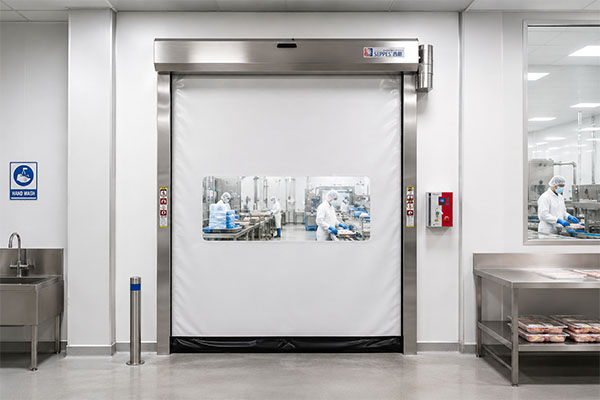
Food-Grade Roll Up Doors are the ultimate defense line for food processing facilities, particularly in the highly sensitive transition zone separating semi-finished cooling lines from the final packaging area. If your facility produces baked goods, snacks, or multi-step composite foods, you already know that this specific transition point is arguably the most vulnerable stage in your entire operation.
At this stage, your products have already been baked, fried, or molded. They are sitting on conveyors, cooling down and waiting for final sealing. Because these foods will not undergo any further high-temperature sterilization, even a single speck of dust or a tiny flying insect slipping into the packaging area can lead to secondary contamination. The result? Devastating product recalls, severe brand damage, and massive financial losses.
By prioritizing rapid closure and hermetic sealing over general industrial features, upgrading to specialized doors in this exact location is a game-changer. Here are five proven ways these doors eliminate risks before your product goes into the bag.
Contents
- 1 1. Lightning-Fast Speeds Stop Air Infiltration
- 2 2. Flawless Sealing Blocks Pests from Bakery Cooling Lines
- 3 3. Frameless Designs Excel in High Hygiene Zones
- 4 4. Preventing Cross-Contamination in Multi-Step Processing
- 5 5. Securing Quality Assurance and HACCP Compliance
- 6 Protect Your Final Product Today
- 7 FAQ
- 7.1 Q: How do these doors stop flies and insects attracted by the smell of cooling food?
- 7.2 Q: Our facility uses harsh chemicals and high-pressure water for cleaning. Will these doors rust or harbor bacteria?
- 7.3 Q: Can installing a high-speed door realistically prevent airborne flour or spice dust from entering the final packaging room?
1. Lightning-Fast Speeds Stop Air Infiltration
In a bustling food plant, automated guided vehicles (AGVs) and personnel constantly shuttle between the processing rooms and the packaging zones. Every single second a traditional, slow-moving door remains open, facility air—carrying microscopic dust, allergens, and airborne bacteria—rushes into the clean packaging zone.
Food-Grade Roll Up Doors operate at incredible speeds, often reaching up to 2.0 meters per second. This rapid open-and-close cycle ensures that the doorway is exposed for the absolute minimum time possible.
Maintains Pressure: By severely restricting air infiltration, high-speed food-grade roll up doors effortlessly maintain the delicate air pressure balance between the semi-finished production floor and the cleanroom-like packaging areas.
Reduces Exposure: The less time the door is open, the less chance contaminants have to ride the air currents into your final product.
2. Flawless Sealing Blocks Pests from Bakery Cooling Lines
Freshly baked goods, warm chocolates, and seasoned snacks release distinct, savory, and sweet aromas as they cool. Unfortunately, these odors act as powerful magnets for flies, moths, and other facility pests. When semi-finished products are moving into the final wrapping phase, absolute insect control is non-negotiable.
Unlike standard factory doors that leave glaring gaps at the bottom edge or side tracks, insect control food roll up doors are engineered for total enclosure.
They feature tightly sealed side guides and a flexible, yielding bottom edge that conforms flawlessly to uneven floors.
When closed, they create an impenetrable physical barrier, guaranteeing that no crawling or flying pests can hitch a ride into your packaging machinery.
3. Frameless Designs Excel in High Hygiene Zones
In the food processing industry, the very equipment you use to protect your product should never become a contamination risk itself. Traditional rigid doors rely on complex hinges, exposed springs, and wide tracks where flour dust, airborne grease, and moisture easily accumulate, fostering mold and bacterial growth.
Modern FDA compliant roll up doors are designed specifically for strict hygiene zones.
Minimal Hardware: They feature sloped shrouds to prevent dust pooling and utilize smooth, non-porous PVC or polyurethane curtains.
Easy Cleaning: As true washdown safe food-grade doors, they can withstand harsh sanitizing chemicals and high-pressure washing routines without rusting or degrading, keeping your transition zones spotless.
4. Preventing Cross-Contamination in Multi-Step Processing
If your facility produces composite foods—such as cream-filled pastries, icing-coated cookies, or seasoned nuts—different stages of production carry vastly different microbiological profiles. The raw ingredient mixing area must be strictly separated from the pristine final wrapping line.
Installing cleanroom roll up doors for food processing acts as a definitive physical and procedural boundary. It enforces strict facility zoning protocols, ensuring that airborne flour from the mixing room or stray particulates from the baking ovens never cross-contaminate the highly sensitive finished goods waiting to be packaged.
5. Securing Quality Assurance and HACCP Compliance
Food safety inspectors and third-party auditors heavily scrutinize the “last mile” of your production—the critical moments right before the product is enclosed in consumer packaging. They actively search for potential failure points where secondary contamination could realistically occur.
Relying on slow, poorly sealed, or hard-to-clean doors in these critical transition areas is an immediate red flag during an audit. Integrating high-performance Food-Grade Roll Up Doors demonstrates a proactive, uncompromising approach to quality assurance. It perfectly aligns with HACCP principles by establishing a highly effective critical control point, permanently locking out environmental hazards just before final sealing.
Protect Your Final Product Today
Do not let a slow, outdated door compromise thousands of dollars of perfectly processed food right before it goes into the bag. Securing the critical gap between your semi-finished cooling lines and your finished packaging areas is the smartest investment you can make in food safety. Contact our engineering team today to find the perfect door solution for your packaging lines.
FAQ
Q: How do these doors stop flies and insects attracted by the smell of cooling food?
A: Freshly baked or processed foods release strong, sweet, or savory aromas during the cooling phase, which inevitably attract pests. Standard doors often leave small gaps at the floor or sides, allowing bugs to slip through. Food-Grade Roll Up Doors solve this by utilizing a hermetic seal along the side tracks and a yielding bottom edge that conforms tightly to the floor. Combined with their rapid closing speeds, they eliminate the window of opportunity for flying or crawling insects to enter the clean packaging area.
Q: Our facility uses harsh chemicals and high-pressure water for cleaning. Will these doors rust or harbor bacteria?
A: Not at all. High-quality washdown safe food-grade doors are specifically engineered for these rigorous QA environments. They utilize smooth, non-porous curtains (such as PVC or polyurethane) and utilize minimal-hardware, stainless-steel designs with sloped shrouds. This intentionally eliminates hidden crevices, hinges, or tracks where water, grease, or food particles usually accumulate, allowing your team to perform aggressive daily washdowns without the risk of rust, mold, or bacterial growth.
Q: Can installing a high-speed door realistically prevent airborne flour or spice dust from entering the final packaging room?
A: Yes. In multi-step food processing, maintaining air pressure differentials between dusty mixing/processing areas and sterile packaging zones is a major critical control point. Because high-speed food-grade roll up doors open and close in mere seconds, they drastically minimize the time the doorway is exposed to drafts. This rapid cycle stops air currents from carrying microscopic airborne particles, allergens, or flour dust into the finished goods sector, effectively stopping cross-contamination in its tracks.


