
Implementing Food-Grade Cleanroom Zipper Doors is no longer just an operational upgrade; it is a critical defense mechanism for any modern slaughterhouse or meat factory. In the meat and poultry processing industry, the transition zone between the raw meat processing area and the cooked food packaging area is the most dangerous frontier. A single breach in hygiene protocols here can lead to a disastrous outbreak, product recalls, and severe legal consequences.
Standard industrial doors simply cannot survive the brutal conditions of a slaughterhouse. To maintain absolute hygiene, plant managers must rely on purpose-built Food-Grade Cleanroom Zipper Doors to act as an impenetrable shield. Here is exactly why these advanced door systems are the only viable solution to prevent fatal contamination in your facility.
Contents
- 1 The Highest Risk Zone: Raw Meat Processing vs. Cooked Packaging
- 2 Why Food-Grade Cleanroom Zipper Doors Are the Ultimate Barrier
- 2.1 1. IP69K Washdown Ready: Surviving the Harsh CIP Process
- 2.2 2. Lightning-Fast Speeds to Control Airborne Pathogens
- 2.3 3. Eliminating Bacteria with Crevice-Free Design
- 2.4 4. Perfect Separation from Raw to Ready-to-Eat
- 2.5 5. FDA and HACCP Compliance for Ultimate Trust
- 2.6 6. Heavy-Duty Durability for Brutal Environments
- 2.7 7. Auto-Repairing Features to Eliminate Downtime
- 3 Door Technology Comparison
- 4 Conclusion
- 5 FAQ
- 5.1 1. Our facility uses aggressive chemical foams and 100-bar hot water daily. Won’t this destroy the door’s electronics and frame?
- 5.2 2. Standard roll-up doors trap meat scraps and blood in the side tracks. How does a zipper door prevent Listeria growth?
- 5.3 3. We use positive air pressure in our cooked packaging room. Will opening the door let airborne pathogens in from the raw meat processing side?
The Highest Risk Zone: Raw Meat Processing vs. Cooked Packaging
The environment in a raw meat processing plant is exceptionally hostile. Floors and walls are constantly bombarded with animal blood and grease, creating a breeding ground for severe biological threats. In these raw zones, heavy biological contamination is a daily reality, and the risk of harboring fatal pathogens like Salmonella is extremely high.
Right next to this chaotic environment is the cooked food packaging area—a high-cleanliness zone that demands strict sanitary conditions. The crossing from “heavy biological contamination” to “ready-to-eat packaging” represents the highest risk of cross-contamination in the entire food industry. Traditional hard-edge roll-up doors with brush seals act as bacterial petri dishes in this setting. Blood, fat, and bone fragments get permanently trapped in their rigid tracks, making them impossible to clean and a severe threat to your entire operation.
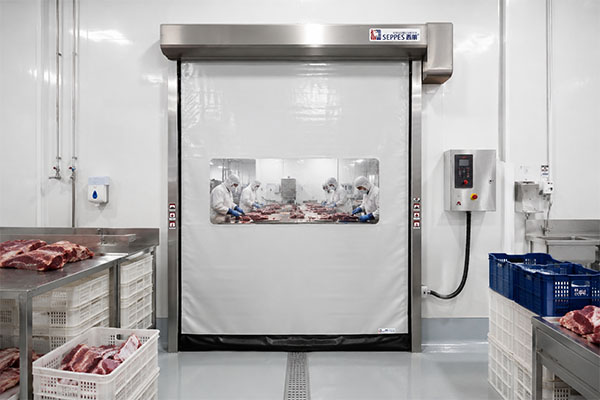
Why Food-Grade Cleanroom Zipper Doors Are the Ultimate Barrier
To bridge this dangerous gap, Food-Grade Cleanroom Zipper Doors utilize a fully enclosed, trackless design that eliminates the traditional failure points of standard doors. By acting like a giant, airtight zipper, the door curtain locks tightly into the side guides. This design provides maximum safety, sealing off the cleanroom entirely.
Here are the 7 reasons why installing Food-Grade Cleanroom Zipper Doors is mandatory for your high-risk zones.
1. IP69K Washdown Ready: Surviving the Harsh CIP Process
Meat processing plants rely on rigorous CIP procedures (Clean-in-Place) to maintain hygiene. Every single day, equipment is covered in highly corrosive chemical foams, left to sit, and then blasted with 80°C high-pressure water at over 100 bar. Standard doors rust, short-circuit, and peel within weeks.
By utilizing IP69K waterproof cleanroom zipper doors, your facility is completely protected. These doors feature fully sealed motors and control boxes that laugh in the face of high-pressure hot water jets. As true washdown ready cleanroom zipper doors, they feature a sloped top cover design that prevents water pooling, ensuring no stagnant water can harbor bacteria after the cleaning crew finishes.
2. Lightning-Fast Speeds to Control Airborne Pathogens
In meat plants, a significant danger comes from invisible airborne pathogens. Mists of water mixed with microscopic raw meat particles float in the air. To maintain a sterile packaging room, facilities use positive air pressure to push clean air out when a door opens.
However, if a door is too slow, the pressure drops, and contaminated aerosols slip in. Utilizing high-speed cleanroom doors for meat processing solves this. With opening speeds exceeding 2.0 meters per second, these doors drastically minimize the time the barrier is open, maintaining the pressure differential and keeping contaminated air exactly where it belongs.
3. Eliminating Bacteria with Crevice-Free Design
Listeria monocytogenes thrives in cold, wet crevices. The bottom edge of a standard door, usually weighed down by a sandbag or rigid metal bar, is a classic hiding spot for this deadly pathogen.
Investing in Listeria prevention cleanroom zipper doors eliminates this risk completely. The flexible bottom edge contains no rigid metal parts or fabric pockets. The completely smooth, crevice-free curtain means bacteria have absolutely nowhere to hide during the daily washdown, cutting off the risk of cross-contamination at the source.
4. Perfect Separation from Raw to Ready-to-Eat
When defining the boundary lines in a processing plant, you need a physical barrier that acts as a true airlock system. Food-Grade Cleanroom Zipper Doors provide a seamless, brush-free seal.
As dedicated raw to cooked meat separation doors, they ensure that absolutely no drafts, insects, or biological splatters can penetrate the gap between the curtain and the frame. The zipper teeth interlock perfectly, acting as a true airtight vault door for your cooked meat packaging line.
5. FDA and HACCP Compliance for Ultimate Trust
Passing a BRCGS or HACCP audit requires proving that your facility’s hardware actively prevents contamination. Auditors heavily scrutinize the transition zones.
By choosing FDA approved zipper doors for food plants, you instantly demonstrate a commitment to food safety. The curtain material is certified safe for direct and indirect food contact. Furthermore, because Food-Grade Cleanroom Zipper Doors actively support HACCP compliance by minimizing hazard transition, passing rigorous hygiene audits becomes a streamlined process rather than a stressful ordeal.
6. Heavy-Duty Durability for Brutal Environments
Slaughterhouses are rough environments. Forklifts, pallet jacks, and meat carts are constantly moving at high speeds. Flimsy doors will be destroyed in days.
You need heavy-duty zipper doors for slaughterhouses that feature a full 304 or 316L stainless steel structure. This high-grade steel resists the corrosive animal fats and daily chemical washes, ensuring your Food-Grade Cleanroom Zipper Doors stand tall and operate flawlessly year after year without rusting.
7. Auto-Repairing Features to Eliminate Downtime
In a fast-paced meat plant, a forklift will inevitably hit a door. With traditional rigid doors, a collision means shutting down the line, waiting for repairs, and exposing the clean packaging area to the dirty raw area for hours.
With advanced Food-Grade Cleanroom Zipper Doors, the flexible curtain simply pops out of the track upon impact and automatically zips itself back in during the next open-and-close cycle. Zero downtime, zero repair costs, and zero compromise in your hygiene separation.
Door Technology Comparison
To clearly illustrate the difference, here is a quick breakdown of why zipper technology is superior in this specific environment:
| Feature | Standard Roll-up Doors | Food-Grade Cleanroom Zipper Doors |
| Side Sealing | Bristle brushes (traps blood & fat) | Airtight zipper interlocking (trackless) |
| Washdown Capability | IP55 (fails under pressure washing) | IP69K (withstands 80°C high-pressure water) |
| Frame Material | Galvanized steel (rusts quickly) | 304/316L Stainless Steel (corrosion-proof) |
| Bottom Edge | Metal bar/sandbag (harbors Listeria) | Soft bottom edge (crevice-free) |
Conclusion
The line dividing raw meat processing and cooked food packaging is the most critical boundary in your entire facility. Relying on outdated hardware in this zone is a gamble with your brand’s reputation and consumer safety. By upgrading to Food-Grade Cleanroom Zipper Doors, you eradicate the structural flaws that cause cross-contamination, safeguard your CIP routines, and guarantee peak operational efficiency.Stop letting traditional doors put your facility at risk of a fatal outbreak. Secure your high-risk transition zones with the ultimate biological barrier today.
FAQ
1. Our facility uses aggressive chemical foams and 100-bar hot water daily. Won’t this destroy the door’s electronics and frame?
Not with true Food-Grade Cleanroom Zipper Doors. Standard industrial doors fail under these conditions because water penetrates the motor housings, and harsh CIP (Clean-in-Place) chemicals corrode galvanized steel. Our doors are engineered with an IP69K washdown rating, meaning the motors, sensors, and control boxes are hermetically sealed against 80°C high-pressure water jets. Furthermore, the entire frame is constructed from 304 or 316L stainless steel with a sloped hood design, preventing corrosive pooling and ensuring your door survives daily chemical foaming without rusting or short-circuiting.
2. Standard roll-up doors trap meat scraps and blood in the side tracks. How does a zipper door prevent Listeria growth?
This is the exact reason traditional doors are banned in many high-risk transition zones. Standard doors rely on bristle brushes or hard edges inside a deep track, which act as a magnet for animal fat, blood, and bone fragments—creating the perfect breeding ground for Listeria and Salmonella. Food-Grade Cleanroom Zipper Doors eliminate this pain point by using a trackless, brush-free design. The curtain edges feature molded zipper teeth that interlock tightly into a smooth, easily washable guide. Combined with a crevice-free soft bottom edge (no metal bars or sandbags), there are absolutely no hidden pockets for bacteria to survive your daily washdown.
3. We use positive air pressure in our cooked packaging room. Will opening the door let airborne pathogens in from the raw meat processing side?
Controlling airborne cross-contamination (aerosols mixed with raw meat bacteria) is critical. If a door opens too slowly, your cooked packaging room loses its positive air pressure, sucking in contaminated air from the raw zone. Food-Grade Cleanroom Zipper Doors prevent this pressure drop through two mechanisms: extreme speed and absolute airtightness. Operating at speeds exceeding 2.0 meters per second, the door minimizes exposure time to just seconds. When closed, the continuous zipper seal physically locks the edges, preventing any drafts or microscopic pathogens from bypassing the barrier, keeping your positive air pressure stabilized and your cooked food safe.


