
High speed doors are becoming an essential door solution for food processing wet areas, especially in coarse processing zones, washing rooms, and high-humidity production areas where sanitation, corrosion resistance, and fast traffic flow all matter.
In food factories, wet areas are very different from ordinary production workshops. These spaces often involve water, steam, cleaning chemicals, salt, oil, blood, mud, or low-temperature processing conditions. If the wrong door is installed, it may quickly lead to corrosion, poor sealing, difficult cleaning, air exchange, pest entry, temperature loss, or even cross-contamination risks.
That is why choosing the right door system is not only a construction decision. It is also part of food safety control, production efficiency, hygiene management, and long-term operating cost control.
This guide explains how to choose the right high speed doors for food processing, including coarse processing areas, washing rooms, seafood processing zones, meat processing wet areas, vegetable washing areas, and other wet production environments.
Contents
- 1 Why Food Processing Wet Areas Need Special Door Solutions
- 2 High Speed Doors for Wet Areas: What Problems Do They Solve?
- 3 Door Selection by Area: Coarse Processing Area, Washing Room, and Wet Zone
- 4 Key Features to Check Before Buying Food Processing High Speed Doors
- 5 7 Critical Mistakes to Avoid When Choosing High Speed Doors for Washing Rooms
- 5.1 Mistake 1: Choosing Only by Price
- 5.2 Mistake 2: Using Standard Doors in Washdown Areas
- 5.3 Mistake 3: Ignoring Corrosion Resistance
- 5.4 Mistake 4: Overlooking Door Sealing
- 5.5 Mistake 5: Forgetting About Traffic Type
- 5.6 Mistake 6: Not Considering Temperature Control
- 5.7 Mistake 7: Ignoring Future Maintenance
- 6 Which Door Type Is Best for Your Food Processing Wet Area?
- 7 Practical Checklist Before Ordering High Speed Doors
- 8 How High Speed Doors Support Food Safety and Production Efficiency
- 9 Conclusion: Choose the Door Based on the Real Wet Area Conditions
- 10 Suggested CTA
- 11 FAQ About High Speed Doors for Food Processing Wet Areas
- 11.1 What are the best high speed doors for food processing wet areas?
- 11.2 Can PVC high speed doors be used in washing rooms?
- 11.3 Why are stainless steel high speed doors recommended for wet food processing areas?
- 11.4 Are zipper high speed doors suitable for forklift traffic?
- 11.5 What is the difference between washdown high speed doors and standard high speed doors?
- 11.6 Do food processing doors need to be insulated?
- 11.7 How do high speed doors help reduce cross-contamination risks?
Why Food Processing Wet Areas Need Special Door Solutions
Food processing wet areas usually face more demanding conditions than dry workshops. In a dry warehouse or general factory, a standard industrial door may be enough. But in a food processing wet zone, the door must handle moisture, frequent cleaning, temperature changes, and strict hygiene requirements.
Common wet area conditions include:
- Daily washdown cleaning
- High humidity and condensation
- Chemical cleaning agents
- Salt exposure in seafood processing
- Blood, oil, or fat in meat processing
- Mud and water in vegetable washing areas
- Frequent forklift, trolley, or AGV traffic
- Separation between raw material zones and cleaner production areas
- Low-temperature or temperature-controlled environments
In these conditions, ordinary doors can become a weak point. Metal parts may rust, side tracks may collect dirt, door curtains may become damaged, and slow-opening doors may remain open for too long. Once this happens, the door no longer supports hygiene control or production efficiency.
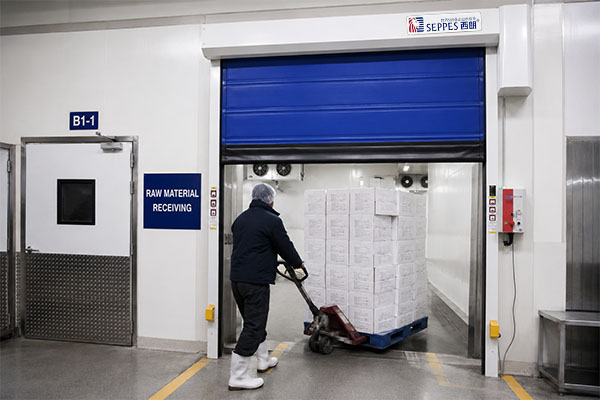
Properly selected high speed doors can help food factories improve separation, reduce unnecessary air exchange, support faster logistics flow, and make daily cleaning easier.
High Speed Doors for Wet Areas: What Problems Do They Solve?
The main reason food factories use high speed doors for wet areas is not only speed. Speed is important, but the real value comes from the combination of fast operation, sealing, hygiene, durability, and safety.
1. Reducing Cross-Contamination Risks
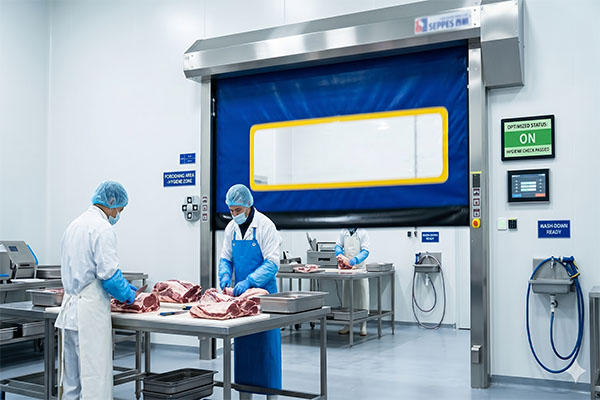
Coarse processing areas, washing rooms, and wet zones often handle raw materials. These areas may be close to cleaner processing areas, packaging areas, cold rooms, or finished product zones. If doors stay open for too long, air, moisture, odor, insects, and contaminants can move between zones.
Fast-opening and fast-closing high speed doors help shorten the time that an opening is exposed. This supports better separation between raw material areas and cleaner production areas.
2. Improving Traffic Flow
Wet areas are usually busy. Workers, carts, forklifts, crates, trays, and AGVs may pass through the same opening many times per hour. If the door is too slow, workers may leave it open to save time. This creates hygiene and temperature control problems.
Food processing high speed doors allow traffic to pass quickly while keeping the opening closed when not in use. This improves both production efficiency and environmental control.
3. Supporting Washdown and Cleaning Requirements
In washing rooms and wet zones, the door must be easy to clean. A good wet area door should avoid unnecessary gaps, dirt-trapping structures, and components that are difficult to wipe down.
For more demanding washdown environments, washdown high speed doors with stainless steel frames, waterproof control components, and corrosion-resistant hardware are usually more suitable than standard doors.
4. Reducing Downtime from Impact Damage
Forklift and trolley impact is common in food factories. A damaged door can stop production, increase maintenance cost, and create an opening that is difficult to control.
For high-traffic wet areas, self repairing high speed doors with a zipper structure can be a practical choice. When the curtain is hit, it can often return to the side guides automatically, reducing downtime and maintenance frequency.
Door Selection by Area: Coarse Processing Area, Washing Room, and Wet Zone
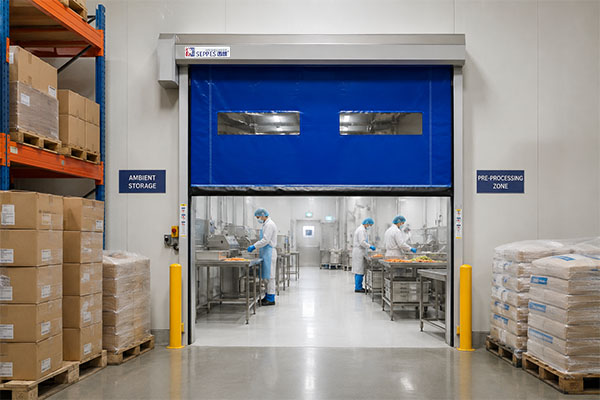
Different areas in a food processing factory need different door solutions. The best door for a raw material washing room may not be the best door for a cold room connection or an exterior loading entrance.
Coarse Processing Areas
Coarse processing areas usually handle raw food materials before further processing. These spaces may involve mud, water, packaging waste, raw meat, seafood, vegetables, or other materials that require strict separation from cleaner areas.
Recommended door options:
- PVC fast doors
- Zipper rapid doors
- Stainless steel roll up doors for wet or corrosive environments
For coarse processing zones with frequent trolley or forklift traffic, zipper-type high speed doors are often a good option because they combine fast operation, flexible curtains, and impact recovery.
Washing Rooms
Washing rooms are among the most demanding areas in food factories. They may be used for cleaning crates, trays, tools, containers, boots, equipment parts, or raw materials.
Recommended door options:
- Washdown fast doors
- Stainless steel rapid doors
- Waterproof zipper roll up doors
In this type of environment, the frame material and electrical protection are very important. If the door uses painted steel components or standard control boxes, corrosion and water damage may become a problem over time.
Seafood Processing Wet Areas
Seafood processing areas often involve salt, low temperatures, humidity, and frequent washdown. Salt and moisture can quickly damage ordinary steel structures.
Recommended door options:
- Stainless steel rapid doors
- Zipper fast doors with stainless steel frame
- Insulated roll up doors for low-temperature areas
For seafood plants, stainless steel construction is usually more reliable than standard painted steel. It helps improve corrosion resistance and supports easier cleaning.
Meat Processing Wet Areas
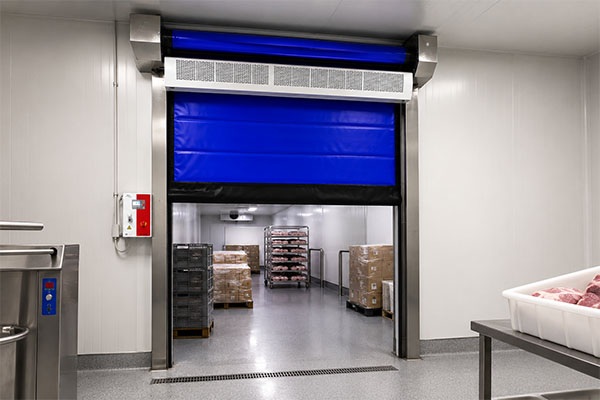
Meat cutting, deboning, thawing, and washing areas may involve blood, oil, fat, low temperatures, and frequent cleaning. Door sealing and cleanability are especially important.
Recommended door options:
- Hygienic roll up doors
- Stainless steel zipper roll up doors
- Insulated high speed doors for food processing when temperature control is required
In meat processing areas, the door should help separate different hygiene zones while allowing workers and transport equipment to move efficiently.
Vegetable Washing Areas
Vegetable washing areas may involve mud, sand, water spray, high humidity, and drainage issues. Doors in these areas should be easy to clean and resistant to moisture.
Recommended door options:
- PVC fast doors
- Self repairing roll up doors
- Stainless steel rapid doors for heavy washdown zones
If forklifts or carts frequently pass through the opening, a self-repairing structure can reduce downtime caused by accidental impact.
Cold and Wet Transition Areas
Some food factories have wet areas connected to cold rooms, thawing rooms, or chilled processing rooms. In these areas, standard PVC doors may not be enough.
Recommended door options:
- Insulated rapid doors
- High speed insulated doors
- Stainless steel insulated fast doors
These doors help reduce cold air loss, condensation, and temperature fluctuation. They are especially useful in meat, seafood, dairy, and frozen food processing plants.
Key Features to Check Before Buying Food Processing High Speed Doors
When choosing high speed doors for food processing, buyers should not only compare price. The right door should match the actual environment, cleaning method, traffic frequency, and hygiene requirements.
1. Frame Material
For food processing wet areas, stainless steel is often preferred because it provides better corrosion resistance and cleaner appearance. In less demanding areas, galvanized steel or aluminum may be acceptable, but for washing rooms and seafood processing areas, stainless steel is usually a safer choice.
Common options include:
- 304 stainless steel frame
- Galvanized steel frame
- Aluminum alloy frame
- Painted steel frame for dry or low-humidity areas
2. Door Curtain Material
The door curtain should be suitable for food factory environments. PVC curtains are widely used because they are flexible, fast-moving, and cost-effective. For special areas, the curtain may need low-temperature resistance, transparency, or reinforced structure.
Important curtain features include:
- Durable PVC fabric
- Transparent vision window
- Low-temperature resistance
- Easy-clean surface
- Strong tear resistance
- Good sealing performance
3. Sealing Structure
Sealing is one of the most important factors in wet area door selection. A poor seal can allow water, air, odor, insects, or contaminants to pass through.
For wet food processing areas, check:
- Side guide sealing
- Zipper sealing system
- Bottom sealing edge
- Top sealing design
- Curtain recovery after impact
Zipper-type high speed doors are often used when better side sealing and self-repairing performance are required.
4. Waterproof Electrical Components
Wet areas require more attention to electrical protection. The motor, control box, sensors, push buttons, and wiring should be protected from water, humidity, and cleaning activities.
Important points include:
- Waterproof control box
- Protected motor cover
- Proper cable routing
- Water-resistant push buttons
- Suitable sensors for humid environments
- Safe installation away from direct water impact when possible
5. Safety Devices
Food processing facilities often have workers, forklifts, carts, and AGVs moving through the same area. Door safety is essential.
Common safety devices include:
- Safety photocell
- Safety bottom edge
- Radar sensor
- Loop detector
- Pull cord switch
- Warning light
- Emergency stop button
The right combination depends on traffic type and opening location.
6. Cleaning and Maintenance Design
A food factory door should be easy to clean and maintain. Avoid door structures with too many exposed screws, open gaps, or dirt-catching areas.
Good hygienic high speed doors should support easier cleaning and reduce areas where dirt, moisture, or food residue can collect.
7 Critical Mistakes to Avoid When Choosing High Speed Doors for Washing Rooms
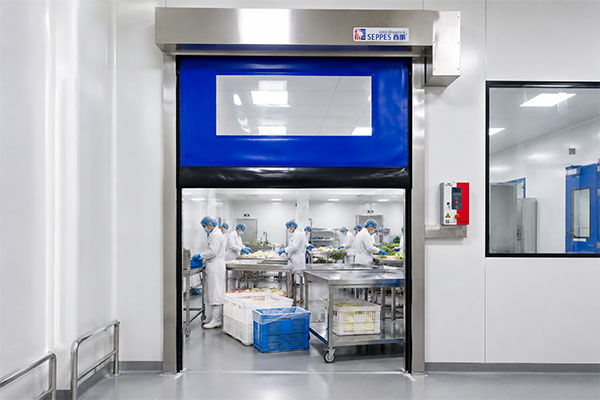
Choosing the wrong door can create long-term problems. Here are seven common mistakes buyers should avoid.
Mistake 1: Choosing Only by Price
A low-cost standard door may look attractive at first, but it can become expensive if it rusts, breaks down, or fails to meet cleaning requirements. In food processing wet areas, the correct structure is more important than the lowest initial price.
Mistake 2: Using Standard Doors in Washdown Areas
Not all high speed doors are suitable for washdown environments. A standard PVC fast door may work in a dry processing area, but washing rooms often require stainless steel frames, better sealing, and waterproof protection.
Mistake 3: Ignoring Corrosion Resistance
In seafood, meat, and wet cleaning areas, corrosion is a serious issue. If the frame, fasteners, bottom parts, or side guides are not corrosion-resistant, the door may have a shorter service life.
Mistake 4: Overlooking Door Sealing
Speed alone cannot solve hygiene problems. If the door has poor side sealing or bottom sealing, it may allow air, water, pests, and contaminants to pass through.
Mistake 5: Forgetting About Traffic Type
A door used mainly by workers is different from a door used by forklifts or AGVs. For vehicle traffic, automatic activation, safety sensors, and impact recovery are important.
Mistake 6: Not Considering Temperature Control
Some wet areas are also temperature-controlled. In these areas, standard doors may cause cold air loss and condensation. Insulated high speed doors for food processing may be more suitable.
Mistake 7: Ignoring Future Maintenance
Food factories need stable production. If a door requires frequent manual repair, has hard-to-clean parts, or uses difficult-to-replace components, the long-term cost will be higher.
Which Door Type Is Best for Your Food Processing Wet Area?
There is no single door type that fits every area. The best solution depends on the environment.
PVC High Speed Doors
PVC high speed doors are suitable for general internal separation, dry-to-wet transitions, and medium-duty food processing areas. They are fast, flexible, and cost-effective.
Best for:
- General food factory partitions
- Coarse processing areas
- Internal logistics channels
- Personnel and trolley traffic
Not ideal for:
- Heavy washdown rooms
- Strong corrosive environments
- Low-temperature areas requiring insulation
Zipper High Speed Doors
Zipper high speed doors are suitable for high-traffic areas where impact may happen. Their self-repairing function can help reduce downtime.
Best for:
- Forklift traffic
- AGV passages
- Cart and trolley routes
- Wet areas requiring better sealing
Not ideal for:
- Large exterior openings with high wind pressure
- Areas requiring rigid security
Washdown High Speed Doors
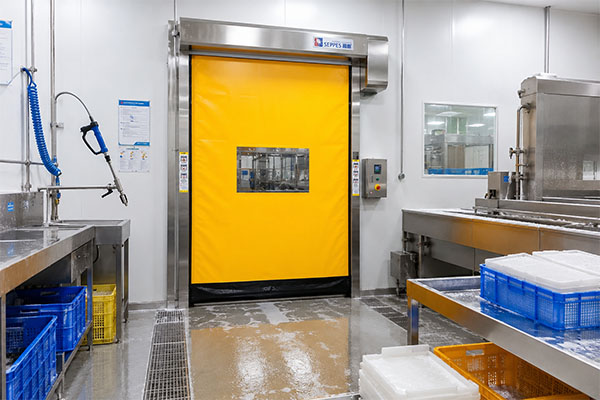
Washdown high speed doors are designed for cleaning-intensive environments. They usually use stainless steel structures, waterproof components, and easy-clean designs.
Best for:
- Washing rooms
- Crate and tray washing areas
- Equipment cleaning areas
- High-humidity food processing rooms
Not ideal for:
- Very low-budget applications
- Dry areas where washdown is not required
Stainless Steel High Speed Doors
Stainless steel high speed doors are recommended for harsh wet food processing environments. They offer better corrosion resistance and a more hygienic appearance.
Best for:
- Seafood processing
- Meat processing
- Dairy production
- Wet cleaning zones
- Salt or chemical exposure areas
Not ideal for:
- Simple dry storage areas where stainless steel is not necessary
Insulated High Speed Doors
Insulated high speed doors are used when temperature control matters. They help reduce heat transfer, cold air loss, and condensation.
Best for:
- Cold rooms
- Thawing rooms
- Chilled processing areas
- Wet low-temperature zones
Not ideal for:
- Normal-temperature internal partitions
Practical Checklist Before Ordering High Speed Doors
Before selecting high speed doors for food processing wet areas, answer these questions:
- Is the area washed down every day?
- Is there direct water spray near the door?
- Are salt, oil, blood, mud, or cleaning chemicals present?
- Is the traffic mainly workers, carts, forklifts, or AGVs?
- Does the door need to separate clean and unclean zones?
- Is stainless steel required for the frame?
- Does the area need temperature control?
- Is self-repairing function necessary?
- Are the control box and sensors protected from moisture?
- Is the door easy to clean with fewer dirt-trapping gaps?
- What is the opening size?
- How many times will the door open per day?
These questions help suppliers recommend the correct door structure instead of offering a generic product.
How High Speed Doors Support Food Safety and Production Efficiency
In food factories, doors are part of the production environment. A well-selected door can support hygiene zoning, improve traffic flow, reduce energy loss, and lower maintenance problems.
For example, high speed doors between coarse processing and cleaner areas can help reduce unnecessary air movement. In washing rooms, stainless steel washdown doors can better withstand moisture and cleaning routines. In forklift passages, self-repairing zipper doors can reduce downtime after impact. In cold wet areas, insulated doors can help control temperature and condensation.
This is why many food processing plants do not choose one door type for the entire factory. Instead, they use different doors for different zones.
A practical door plan may include:
- PVC high speed doors for general internal separation
- Stainless steel high speed doors for wet and corrosive areas
- Washdown high speed doors for washing rooms
- Zipper high speed doors for high-traffic passages
- Insulated high speed doors for cold and wet areas
- Sectional doors or hard high speed doors for exterior entrances
This approach gives each area the right balance of speed, hygiene, durability, and cost control.
Conclusion: Choose the Door Based on the Real Wet Area Conditions
Food processing wet areas require more than a standard industrial door. Moisture, cleaning chemicals, corrosion, traffic frequency, hygiene control, and temperature requirements all affect the final door choice.
For coarse processing areas, PVC or zipper high speed doors may provide efficient internal separation. For washing rooms and seafood processing zones, stainless steel washdown high speed doors are often more reliable. For cold and wet areas, insulated high speed doors can help reduce cold air loss and condensation.
The right door should not only open quickly. It should also support food safety, easy cleaning, corrosion resistance, safe traffic flow, and long-term stable operation.
If you are choosing high speed doors for food processing wet areas, start with the real working conditions: cleaning method, traffic type, humidity level, temperature requirement, and hygiene zoning. With the right selection, your doors can become an important part of a safer, cleaner, and more efficient food processing facility
Suggested CTA
Need help choosing the right high speed doors for your coarse processing area, washing room, or food processing wet zone? Send us your opening size, traffic frequency, cleaning method, and temperature requirement. Our team can recommend a suitable door structure for your application.
FAQ About High Speed Doors for Food Processing Wet Areas
What are the best high speed doors for food processing wet areas?
The best option depends on the environment. For general wet internal areas, zipper high speed doors or PVC high speed doors may be suitable. For washing rooms, seafood processing areas, or highly humid zones, stainless steel washdown high speed doors are usually a better choice.
Can PVC high speed doors be used in washing rooms?
PVC high speed doors can be used in some light wet areas, but heavy washdown rooms usually need stronger waterproof and corrosion-resistant features. For frequent cleaning, stainless steel washdown high speed doors are often more suitable.
Why are stainless steel high speed doors recommended for wet food processing areas?
Stainless steel high speed doors offer better corrosion resistance, easier cleaning, and a more hygienic structure. They are especially useful in seafood, meat, dairy, and washing areas where moisture and cleaning chemicals are common.
Are zipper high speed doors suitable for forklift traffic?
Yes. Zipper high speed doors are often used in areas with forklift, trolley, or AGV traffic. Their self-repairing structure can help reduce downtime if the curtain is accidentally hit.
What is the difference between washdown high speed doors and standard high speed doors?
Washdown high speed doors are designed for wet and cleaning-intensive environments. They usually include stainless steel frames, better sealing, water-resistant components, and easy-clean structures. Standard high speed doors may not be suitable for heavy washdown use.
Do food processing doors need to be insulated?
Not always. Insulated high speed doors are mainly needed in cold rooms, thawing rooms, chilled processing areas, or wet zones with temperature control requirements. For normal-temperature areas, standard PVC or zipper high speed doors may be enough.
How do high speed doors help reduce cross-contamination risks?
High speed doors open and close quickly, helping reduce the time that an opening remains exposed. This supports better separation between raw material areas, washing rooms, clean processing zones, and packaging areas.


