
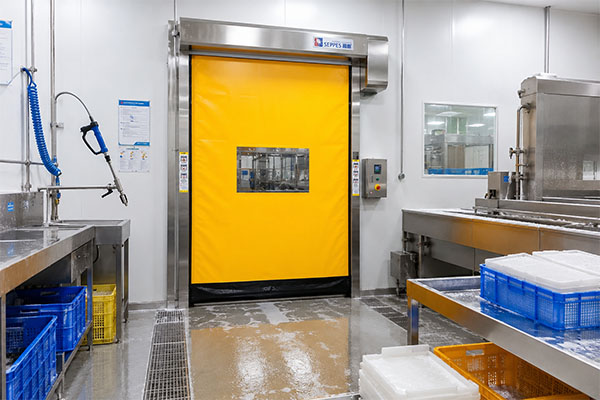
In the rigorous environment of modern food processing facilities, crate washing rooms, tray washing rooms, and box washing rooms represent some of the most challenging operational zones. Maintaining impeccable hygiene while ensuring high-speed logistics is an absolute necessity. To survive these extreme, moisture-heavy conditions, installing high-quality Stainless Steel Rapid Doors is a critical decision for food safety, operational efficiency, and regulatory compliance.
These specialized washing zones are constantly subjected to high-temperature steam, continuous water spray, and aggressive chemical sanitizers. Standard industrial doors degrade rapidly in these areas, causing severe operational bottlenecks. In this comprehensive guide, we will explore why purpose-built Stainless Steel Rapid Doors are the ultimate solution for crate and box washing environments and how they protect your facility from unexpected and costly shutdowns.
Contents
- 1 Why Crate, Tray, and Box Washing Rooms Destroy Standard Doors
- 2 5 Costly Dangers of Choosing the Wrong Door for Washing Rooms
- 3 Core Engineering Features of Stainless Steel Rapid Doors
- 4 Case Study: Conquering Corrosion in a High-Volume Crate Washing Room
- 5 ROI Analysis: Why Premium Stainless Steel Rapid Doors Save Money
- 6 FAQ: Stainless Steel Rapid Doors in Washing Rooms
Why Crate, Tray, and Box Washing Rooms Destroy Standard Doors
Crate washing rooms and tray washing areas operate under a constant barrage of water and extreme humidity. To maintain strict HACCP compliance, these specific zones undergo rigorous, high-frequency sanitation cycles every single day. This often involves high-pressure hot water washdowns mixed with harsh alkaline or chlorinated cleaning agents.
When standard industrial doors or low-grade metal doors are installed in a box washing room, their structural integrity is compromised almost instantly. Traditional guide rails trap water, leading to deep structural rust. Furthermore, standard commercial motors lack the necessary ingress protection, allowing water penetration that triggers sudden electrical short circuits and complete door failure.
Additionally, standard doors often rely on heavy felt seals or brush weatherstripping. In a constantly wet tray washing room, these porous materials absorb moisture and become breeding grounds for dangerous pathogens, directly threatening your food safety standards.
5 Costly Dangers of Choosing the Wrong Door for Washing Rooms
Failing to deploy specially engineered Stainless Steel Rapid Doors in your crate and tray washing areas can lead to severe operational and financial consequences. Here are the five most critical risks you must avoid:
1. Biofilm Formation and Cross-Contamination
In a high-traffic box washing room, airborne moisture and organic residues constantly settle on all surfaces. If a door track features hollow profiles or crevices, thorough cleaning becomes impossible. Bacteria form resilient biofilms in these hidden areas. As the door cycles, it can shed contaminated droplets onto freshly sanitized crates, causing severe cross-contamination.
2. Frequent Motor Burnouts and Production Halts
High-pressure water spray will inevitably penetrate any motor enclosure not explicitly rated for washdown environments. Standard motors quickly suffer from internal coil failure. When a door fails in a high-throughput crate washing room, the entire logistics chain grinds to a halt, costing thousands of dollars in lost productivity.
3. Structural Corrosion Leading to Audit Failures
Aggressive cleaning agents accelerate metal oxidation. Even inferior grades of stainless steel will pit and rust under continuous exposure to chlorine-based sanitizers in a tray washing room. During stringent food safety audits, any visible rust or corroded guide rails in these zones will result in immediate non-compliance penalties.
4. Condensate Buildup and Slippery Hazards
Washing rooms utilize high-temperature water, creating high-humidity microclimates. If the door separating the wet crate washing room from dry storage lacks proper sealing, severe condensate buildup occurs on the door frame. This condensation drips onto the floor, creating dangerous, slippery conditions for personnel and forklifts.
5. Skyrocketing Maintenance and Replacement Costs
A standard door placed in a box washing room requires continuous, expensive maintenance. From replacing rusted bearings to fixing waterlogged electronics, the total cost of ownership of an incorrect door quickly surpasses the initial investment of a premium hygienic door within the first year.
Core Engineering Features of Stainless Steel Rapid Doors
To effectively neutralize these risks, a Stainless Steel Rapid Doors system must be engineered with uncompromising technical standards specifically for washing environments:
Premium SUS304 or SUS316L Construction: The entire frame, roller shaft, and side guides must be constructed from solid, high-grade stainless steel. All joints should feature smooth, seamless welding to eliminate crevices where water and organic material can accumulate.
IP67 or IP69K Rated Motor Systems: The drive system must be fully sealed. An IP69K rating ensures the motor can withstand close-range, high-pressure, and high-temperature washdowns in a tray washing room without any water penetration.
Zipper-Style, Crevice-Free Guide Rails: High-performance Stainless Steel Rapid Doors utilize a continuous zipper-style edge guidance system. This eliminates the internal cavities and cables that harbor bacteria, making the entire track fully accessible for foam cleaning.
Sloped Hygienic Covers: The motor covers and top roll header must feature a sloped design to prevent water from pooling, ensuring that cleaning fluids drain away instantly after sanitation.
Case Study: Conquering Corrosion in a High-Volume Crate Washing Room
A large-scale food processing facility faced persistent headaches in its central crate washing room. Originally, they installed standard aluminum high-speed doors. Due to the daily use of chlorinated foam detergents and high-pressure water, the aluminum tracks suffered severe galvanic corrosion within eight months. The motors burned out frequently due to moisture ingress, causing massive delays in returning clean crates to the production line.
The facility upgraded to custom-engineered Stainless Steel Rapid Doors equipped with full SUS316L frames and IP69K-rated motors. Over the next 24 months of continuous operation, the plant experienced zero water-induced electrical failures, entirely eliminated rust-related contamination risks, and seamlessly passed every HACCP audit.
ROI Analysis: Why Premium Stainless Steel Rapid Doors Save Money
For procurement managers, purchasing industrial washdown doors for food plants is an exercise in lifecycle management. While standard doors have a lower upfront cost, their operational expenses skyrocket in wet washing rooms.
By investing in specialized Stainless Steel Rapid Doors, facilities secure major financial advantages:
Extended Lifespan: Built to endure decades of harsh washdown cycles.
Zero Unplanned Downtime: Reliable operation ensures the crate washing room never becomes a bottleneck.Audit Readiness: Eliminates the risk of fines and penalties associated with rust and cross-contamination.
FAQ: Stainless Steel Rapid Doors in Washing Rooms
Q1: Can these doors withstand direct high-pressure washdowns in a box washing room?
Yes, Stainless Steel Rapid Doors featuring IP69K-rated components are specifically built to withstand direct, close-range spraying with high-temperature water and chemical sanitizers without short-circuiting.
Q2: How do they prevent cross-contamination between a tray washing room and clean zones?
These doors utilize advanced zipper-guided sealing systems and non-porous curtains. Because they lack internal springs and brush seals, they do not harbor pathogens and effectively block airborne contaminants.
Q3: Is SUS304 sufficient, or do we need SUS316L for a crate washing room doors?
For standard crate washing rooms using alkaline cleaners, SUS304 offers excellent resistance. However, if your facility uses highly concentrated chlorine sanitizers or processes acidic foods, upgrading to SUS316L is highly recommended to prevent pitting corrosion.


