
Contents
- 1 Introduction
- 2 Strict Physical Barrier Requirements in cGMP Cleanrooms
- 3 Comparative Analysis: Why Are Standard Industrial Doors Prohibited in Sterile Areas?
- 4 Core Comparison: Stainless Steel Zipper High Speed Doors vs. Standard Industrial Doors
- 5 Configuration Guide for cGMP-Compliant Cleanroom Doors
- 6 Case Study: How a Multinational Pharma Eliminated Contamination Risks via Door Upgrades?
- 7 Conclusion
- 8 FAQ
Introduction
Under the cGMP (Current Good Manufacturing Practice) system, environmental control in sterile preparation workshops (such as the periphery of sterile filling lines and A/B grade cleanroom airlocks) allows for zero compromises. During facility renovations or new constructions, many enterprises attempt to use standard industrial high-speed doors outside sterile areas to save initial costs, which often leads to fatal compliance risks. This article deeply compares standard industrial doors with cleanroom high speed doors, analyzing the strict requirements for high airtightness, easy disinfection, low dust generation, and fully enclosed stainless steel structures in sterile areas.
Strict Physical Barrier Requirements in cGMP Cleanrooms
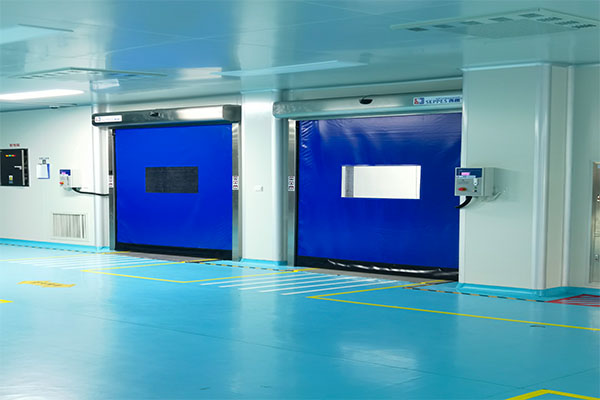
In sterile areas (especially around core filling lines), an absolute sterile state must be established and maintained. The introduction of any microorganisms or particles will lead to the rejection of the entire batch of drugs. In sterile workshops, doors have long surpassed the simple function of “passage”; they are dynamic physical barriers that maintain the pressure gradient of the HVAC system (such as stable positive pressure) and prevent cross-contamination. According to EU GMP Annex 1 and other regulations, a pressure differential of at least 10 Pa (∆P ≥ 10) must generally be maintained between adjacent areas of different classification levels.
Comparative Analysis: Why Are Standard Industrial Doors Prohibited in Sterile Areas?
1. Inadequate Airtightness Leads to Pressure Collapse
Standard industrial doors typically use brush seals or simple bottom rubber strips, which have large gaps and high air leakage rates. They simply cannot lock in indoor air during high-frequency operations. This causes the pressure differential between the sterile room (high-pressure zone) and the lower-cleanliness zone to instantly dissipate, leading to unfiltered air backflow and severe cross-contamination risks.
2. Materials Fail Cleaning Validation
Standard industrial door frames mostly use aluminum alloy or painted carbon steel. When exposed to the high-frequency VHP (Vaporized Hydrogen Peroxide) space sterilization or strong chemical disinfectants required in sterile workshops, they easily oxidize, peel, and rust. Rusting and flaking particles directly become pollution sources in the cleanroom, absolutely failing cGMP Cleaning Validation audits.
3. Structural Dead Angles Breed Microorganisms
Standard doors have complex tracks, numerous exposed screws, 90-degree dead angles, and open top shafts. These areas cannot be thoroughly wiped and disinfected, easily accumulating dust and breeding bacteria.
4. Curtain Material Generates Dust and Static
Standard industrial PVC curtains easily generate micro-dust during operational friction and lack anti-static properties, easily attracting airborne particles and destroying cleanliness levels.
Core Comparison: Stainless Steel Zipper High Speed Doors vs. Standard Industrial Doors
To intuitively demonstrate the necessity of stainless steel cleanroom doors, refer to the following core metric comparison:
| Dimension | Standard High Speed Doors | Stainless Steel Cleanroom Zipper Doors | Impact |
| Sealing Structure | Brush seals, leakage > 15% | Seamless zipper track, fully enclosed | The zipper door can stably maintain a pressure differential of ∆P ≥ 10 with low energy consumption. |
| Frame Material | Aluminum / Painted Steel | Medical-grade 304/316L SS | Stainless steel perfectly withstands VHP sterilization, preventing rust and particle generation. |
| Cleanability | Many right angles, exposed screws | Arched sloped design, smooth, no exposed screws | Eliminate accumulated water and dust to successfully pass cleaning validation. |
| Curtain Features | Standard PVC, static-prone | FDA-compliant anti-static, low-dust curtain | Prevent particulate adsorption to ensure Grade A/B cleanliness in the core zone. |
Configuration Guide for cGMP-Compliant Cleanroom Doors
high speed zipper doors for cleanroom: To ensure successful regulatory audits, enterprises should strictly configure high speed zipper doors for cleanroom according to the following standards:
1. Fully Enclosed 304/316L SS Structure:
The door frame and hood must utilize corrosion-resistant, medical-grade stainless steel with a smoothly polished surface to comprehensively withstand VHP (Vaporized Hydrogen Peroxide) fumigation.
2. Ultra-High Airtight Design:
A seamless zipper track structure must be selected to ensure full perimeter sealing, maintaining the indoor pressure gradient with low energy consumption.
3. Double-Door Interlocking:
Equip the airlock with a PLC interlocking function to ensure that “if one door is open, the other is forcibly locked,” completely cutting off airflow convection.
4. Touchless Opening:
Standardly equipped with infrared radar or touchless hand sensors (wave-to-open) to prevent bacterial transmission caused by employee hand contact.
Case Study: How a Multinational Pharma Eliminated Contamination Risks via Door Upgrades?
Background:
A multinational biopharmaceutical enterprise’s ISO Class 7 sterile filling airlock originally used standard industrial high-speed doors with brush seals. Due to high-frequency operations, the pressure monitoring system indicated frequent drops to 3 Pa (far below the 10 Pa standard). Additionally, after monthly VHP (Vaporized Hydrogen Peroxide) sterilization, noticeable white oxidation spots appeared on the aluminum alloy tracks.
Solutions:
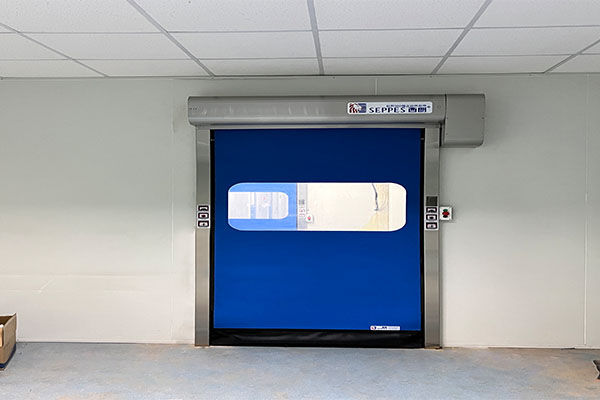
The engineering team upgraded all peripheral doors to 304 SS cleanroom zipper doors. These doors feature a fully enclosed, smooth arched track design and are integrated with a PLC double-door interlocking system boasting a response time of under 0.5 seconds.
Measurable Results:
1. 100% Pressure Compliance: Post-retrofit, the airlock pressure stabilized at 15 Pa, achieving zero pressure alarms for 12 consecutive months.
2. Energy Savings: The ultra-high airtightness significantly reduced cold air loss, slashing HVAC energy consumption by 14%.
3. Audit Success: During the subsequent FDA on-site inspection, auditors highly commended the area’s contamination barrier and Cleaning Validation reports, resulting in a flawless pass with zero non-conformities.
Conclusion
In the construction of sterile preparation workshops, door selection is a critical detail determining the success of FDA or EU GMP audits. Using standard industrial doors may seem to save initial costs but buries extremely high risks of downtime, contamination, and product recalls. Strictly following cGMP standards and choosing cleanroom high speed doors with fully enclosed 304 stainless steel structures and zipper airtightness is the wise choice to safeguard drug quality and achieve cost-efficiency.
FAQ
Q1: Can standard aluminum doors be used in Class 10,000 cleanrooms?
Not recommended. Although a Class 10,000 environment is less stringent than the sterile core zone, regular disinfection is still required. Aluminum alloys are prone to corrosion and flaking when exposed to chlorine-based disinfectants or hydrogen peroxide over the long term. From a long-term compliance perspective, adopting cleanroom high speed doors with 304 stainless steel frames is a much safer investment.
Q2: What is the special advantage of the “zipper” structure in cleanroom doors?
Traditional doors with rigid wind bars cannot fully seal against the floor, and their tracks often have gaps. The zipper track structure seamlessly nests the door curtain directly into the guide rails, bringing the air leakage rate to almost zero. Furthermore, it features a self-repairing function when accidentally impacted by carts, eliminating the risk of dust generation caused by maintenance downtime.
Q3: Will VHP sterilization damage the high-speed door’s control system?
Not if it is a dedicated cGMP cleanroom door. Its motor typically features an embedded, fully enclosed design, and the external control box utilizes a sealed stainless steel enclosure meeting IP65 or higher protection standards. Therefore, it can perfectly resist the penetration of VHP (Vaporized Hydrogen Peroxide) gases, safely protecting the internal electronic components.


