
Contents
- 1 Introduction
- 2 What Is a PVC Zipper High Speed Door?
- 3 Core Environmental Requirements of GMP Cleanrooms
- 4 Why PVC Zipper High Speed Doors Are Essential in GMP Workshops
- 5 Why Traditional Industrial Doors Fail in GMP Environments
- 6 PVC High Speed Door vs Roller Shutter Door
- 7 PVC Zipper High Speed Doors Technical Specifications (Typical)
- 8 Key Advantages of PVC Zipper High Speed Doors
- 9 Industry Application Case Study
- 10 How to Choose the Right GMP Cleanroom Door: 4 Essential Factors
- 11 Conclusion
- 12 FAQ: GMP Cleanroom Doors
Introduction
In the modern pharmaceutical manufacturing industry, GMP (Good Manufacturing Practice) standards impose extremely strict requirements on the production environment. From air cleanliness and temperature control to contamination prevention, every detail directly impacts drug safety and quality.
Under such conditions, workshop doors are no longer just passage tools—they are a critical component of cleanroom contamination control systems.
In recent years, PVC zipper High Speed doors have become the standard solution for GMP pharmaceutical workshops. Especially professional brands like SEPPES, with certifications such as CE, SGS, and CMA, are widely adopted across the industry.
So why are PVC High Speed doors essential for GMP cleanrooms? Let’s break it down.
What Is a PVC Zipper High Speed Door?
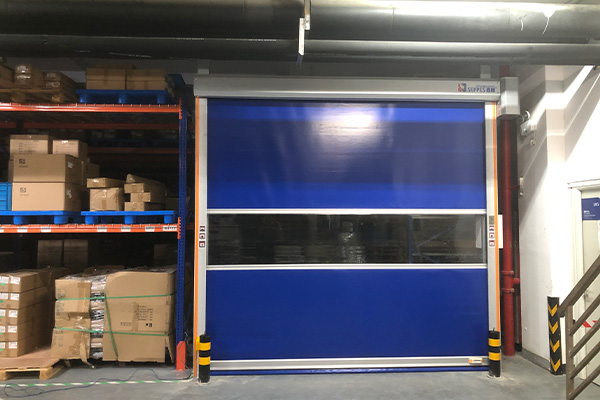
A PVC zipper High Speed door is a type of industrial door made of high-strength PVC curtain material combined with a High Speed motor system.
Key Features
High Speed operation: Opening speed of 0.8–2.0 m/s
Self-repairing zipper structure: Automatically resets after derailment
Excellent sealing performance: Blocks dust, air, and microorganisms
Easy to clean & corrosion-resistant: Ideal for pharmaceutical-grade environments Compared with traditional roller shutter doors or swing doors, it is far more suitable for high-frequency use and cleanroom environments.
Core Environmental Requirements of GMP Cleanrooms
GMP standards emphasize three key principles:
Cleanliness, Stability, and Control
1. Air Cleanliness Control
Pharmaceutical workshops must strictly control airborne dust particles and microorganisms to prevent the contamination of medicines.
2. Temperature & Humidity Stability
Many pharmaceutical manufacturing processes are extremely sensitive to temperature and humidity; environmental fluctuations may affect product quality.
3. Sealing & Isolation
Areas of different cleanliness levels must be effectively isolated to prevent cross-contamination.
Additional GMP Requirements
1.Clean zones must be classified by process
2.Pressure differentials between zones (≥5 Pa)
3.Prevention of cross-contamination
4.Structures (including doors) must be: Airtight, Easy to clean, Dust-free This means cleanroom doors must meet both functional and compliance requirements.
Why PVC Zipper High Speed Doors Are Essential in GMP Workshops
1. Improved Cleanliness Control
According to international standards, cleanrooms are typically classified in accordance with the ISO 14644 standard; for example:
ISO Class 5 (corresponding to a higher level of cleanliness)
ISO Class 7 / 8 (commonly found in pharmaceutical manufacturing facilities)
Different classifications impose strict limits on the concentration of airborne suspended particles. For instance:
ISO Class 7 Cleanroom: The number of particles ≥0.5 μm per cubic meter must not exceed 352,000.
Under these standards, the air turbulence caused by frequent door openings directly impacts the ability to maintain the required level of cleanliness; consequently, this places higher demands on both the sealing performance and the opening speed of the doors.
PVC zipper high speed doors achieve rapid opening and closing speeds, thereby significantly minimizing the duration of door openings. This reduces the frequency of air exchange and effectively prevents dust and microorganisms from entering the cleanroom area.
2. Cross-Contamination Prevention
In GMP workshops, strict isolation must be maintained between different zones (such as raw material, production, and packaging areas). PVC zipper high speed doors facilitate the separation of personnel and material flows, as well as the zoned management of cleanliness levels.
3. Increased Operational Efficiency
Traditional doors open slowly, which can easily cause logistics congestion. In contrast, PVC zipper high speed doors support high-frequency operation, making them ideal for environments involving the frequent movement of forklifts and automated equipment, thereby significantly boosting overall efficiency.
4. Energy Savings
Rapid closing speeds and superior sealing performance effectively minimize the loss of conditioned air—whether cooled or heated—thereby reducing energy consumption and, over the long term, generating substantial operational cost savings.
From the perspective of industry standards—ranging from GMP guidelines to standards governing cleanroom design (such as ISO 14644, GB/T 16292, etc.)—there is a consistent emphasis on controlling airflow pathways, minimizing the ingress of external contaminants, and maintaining a stable operational environment within clean zones.Consequently, in practical engineering applications, the performance of “doors”—particularly their sealing integrity and opening efficiency—emerges as a critical factor influencing the effectiveness of contamination control.
Why Traditional Industrial Doors Fail in GMP Environments
In accordance with relevant GMP regulations, structural components within cleanroom areas must possess the following characteristics: smooth surfaces that neither generate nor accumulate dust; ease of cleaning and disinfection; and excellent sealing capabilities.
However, traditional roller shutters or standard industrial doors often struggle—due to their structural design—to fully satisfy these requirements, thereby presenting significant limitations within high-standard pharmaceutical environments.
Although traditional industrial doors offer lower initial costs, they exhibit distinct shortcomings within a GMP setting: slow opening speeds, which heighten the risk of airborne contamination; poor sealing performance, rendering them ineffective at isolating dust and bacteria; complex structural designs prone to dust accumulation, making them difficult to clean; and high maintenance costs, as frequent malfunctions disrupt production operations.In contrast, PVC zipper high speed doors demonstrate clear advantages in terms of both cleanliness and operational stability.
PVC High Speed Door vs Roller Shutter Door
| Feature | PVC Zipper High Speed Door | Traditional Roller Door |
| Opening Speed | 0.8–2.0 m/s | 0.15–0.3 m/s |
| Sealing | High (airtight) | Low |
| Cleanroom Suitability | GMP compliant | Not suitable |
| Contamination Control | Strong | Weak |
| Self-repair | Yes | No |
| Maintenance Cost | Low | Higher |
| Energy Efficiency | Excellent | Poor |
PVC Zipper High Speed Doors Technical Specifications (Typical)
Opening speed: 0.8–2.0 m/s
Closing speed: 0.6–1.5 m/s
Daily cycles: 500–800 times
Lifespan: ≥1,000,000 cycles
PVC thickness: 0.8–2.0 mm
Temperature range: -30°C to +70°C
Motor: 0.75KW / 1.5KW
Power supply: 220V / 50Hz
Safety: Infrared sensors + safety airbag Wind resistance: Level 6–8
Key Advantages of PVC Zipper High Speed Doors
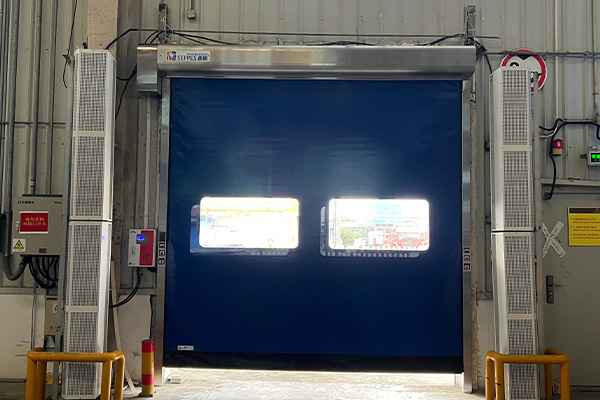
As a renowned brand within the industry, SEPPES offers mature solutions for pharmaceutical cleanroom environments. Its products feature the following advantages:
1. Multiple Authoritative Certifications
Certified by 15 authoritative bodies—including CE, SGS, and CMA—the products comply with both international and domestic quality and safety standards, making them suitable for high-standard pharmaceutical settings.
2. Self-Repairing Zipper Technology
Should the door curtain be dislodged from its tracks due to external impact, it automatically resets to its original position, thereby minimizing maintenance time and costs.
3. High-Sealing Structural Design
Utilizing a fully sealed zipper guide rail system, the design effectively prevents air leakage and ensures stable pressure within the cleanroom.
4. High Durability and Wind Resistance
Engineered for high-frequency usage environments, the products boast a long service life and can operate stably for an average of 500 to 800 cycles per day.
5. Customizable Cleanroom Solutions
Solutions can be tailored to meet specific GMP grade requirements, allowing for the customization of door frame materials (aluminum alloy or 304 stainless steel), control systems, and sealing grades.
Industry Application Case Study
Case: Cleanroom Renovation Project at a Medium-Sized Pharmaceutical Enterprise in East China
Project Background:
This enterprise specializes in the production of oral solid dosage forms. The original workshop was constructed in compliance with GMP standards; however, during actual operations, the workshop’s passageways utilized traditional roller shutter doors. As production capacity increased, several issues gradually emerged:
Frequent opening of logistics passageways resulted in significant air turbulence.
Pressure differentials within the clean zones experienced substantial fluctuations (varying by approximately ±8 Pa).
Forklift traffic efficiency was low, leading to waiting times during peak hours.
During annual GMP internal audits, observations were repeatedly raised indicating that there was “room for optimization in isolation and control measures.”
Renovation Solution:
PVC zipper high speed doors were installed in the main passageways connecting the raw materials area with the production and packaging areas. The renovation focused on optimizing the following key aspects:
Door opening speed (increased to approximately 1.2 m/s).
Door frame sealing structure.
Automatic sensing control system (utilizing a combination of magnetic loops and radar sensors).
Implementation Results (After approximately 3 months of operation):
Pressure differential fluctuations within the clean zones were successfully controlled within ±3 Pa.
The stability of air cleanliness within the workshop improved significantly.
Logistics traffic efficiency increased by approximately 20%–30%.
HVAC energy consumption decreased by approximately 15% compared to pre-renovation levels (based on monthly statistics).
Project Summary:
This project demonstrates that in scenarios involving high-frequency traffic, optimizing door structure and opening mechanisms can effectively enhance environmental stability and operational efficiency—all without requiring modifications to the overall cleanroom system.
How to Choose the Right GMP Cleanroom Door: 4 Essential Factors
1. Material Compliance for GMP Standards
To meet the stringent requirements of pharmaceutical and food manufacturing, always prioritize cleanroom doors made from pharmaceutical-grade or food-grade PVC. These specialized materials are not only durable but also highly resistant to harsh chemical cleaners. Using compliant materials prevents cross-contamination from the source, ensuring your production environment remains sterile and strictly adheres to GMP certification standards.
2. Advanced Smart Control Systems
Operational efficiency is crucial in modern cleanrooms. Choose high-speed doors equipped with advanced automation technologies, such as radar sensors and magnetic loop detectors. By integrating seamlessly with your facility’s automated production lines, these smart doors enable touchless entry, significantly reducing door open times and minimizing the risk of airborne particle infiltration.
3. Superior Air Sealing Performance
A high-quality cleanroom door must provide exceptional airtightness to maintain environmental integrity. Look for precision-engineered designs that guarantee zero gaps between the door curtain, side frames, and the floor. Superior sealing performance is essential for preventing air leakage, maintaining necessary positive or negative room pressure, and effectively blocking dust, moisture, and insects.
4. Partner with a Certified and Experienced Manufacturer
The long-term reliability of your industrial doors depends heavily on your supplier. Partner with certified manufacturers who possess deep industry expertise and proven success cases in factory renovations and new facility constructions. Working with an experienced brand guarantees not only premium product quality but also professional installation and reliable after-sales support, maximizing your return on investment.
Conclusion
All things considered, PVC zipper high speed doors are no longer merely a “recommended feature,” but rather an “essential facility” for GMP pharmaceutical workshops. Their comprehensive advantages—spanning cleanroom control, efficiency enhancement, and energy conservation—make them an indispensable component of modern pharmaceutical manufacturing plants.
Brands such as SEPPES—which possess international certifications and mature technological expertise—are particularly well-positioned to provide enterprises with solutions that are reliable, safe, and fully compliant with regulatory standards.If you are currently planning or upgrading a GMP pharmaceutical workshop, selecting a high-quality PVC zipper high speed door represents a crucial step toward elevating your overall production environment.


