
The raw material receiving area of a food processing plant is the very first entry point of the entire production process. Every day, trucks, forklifts, pallets, raw material packaging, and personnel pass through the loading dock to enter the facility. This area may seem like just a logistics corridor, but it actually directly impacts food safety, pest control, temperature stability, and production efficiency.
If the loading dock doors are left open for too long, outdoor dust, flying insects, hot air, moisture, and contaminants can enter the internal environment. For companies in meat, seafood, dairy, frozen food, bakery, and fruit & vegetable processing, this not only increases operating costs but can also become a critical risk point during facility audits.
Therefore, an increasing number of food processing facilities are beginning to use high speed rigid doors in their raw material receiving areas and loading docks.
Contents
- 1 Why the Raw Material Receiving Area Is a Critical Control Point
- 2 Common Problems at Food Processing Loading Docks
- 3 Why high speed rigid doors Are Suitable for Raw Material Loading Docks
- 4 Rigid High Speed Door vs PVC High Speed Door: Which Is Better for Loading Docks?
- 5 Key Benefits of high speed rigid doors for Food Loading Docks
- 6 Best Application Scenarios in Food Processing Plants
- 7 How to Choose the Right Rigid High Speed Door
- 8 FAQ
- 8.1 Q1: Why are loading dock doors important in food processing plants?
- 8.2 Q2: Is a rigid high-speed door better than a PVC high-speed door for loading docks?
- 8.3 Q3: Can high speed rigid doors help prevent insects in food factories?
- 8.4 Q4: Are high speed rigid doors suitable for cold chain loading docks?
- 8.5 Q5: What should be considered when choosing a food factory loading dock door?
Why the Raw Material Receiving Area Is a Critical Control Point
The raw material receiving area is more than just a physical pathway; it connects external transport vehicles with the internal food production environment. Because raw materials, personnel, and forklifts all enter through here, it naturally becomes a high-risk zone for contamination, pests, temperature fluctuations, and cross-contamination.
During food plant audits, access control, pest management, and hygienic separation are closely scrutinized. Facility managers must realize: a loading dock is not an ordinary doorway; it is a food safety boundary.
Common Problems at Food Processing Loading Docks
In daily operations, food processing enterprises typically face the following five major challenges at their loading docks:
1. Dust and Outdoor Contaminants Enter the Facility
Frequent logistics activities can easily bring dust, particulate matter, packaging debris, and vehicle-borne contaminants indoors.
2. Pests Can Enter Through Open Dock Doors
Open doorways provide perfect access for flying insects, birds, and rodents. Especially in summer, the pest risk skyrockets.
3. Temperature Loss Increases Energy Costs
Slow doors lead to massive cold air loss and severe temperature fluctuations, causing condensation issues and overloading refrigeration systems.
4. Slow Doors Reduce Unloading Efficiency
The slow opening speed of traditional roller shutters causes forklift wait times, truck delays, and ultimately, dock congestion.
5. Poor Sealing May Affect Audit Readiness
Poor door sealing can be a major point deduction during HACCP, GMP, BRC, IFS, client audits, and third-party inspections.
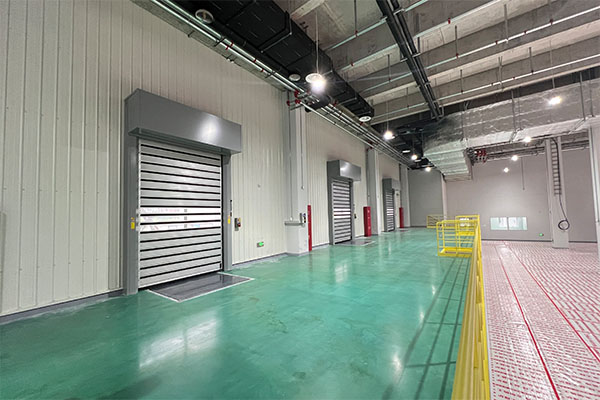
Why high speed rigid doors Are Suitable for Raw Material Loading Docks
Facing these complex operational pain points, the High speed rigid door for food processing demonstrates exceptional adaptability. Here is how high speed rigid doors precisely solve loading dock problems:
Doors open for too long: Provides rapid opening and closing capabilities.
Outdoor dust entering: Shortens exposure time and improves overall sealing.
Pest risks: Closes quickly, minimizing entry opportunities for insects and rodents.
Cold air loss: Significantly reduces hot and cold air exchange.
High wind loads: Rigid aluminum panels offer wind resistance far superior to standard doors.
High security required for exterior doors: Aluminum slats are much stronger and provide anti-theft capabilities.
Frequent forklift traffic: Equipped with automatic sensors to dramatically improve traffic efficiency.
Rigid High Speed Door vs PVC High Speed Door: Which Is Better for Loading Docks?
Should a food plant loading dock use PVC high-speed doors or rigid high-speed doors? This is a common question for facility managers during equipment selection.
PVC High Speed Doors are suitable for:
Internal workshop passages; cleanroom isolation; packaging areas; ambient temperature logistics corridors; indoor high-frequency traffic areas.
Rigid High Speed Doors are suitable for:
Raw material loading docks; exterior entrances; high wind pressure zones; cold chain unloading docks; areas requiring higher security; doorways connecting outdoors to indoors.
For internal workshop separation, a PVC high-speed door is often enough. But for external loading docks in food processing plants, a rigid high-speed door is usually a more durable and reliable choice.
Key Benefits of high speed rigid doors for Food Loading Docks
By upgrading to rigid high-speed doors, your raw material receiving area will gain the following core benefits:
1. Better Environmental Separation:
Effectively isolates the outdoor and indoor environments, maintaining the purity of the production area.
2. Improved Pest Control:
Dramatically reduces the chances of flying insects, birds, and contaminants entering.
3. More Stable Temperature Control:
Provides reliable temperature guarantees for cold chain, refrigerated, and temperature-controlled zones.
4. Higher Unloading Efficiency:
Accommodates fast, seamless forklift traffic, improving overall logistics turnover rates.
5. Stronger Wind Resistance and Durability:
Easily handles severe weather conditions, making it a perfect fit for exterior doorways.
6. Better Support for Food Safety Audits:
When properly selected and installed, this door can strongly support food safety management and audit readiness.
Best Application Scenarios in Food Processing Plants
To achieve the best balance of separation and efficiency, high speed rigid doors are widely applicable in the following key areas:
Raw material receiving area
Loading dock entrance
Cold storage loading dock
Frozen food unloading area
Meat processing plant receiving dock
Dairy plant raw material entrance
Seafood processing loading area
Fruit and vegetable processing facility
Central kitchen receiving area
Packaging material receiving dock
How to Choose the Right Rigid High Speed Door
When choosing a rigid high-speed door for a food plant loading dock, the following engineering details should be considered:
- Doorway size and opening frequency
- Whether it connects to a refrigerated area
- Whether there is high wind pressure
- Forklift traffic volume
- Whether radar, ground loop, or pull-cord sensors are needed
- Whether insulated door panels are required
- Whether integration with dock levelers, dock seals, air curtains, or interlocking systems is needed
- Whether anti-collision protection is necessary
A customized, high-performance door system not only solves current pain points but also reduces long-term operating costs.
FAQ
Q1: Why are loading dock doors important in food processing plants?
A1: Because they connect the outdoor transport environment with internal food processing/storage areas, making them critical control points for contamination, pests, and temperature fluctuations.
Q2: Is a rigid high-speed door better than a PVC high-speed door for loading docks?
A2: Generally speaking, exterior loading docks are more suited for high speed rigid doors due to their superior wind resistance, security, and durability; PVC high-speed doors are better for indoor separation passages.
Q3: Can high speed rigid doors help prevent insects in food factories?
A3: Yes. They reduce the chances of flying insects entering through rapid closing and excellent sealing, though they should typically be combined with dock seals, air curtains, pest monitoring, and sanitation management.
Q4: Are high speed rigid doors suitable for cold chain loading docks?
A4: Yes, especially for loading docks connecting to refrigerated or temperature-controlled zones. Rigid doors with insulated panels effectively reduce hot and cold air exchange, helping maintain temperature stability.
Q5: What should be considered when choosing a food factory loading dock door?
A5: You should consider doorway size, opening frequency, temperature control requirements, wind pressure, forklift traffic, sealing needs, safety systems, and automatic sensing methods.


