
Contents
- 1 High Speed Doors Selection Guide for Food Receiving and Unloading Areas
- 2 Why High Speed Doors Matter in Food Receiving Areas
- 3 Main Challenges in Food Processing Receiving and Unloading Areas
- 3.1 1. Temperature Loss During Unloading
- 3.2 2. Dust, Insects and Outdoor Air Entering the Plant
- 3.3 3. Cross Contamination Between Dirty and Clean Zones
- 3.4 4. Forklift Impact and Frequent Traffic
- 3.5 5. Wet, Humid or Washdown Conditions
- 3.6 6. Energy Loss and Operating Cost
- 3.7 7. Food Safety Audit and Compliance Pressure
- 4 How to Choose the Right High Speed Doors for Each Food Plant Area
- 5 Door Selection Table for Food Receiving and Unloading Areas
- 6 Checklist Before Buying High Speed Doors for Food Facilities
- 7 Common Mistakes When Choosing Food Factory Doors
- 8 Recommended Door Solutions by Food Processing Application
- 9 Conclusion
- 10 FAQ About High Speed Doors for Food Processing Areas
- 10.1 1. What type of high speed doors are best for food receiving areas?
- 10.2 2. Are insulated high speed doors necessary for cold chain unloading areas?
- 10.3 3. Can high speed doors help with pest control in food plants?
- 10.4 4. What is the difference between PVC and zipper high speed doors?
- 10.5 5. Which high speed doors are suitable for meat and seafood processing?
- 10.6 6. Are rigid high speed doors suitable for food factories?
- 10.7 7. How do I choose between high speed doors and traditional sectional doors?
High Speed Doors Selection Guide for Food Receiving and Unloading Areas
High speed doors are one of the most important door solutions for food processing receiving areas, where hygiene, temperature control, traffic flow and pest prevention must be balanced every day. In a food factory, the raw material receiving area and unloading dock are not ordinary entrances. They are the point where outdoor logistics, trucks, pallets, forklifts, raw ingredients and controlled production environments meet.
If the wrong door is installed in this area, the result may be more than inconvenience. Slow opening doors can increase air exchange, cold air loss, dust entry, insect risk, condensation and forklift waiting time. For meat, seafood, dairy, frozen food, beverage and vegetable processing facilities, these problems may directly affect production efficiency, energy use and food safety management.
That is why choosing the right high speed doors for food processing facilities should not be based only on price or door size. A better selection process should consider traffic frequency, temperature difference, cleaning method, sealing requirement, impact risk, hygiene level and the location of the opening.This guide explains how to select the right industrial doors for food receiving and unloading areas, including PVC high speed doors, zipper high speed doors, insulated high speed doors, rigid high speed doors and other rapid door solutions.
Why High Speed Doors Matter in Food Receiving Areas
In food receiving areas, high speed doors are not only used for access control. They help reduce the time that openings remain exposed, which supports hygiene control, temperature stability, pest prevention and smoother forklift traffic.
Food receiving and unloading areas often face several challenges at the same time:
Trucks may arrive from outdoor environments.
Forklifts may pass through the door many times per hour.
Raw materials may need temperature control.
The area may be close to clean processing zones.
The door may be exposed to dust, wind, rain, insects or humidity.
The facility may need to support food safety audits and sanitation programs.
Food safety regulations and good manufacturing practice principles emphasize the importance of preventing contamination, reducing allergen cross-contact and protecting food-contact or food-packaging areas from external risks. FDA 21 CFR Part 117 includes requirements related to reducing contamination risks, protecting against allergen cross-contact, maintaining sanitary conditions and controlling potential hazards in food facilities. (Electronic Code of Federal Regulations)A door cannot replace a complete food safety system. However, the right high speed doors can support a cleaner, more stable and more efficient receiving environment.
Main Challenges in Food Processing Receiving and Unloading Areas
1. Temperature Loss During Unloading
Temperature control is one of the biggest concerns in food processing plants. When a door stays open too long, cold air escapes and warm air enters the facility. This can increase the workload of refrigeration or HVAC systems and make it harder to maintain stable conditions.
For cold chain logistics, frozen food warehouses, meat processing plants and seafood receiving areas, insulated high speed doors are often a better choice than standard roll up doors. These doors combine fast opening speed with improved thermal separation.
Recommended solutions include:
- insulated rapid doors for cold chain logistics
- freezer fast doors
- thermal insulated rapid roll up doors
- speed doors with tight side sealing
- door systems combined with dock shelters or air curtains
For temperature-sensitive receiving areas, the goal is not only to close the door quickly, but also to reduce air leakage around the opening.
2. Dust, Insects and Outdoor Air Entering the Plant
The unloading dock is usually close to the outdoor environment. When the door remains open, insects, dust, odor, humidity and outdoor air may enter the plant. This is especially important for food factories that handle exposed ingredients, raw meat, seafood, dairy products or ready-to-eat food packaging.
A well-designed rapid door can help reduce opening exposure time. For many general receiving areas, PVC rapid doors are a practical solution because they open and close quickly, support frequent traffic and provide better separation than slow manual doors or conventional roller shutters.
Recommended solutions include:
- PVC rapid for food plants
- automatic high speed roll up doors
- self-repairing high speed zipper doors
- dock shelter and rapid door combinations
- rapid doors with radar sensor or loop detector activation
For better pest control, the door should also work together with dock seals, air curtains, lighting control, sanitation procedures and facility pest management programs.
3. Cross Contamination Between Dirty and Clean Zones
In many food facilities, the raw material receiving area is considered a higher-risk zone because it connects to trucks, pallets, packaging materials and external suppliers. The processing room, clean corridor, packaging room or cold storage zone may require a higher level of environmental control.
This is where high speed doors can support zone separation. By closing quickly after each forklift or worker passes through, they help reduce unnecessary airflow between dirty and clean zones.
For areas near clean rooms or hygienic corridors, high speed zipper doors are often preferred because they provide better sealing than standard PVC roll up doors. In some facilities, two doors may be used as an interlocked airlock system, where one door closes before the other opens.
Recommended solutions include:
- rapid doors for cleanroom food processing areas
- self-repairing high speed zipper doors
- interlocked fast door systems
- hygienic fast doors for food factories
- rapid doors for airlock rooms
For food safety audits, it is useful to explain how each door supports separation between raw material flow, personnel flow and finished product areas.
4. Forklift Impact and Frequent Traffic
Forklift impact is one of the most common problems in receiving and unloading areas. Drivers may be moving quickly, pallets may be oversized, and traffic can be heavy during peak unloading times. A traditional door may be damaged after repeated impact, leading to downtime, repair cost and safety concerns.
Self-repairing zipper high speed doors are designed for high-traffic areas where accidental impact may happen. When the curtain is hit, it can often return to the side guide system automatically, reducing downtime compared with conventional curtain doors.
Recommended solutions include:
- self-repairing high speed zipper doors
- PVC high speed doors with flexible curtain
- rapid roll up doors with soft bottom edge
- rapid roll up doors with photo eyes and safety sensors
- doors with radar, loop detector or remote control activation
For forklift-heavy areas, door width, opening height, activation method and safety system should be selected carefully. The goal is to reduce collision risk before it happens.
5. Wet, Humid or Washdown Conditions
Food processing environments may involve water, steam, cleaning chemicals or high humidity. Meat, seafood and vegetable processing facilities often require regular cleaning and sanitation. In these environments, the door frame, motor cover, curtain, control box and hardware should be selected with corrosion resistance and cleanability in mind.
For wet areas, stainless steel roll up doors or hygienic zipper doors may be more suitable. The curtain should be easy to clean, and the structure should avoid unnecessary dirt-trapping areas.
Recommended solutions include:
- stainless steel hygienic roll up doors
- washdown area PVC rapid doors
- zipper doors with washable curtain
- waterproof motor cover options
- corrosion-resistant components
For food factories, a door is not only a moving barrier. It is part of the sanitation environment. A door that is difficult to clean may become a weak point in daily hygiene management.
6. Energy Loss and Operating Cost
Many food plants focus on the purchase price of industrial doors, but the long-term cost is often related to energy loss, maintenance, downtime and production interruptions. Slow doors may stay open longer than necessary, especially when forklifts move frequently between storage, unloading and processing areas.
Energy saving rapid doors can reduce unnecessary air exchange by closing quickly after each passage. In cold storage or temperature-controlled receiving areas, insulated high speed doors may further reduce heat transfer.
Important factors include:
- opening and closing speed
- sealing performance
- curtain thickness
- insulation value
- activation system
- door cycle frequency
- maintenance accessibility
For facilities with heavy traffic, automatic high speed doors can also improve workflow because forklift drivers do not need to stop, wait or manually operate the door.
7. Food Safety Audit and Compliance Pressure
Food manufacturers often need to show that their facility design supports hygiene, pest control, separation and cleaning. The door selected for a receiving area should make sense from an operational and food safety perspective.
A weak door choice may create questions during internal audits or customer visits:
- Does the door stay open too long?
- Can insects or dust enter easily?
- Is the door suitable for wet cleaning?
- Does it separate raw material areas from clean zones?
- Is it frequently damaged by forklifts?
- Does it affect temperature control?
- Is it easy to inspect and maintain?
The best high speed doors are not selected only because they are fast. They are selected because they match the risk level of the area
How to Choose the Right High Speed Doors for Each Food Plant Area
PVC High Speed Doors for General Receiving Areas
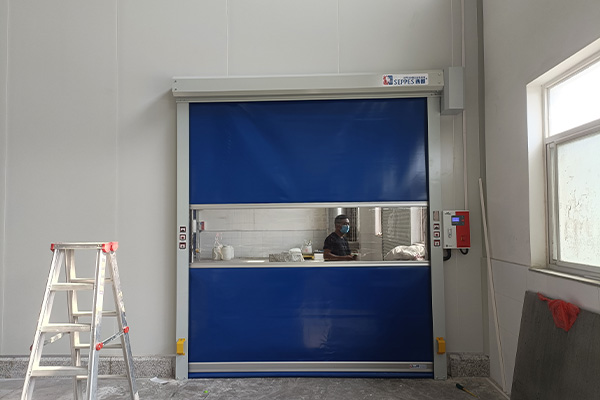
PVC high speed doors are commonly used in food processing plants, warehouses and internal logistics passages. They are suitable for areas with frequent forklift traffic, moderate hygiene requirements and normal temperature conditions.
Best for:
- general raw material receiving areas
- internal logistics passages
- packaging material storage entrances
- dry food processing areas
- warehouse-to-production transitions
Main advantages:
- fast opening and closing
- flexible PVC curtain
- good visibility options
- lower cost than insulated or rigid doors
- suitable for frequent operation
PVC roll up doors are a good option when the main purpose is improving traffic efficiency and reducing door opening time.
Zipper High Speed Doors for Hygienic and Impact-Prone Areas
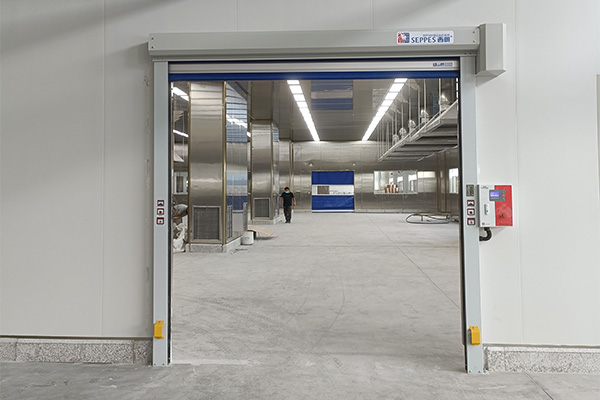
Self-repairing zipper high speed doors are suitable for areas where sealing, hygiene and impact recovery are important. The zipper structure helps improve side sealing, while the self-repairing design helps reduce downtime after accidental forklift contact.
Best for:
- food factory clean corridors
- airlock rooms
- high-frequency forklift passages
- areas with pressure difference
- meat and seafood processing transitions
- hygienic production zones
Main advantages:
- better sealing performance
- self-repairing curtain system
- reduced maintenance downtime
- suitable for high traffic
- good option for clean zone separation
For facilities that need both hygiene control and impact resistance, zipper high speed doors are often more suitable than standard PVC roll up doors.
Insulated High Speed Doors for Cold Chain Areas
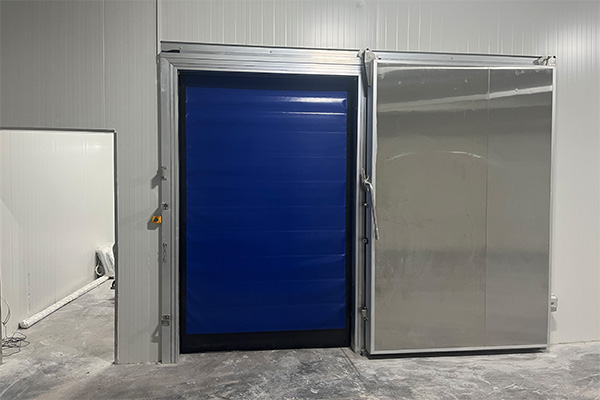
Insulated high speed doors are designed for areas with temperature differences. In food processing plants, they are often used in cold rooms, refrigerated receiving areas, frozen food warehouses and temperature-controlled unloading docks.
Best for:
- cold chain logistics areas
- refrigerated raw material receiving rooms
- frozen food storage entrances
- dairy processing facilities
- meat and seafood cold storage areas
Main advantages:
- improved thermal separation
- reduced cold air loss
- better energy efficiency
- fast opening for forklift traffic
- improved temperature stability
When selecting insulated high speed doors, buyers should consider the required temperature range, condensation risk, door size, opening frequency and sealing system.
Rigid High Speed Doors for Exterior Entrances
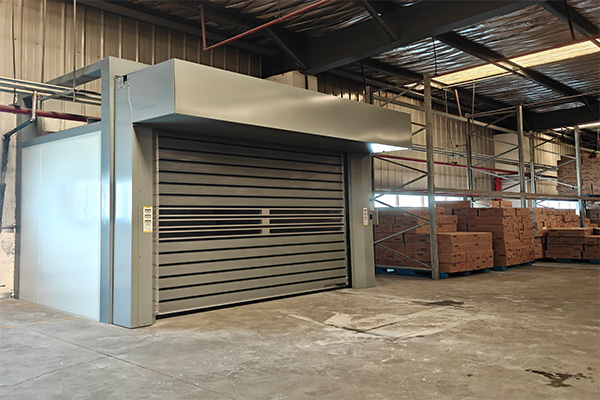
Rigid high speed doors are often used for external openings where wind resistance, security and durability are important. Unlike flexible PVC doors, rigid doors usually use aluminum or metal panels and are suitable for exterior building entrances.
Best for:
- exterior factory entrances
- logistics center openings
- high-wind areas
- areas requiring higher security
- loading zones exposed to outdoor weather
Main advantages:
- stronger structure
- better wind resistance
- improved security
- suitable for exterior use
- durable panel system
For food factories with outdoor-facing receiving doors, rigid high speed doors can be a better choice than flexible curtain doors, especially when wind load and security are major concerns.
Stacking High Speed Doors for Large Openings
Stacking high speed doors are suitable for large openings, heavy-duty industrial use and strong wind environments. They are often used in large warehouses, logistics centers, agricultural processing facilities and oversized equipment access areas.
Best for:
- large food warehouse openings
- high-wind exterior entrances
- wide logistics passages
- large raw material transfer areas
- heavy-duty industrial facilities
Main advantages:
- suitable for large door openings
- strong wind resistance
- reinforced curtain structure
- stable operation in demanding environments
If the opening is very wide or exposed to outdoor wind, stacking doors may be more reliable than standard roll up doors.
Door Selection Table for Food Receiving and Unloading Areas
| Application Area | Recommended Door Type | Why It Works |
| General raw material receiving area | PVC high speed doors | Fast operation, suitable for frequent forklift traffic |
| Loading dock area | High speed doors with dock shelter | Reduces outdoor air exchange during unloading |
| Cold chain receiving area | Insulated high speed doors | Helps reduce cold air loss and temperature fluctuation |
| Frozen food storage entrance | Freezer high speed doors | Supports low-temperature operation and better sealing |
| Meat and seafood processing area | Stainless steel hygienic high speed doors | Better for humid, wet and washdown environments |
| Cleanroom transition area | Self-repairing zipper high speed doors | Better sealing and zone separation |
| Forklift impact-prone area | Zipper high speed doors | Self-repairing system reduces downtime |
| Exterior factory entrance | Rigid high speed doors | Better wind resistance, security and durability |
| Large warehouse opening | Stacking high speed doors | Suitable for wide openings and heavy-duty use |
Checklist Before Buying High Speed Doors for Food Facilities
Before selecting high speed doors for a food receiving or unloading area, check the following factors:
- What is the door opening size?
- Is the door used indoors or outdoors?
- How many times will the door open per hour?
- Will forklifts, pallet trucks or workers pass through?
- Is the area dry, wet, humid or washdown?
- Is there a temperature difference between both sides?
- Does the area need cold chain control?
- Is the door close to a clean processing zone?
- Is there a high risk of forklift impact?
- Is wind resistance required?
- What type of activation is needed: radar, loop detector, pull cord or remote control?
- Are safety sensors required?
- Does the door need stainless steel components?
- Will the door need to work with a dock shelter, air curtain or interlock system?
- What maintenance access is available?
This checklist helps buyers choose high speed doors based on real operating conditions instead of only comparing price.
Common Mistakes When Choosing Food Factory Doors
Mistake 1: Choosing Only by Price
A cheaper door may cost more in the long term if it causes energy loss, downtime, hygiene issues or frequent repairs. Food processing facilities should compare total operating cost, not only purchase cost.
Mistake 2: Using Standard Doors in Cold Chain Areas
A standard PVC rapid door may not provide enough thermal separation for cold storage or frozen food areas. For temperature-controlled zones, insulated high speed doors are often more suitable.
Mistake 3: Ignoring Forklift Impact
If the receiving area has heavy forklift traffic, impact resistance should be considered from the beginning. Self-repairing zipper high speed doors can reduce repair frequency in impact-prone areas.
Mistake 4: Forgetting Cleaning Requirements
In wet or washdown environments, the door structure should be easy to clean and corrosion-resistant. Stainless steel frames and waterproof components may be necessary for meat, seafood or vegetable processing areas.
Mistake 5: Treating Every Door Opening the Same
Different areas have different risks. A loading dock, cleanroom corridor, cold storage entrance and exterior factory opening may all require different high speed doors.
Recommended Door Solutions by Food Processing Application
Meat Processing Plants
Meat receiving areas often require temperature control, easy cleaning and good separation from processing zones. Insulated high speed doors may be suitable for cold areas, while stainless steel zipper doors may be used near hygienic corridors or washdown areas.
Seafood Processing Plants
Seafood facilities often face humidity, water, odor and temperature control challenges. Hygienic high speed doors with corrosion-resistant components are recommended. For cold receiving areas, insulated rapid doors may help reduce cold air loss.
Dairy Processing Facilities
Dairy plants often need clean separation, controlled temperature and smooth logistics flow. Zipper high speed doors can be used for controlled transitions, while insulated high speed doors may be used in cold chain areas.
Frozen Food Warehouses
Frozen food warehouses need strong temperature separation. Freezer high speed doors or insulated high speed doors are usually better than standard PVC doors. Anti-condensation design and sealing performance should be considered.
Vegetable and Fruit Processing Areas
These areas may involve humidity, washdown, packaging materials and frequent logistics. PVC high speed doors or stainless steel hygienic doors can be selected depending on cleaning requirements and traffic frequency.
Packaging and Clean Transition Areas
For areas connecting production to packaging or clean corridors, self-repairing zipper high speed doors may provide better sealing, smoother traffic and improved separation between zones.
Conclusion
Choosing the right high speed doors for food receiving and unloading areas is not only about opening speed. It is about hygiene control, temperature stability, energy efficiency, forklift safety, maintenance cost and food safety risk management.
For general receiving areas, PVC high speed doors may be enough. For clean or impact-prone areas, self-repairing zipper high speed doors are a better choice. For refrigerated and frozen zones, insulated high speed doors help reduce cold air loss. For exterior entrances, rigid high speed doors provide stronger wind resistance and security.
Every food processing facility has different requirements. Before choosing a door, evaluate the opening size, traffic frequency, temperature difference, cleaning method, sealing requirement, impact risk and hygiene level.
Need help selecting the right high speed doors for your food receiving or unloading area? Send us your door opening size, temperature range, traffic frequency and cleaning requirements. Our team can recommend a suitable door solution for your food processing facility.
FAQ About High Speed Doors for Food Processing Areas
1. What type of high speed doors are best for food receiving areas?
The best choice depends on the operating environment. PVC high speed doors are suitable for general receiving areas. Insulated high speed doors are better for cold chain areas. Self-repairing zipper high speed doors are suitable for high-traffic, hygienic or impact-prone areas.
2. Are insulated high speed doors necessary for cold chain unloading areas?
Yes, insulated high speed doors are recommended when the receiving or unloading area connects to refrigerated or frozen storage zones. They help reduce cold air loss and support temperature stability.
3. Can high speed doors help with pest control in food plants?
High speed doors cannot replace a complete pest control program, but they can reduce the time that openings remain exposed. When combined with dock shelters, air curtains, sanitation and pest management procedures, they can support better environmental control.
4. What is the difference between PVC and zipper high speed doors?
PVC high speed doors are suitable for general high-frequency passages. Zipper high speed doors provide better sealing and usually have a self-repairing design, making them more suitable for clean zones, impact-prone areas and areas requiring improved separation.
5. Which high speed doors are suitable for meat and seafood processing?
PVC high speed doors are suitable for general high-frequency passages. Zipper high speed doors provide better sealing and usually have a self-repairing design, making them more suitable for clean zones, impact-prone areas and areas requiring improved separation.
6. Are rigid high speed doors suitable for food factories?
Yes. Rigid high speed doors are suitable for exterior entrances, high-wind areas and locations requiring higher security. They are often used at factory exterior openings or logistics entrances.
7. How do I choose between high speed doors and traditional sectional doors?
Traditional sectional doors may be suitable for low-frequency access, but high speed doors are better for areas with frequent forklift traffic, hygiene control, temperature separation or energy-saving requirements.


