
Contents
Introduction
In the bottle-washing rooms, equipment cleaning areas of pharmaceutical plants, or food processing washdown zones, the environment is chronically exposed to extreme humidity. To meet strict hygiene standards, these areas require daily high-pressure washdowns using hot water and potent chemical cleaners. Under such harsh conditions, a reliable High Speed Door is crucial for maintaining workshop cleanliness and production efficiency. Standard aluminum or carbon steel industrial doors will rust and peel within months in such environments, and their motors are highly susceptible to water-induced short circuits. This article deeply analyzes why a high-speed door equipped with a 304 stainless steel frame and a high IP rating is the only compliant and long-lasting choice in extreme wet and hot conditions.
Extreme Challenges for Doors in Washdown Areas
Truly compliant pharmaceutical engineering design must directly confront the destructive forces inherent in actual operating conditions. In equipment washing areas (CIP/COP rooms), doors typically face the following three critical threats:
1. High-Pressure Hot Water Washdowns
Daily equipment washing generates massive amounts of hot steam, and high-pressure water jets often spray directly onto the door surface. The gaps in standard doors easily allow moisture to seep into mechanical bearings, leading to lubrication failure and metal rusting.
2. Chemical Corrosion
The pharmaceutical and food industries frequently use 70% Isopropyl Alcohol (IPA), Vaporized Hydrogen Peroxide (VHP), or sodium hypochlorite (chlorine disinfectants). These strong oxidants cause irreversible peeling of painted coatings on traditional metals.
3. Electrical Failures
Waterproof high speed doors rely heavily on motors and precision sensors. Once pervasive moisture invades the control box or photoelectric switches, it directly causes equipment paralysis, triggering exorbitant maintenance costs.
Core Protective Configurations for Washdown High Speed Doors
To successfully pass FDA/GMP Cleaning Validation, professional washdown doors must feature the following engineering configurations:
1. 304/316L SS Frame & Sloped Design
Material: Aluminum and galvanized steel must be strictly rejected. 304 or 316L stainless steel offers exceptional resistance to oxidation and chloride ion corrosion, easily withstanding years of chemical exposure.
Sloped Top: The door hood and motor cover must adopt a sloped, arched design (typically 15°-30°, absolutely no flat tops). This prevents post-wash water pooling, eliminates bacterial growth in stagnant water, and truly achieves a “wash-and-clean” result.
2. Electrical Waterproofing > IP65 Rating
The control system of a compliant High Speed Door must be fully sealed. The control box should be a stainless steel sealed enclosure meeting IP65 or IP66 standards; the motor must be built-in or wrapped in a professional waterproof cover. This ensures that during direct high-pressure water spraying, not a single drop reaches the internal electrical components.
3. Anti-mold Zipper Curtain
We recommend high-strength, non-water-absorbing PVC composite curtains treated against mold. Paired with a seamless zipper track, it not only achieves ultra-high airtight and waterproof effects but also withstands the powerful impact of water jets during washdowns without derailing.
Traditional Doors vs. Washdown High Speed Doors
The following table visually demonstrates why custom stainless steel high-speed doors are irreplaceable in highly humid environments:
| Dimension | Traditional High Speed Doors | 304 SS Washdown High Speed Door | Compliance Impact |
| Frame Material | Aluminum / Painted Carbon Steel | Medical-grade 304/316L SS | Eliminates rust and prevents metal contamination |
| Top Hood Design | Flat, easily pools water and dust. | 15°-30° Sloped water-draining design | No dead zones, easily passes cleaning validation |
| IP Rating | IP54 or lower, prone to short circuits. | IP65 / IP66 SS sealed control system | Withstands direct water jetting with zero failures |
| Chemical Resistance | Yellows/brittles with IPA or bleach. | Corrosion-resistant PVC + Passivated SS | Resists harsh chemicals for an extended lifespan |
Case Study: “Waterproof & Anti-corrosion” Retrofit in a Biopharma Washroom
Background: A renowned biopharma washroom maintained a humidity level over 85% year-round. After 6 months of use, the standard sensor door motors frequently burned out due to moisture intrusion. Furthermore, the aluminum tracks rusted under the corrosion of chlorine disinfectants, dripping rusty water, which caused the area to fail its annual GMP Cleaning Validation.
Solution:
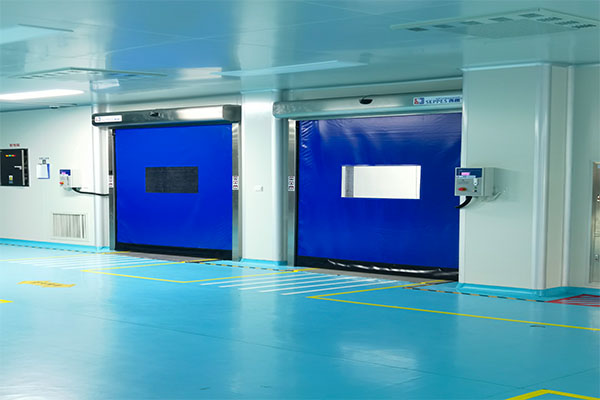
The engineering department decisively replaced the passage doors with custom High Speed Doors featuring full 304 stainless steel frames, IP65 control boxes, and sloped water-draining hoods.
Measurable Results:
Post-retrofit, even with janitorial staff conducting high-pressure washdowns daily using 60°C hot water and strong disinfectants, the equipment achieved “zero rust, zero electrical failures, and zero downtime” for 24 consecutive months. Maintenance costs plummeted, and the facility passed subsequent regulatory audits with perfect data.
Conclusion
In equipment washing rooms and highly humid, corrosive environments, door selection must never focus solely on the “initial purchase price.” If a standard, moisture-vulnerable door rusts and contaminates products, or halts the production line due to electrical shorts, the resulting losses will be dozens of times the cost of the equipment itself.Investing in a true High Speed Door with an IP65+ rating, 304/316L full stainless steel structure, and sloped water-draining design for your core wet areas is not just a tool for efficient daily logistics. It is a wise, long-term strategy to ensure your enterprise passes GMP Cleaning Validations on the first try and achieves sustainable cost reduction and efficiency gains.
FAQ
Q1: For heavy chlorine environments, should I choose 304 or 316L stainless steel?
While 304 SS performs excellently in most wet and chemical environments, for “heavy chlorine” areas (e.g., frequent sodium hypochlorite use), 316L stainless steel is highly recommended. The addition of Molybdenum in 316L gives it vastly superior resistance to chloride-induced pitting corrosion, making it the ultimate marine/medical-grade material.
Q2: Does surface passivation or polishing help with waterproofing and anti-corrosion?
Extremely helpful. Smooth surface treatments (like mirror polishing or brushed passivation) not only look better but, more importantly, eliminate microscopic pores on the metal surface. This prevents water and chemical solvents from clinging, greatly enhancing cleaning efficiency and corrosion resistance.
Q3: Will daily direct high-pressure water washing blow open the door curtain?
No. High-quality waterproof high speed doors utilize a seamless zipper track design. The curtain edges interlock tightly inside the track like a zipper. This not only provides exceptional airtightness but also withstands strong wind pressures and the physical impact of high-pressure water jets without derailing or blowing open.


