
Aluminum roller shutter problems often begin with small warning signs: scraping noise, uneven movement, a brief pause, or extra resistance during opening and closing. When these symptoms are ignored, the door may stop halfway, tilt to one side, or refuse to move.
For a retail store, warehouse, workshop, or factory entrance, a stuck aluminum roller shutter is more than an inconvenience. It can interrupt loading, delay staff, expose goods, prevent a building from being secured, and turn a minor issue into a costly repair. Repeatedly pressing the control button or forcing the curtain can also damage the motor, guide rails, slats, or drive system.
This guide explains three practical troubleshooting methods, the warning signs that require professional help, and the maintenance steps that reduce repeat failures. The advice applies to many commercial roll up doors and industrial roll up doors, but the exact structure varies by manufacturer. Always follow the product manual and local safety procedures.
Contents
- 1 Why Does an Aluminum Roller Shutter Keep Getting Stuck?
- 2 Safety First: What Not to Do
- 3 Method 1: Inspect the Roll Up Door Rails and Curtain Alignment
- 4 Method 2: Check Slats, Bottom Bar, Roll Up Door Rollers, and Hardware
- 5 Method 3: Check the Electric Drive, Limits, and Controls
- 6 When Should You Stop Troubleshooting and Call a Technician?
- 7 How to Prevent an Aluminum Roller Shutter from Sticking Again
- 8 5 Daily Maintenance Tips for Aluminum Roll Up Doors
- 9 Common Maintenance Mistakes That Make the Problem Worse
- 10 Aluminum Roller Shutter Troubleshooting Checklist
- 11 Frequently Asked Questions
- 11.1 Can I Force an Aluminum Roller Shutter Open When It Is Stuck?
- 11.2 Should I Lubricate Roll Up Door Rails?
- 11.3 Why Does My Roller Shutter Door Stop at the Same Height?
- 11.4 Why Is One Side of My Rolling Shutter Lower?
- 11.5 How Often Should Commercial Roll Up Doors Be Serviced?
- 11.6 What Is the Difference Between a Roller Shutter Door and an Overhead Coiling Door?
- 11.7 When Should I Request Commercial Roll Up Door Service?
- 12 Conclusion
- 13 Need Help Diagnosing an Aluminum Roller Shutter Problem?
Why Does an Aluminum Roller Shutter Keep Getting Stuck?
An aluminum roller shutter depends on several parts working together. The curtain must remain aligned, the guide rails must stay clear, the barrel must rotate evenly, and the operator or manual mechanism must move the door without excessive resistance.
A small fault in one area can affect the complete system. Debris inside one guide rail may push the curtain sideways. A bent slat may then scrape against the opposite rail, increasing motor load until the door stops. Troubleshooting should therefore follow a sequence instead of focusing only on the motor.
| Symptom | Possible Cause |
| Stops at the same height | Rail debris, damaged slat, or incorrect limit setting |
| One side is lower | Curtain misalignment, loose hardware, or uneven barrel movement |
| Motor runs but the door does not move | Mechanical resistance, drive fault, or release mechanism problem |
| Metallic scraping noise | Bent rail, damaged slat, or insufficient clearance |
| Closes and then reverses | Obstruction, safety input, or limit-control issue |
| Manual movement feels heavy | Rail friction, curtain distortion, or balance-system fault |
Before inspecting the door, stop normal operation and keep people, vehicles, and forklifts away from the opening.
Safety First: What Not to Do
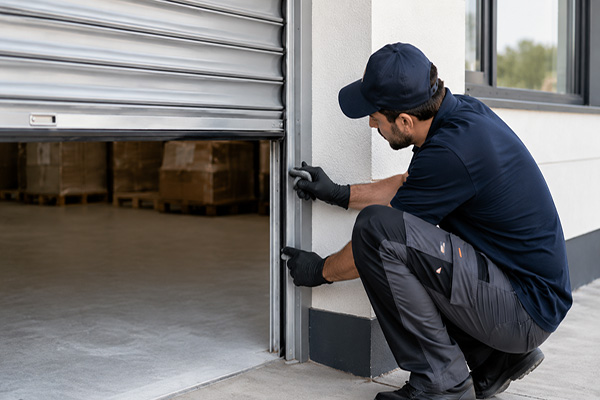
A stuck rolling shutter may store considerable force around the barrel, spring, chain, or suspended curtain. Basic visual checks may be safe, but internal adjustments should be completed by trained personnel.
Do not:
- Keep pressing the open or close button after the door stops.
- Pull the curtain with a forklift, vehicle, chain, or lifting tool.
- Stand beneath a partly open shutter door.
- Remove the hood or adjust springs, barrel tension, or lifting chains without training.
- Continue operation when the curtain is tilted or outside the guide rail.
- Bypass safety devices to make electric roller shutters move.
- Apply large amounts of grease before identifying the cause.
Where practical, isolate electrical power before inspection and prevent another person from operating the door.
Method 1: Inspect the Roll Up Door Rails and Curtain Alignment
The guide rails are the first place to check because they control the path of the moving curtain. Even a small obstruction can create enough friction to stop the door, especially on a large or frequently operated entrance.
Check Both Guide Rails for Debris
Use a flashlight to inspect the full visible length of the roll up door rails. Look for:
- Sand, dust, stones, or metal fragments
- Loose screws and broken fasteners
- Packaging straps, plastic film, or cardboard
- Hardened dirt mixed with lubricant
- Paint buildup or construction debris
Do not inspect only the bottom of the opening. When the door always stops at the same height, the obstruction may be higher inside the rail.
Remove loose debris with a soft brush, vacuum, or clean cloth. Avoid sharp tools that can damage rail surfaces or seals.
Check Rail Spacing and Fixing Points
Stand in front of the closed door and compare both sides. The rails should look parallel, secure, and free from impact damage.
Check for a rail pushed inward by a forklift, loose wall brackets, uneven side clearance, continuous scratch marks, or a dent at the exact stopping height. If a rail is bent or the mounting surface has shifted, cleaning will not solve the fault. The aluminum roller shutter may need professional realignment.
Watch How the Curtain Enters the Rails
Operate the door only when it is safe. Use brief, controlled movement and watch both curtain edges. They should enter and leave the guide rails evenly without jumping, rubbing, or lagging.
Stop immediately if one side rises faster than the other or a slat begins to leave the rail.
Method 2: Check Slats, Bottom Bar, Roll Up Door Rollers, and Hardware
If the rails are clear, inspect the curtain and connected parts. A damaged slat, loose end lock, distorted bottom bar, or worn roller can repeatedly jam the curtain.
Inspect the Aluminum Slats
View the door from several angles. The curtain should form a generally even surface.
Look for:
- Dented or bowed slats
- Separated interlocking profiles
- Protruding end locks
- Impact marks or sharp edges
- Slats sitting higher on one side
- Uneven coiling above the opening
A single damaged slat can affect the entire door. Do not hammer it back into shape while the curtain is under load. The damaged section may need replacement.
Check the Bottom Bar and Floor
Inspect the floor for raised concrete, stones, cables, packaging material, or stored goods. Check whether the bottom seal is folded or detached and whether the bottom bar is bent.
If one end reaches the floor first, the curtain may be misaligned or the bottom bar may be distorted. A tilted aluminum roller shutter should not be repeatedly opened and closed.
Inspect Rollers and Hardware
Some systems use roll up door rollers, end locks, chains, brackets, and other roll up door hardware to maintain alignment and transfer movement.
Without dismantling the door, look for loose fasteners, cracked guides, unusual wear, metal filings, a displaced roller, or a chain that appears damaged. An aluminum roll up door with visibly displaced hardware should remain out of service until inspected.
Method 3: Check the Electric Drive, Limits, and Controls
For a powered aluminum roller shutter, the electrical system may be the cause of the fault, or it may be correctly stopping the door because it detects resistance.
If the Motor Does Not Respond
Check whether power is available, the emergency stop has been pressed, the local isolator is correctly positioned, or the control panel displays an error. Test the normal wall switch, key switch, or remote control.
A motor may also stop after repeated cycles because of thermal protection. Allow it to cool according to the manufacturer’s instructions. Do not repeatedly reset the aluminum roller shutter without finding the cause.
If the Motor Runs but the Curtain Does Not Move
Possible causes include excessive mechanical resistance, a loose drive connection, a chain or gearbox problem, an incorrectly re-engaged manual release, or a curtain jammed inside the rails.
Stop operating the aluminum roller shutter in this condition. Continued motor operation can increase damage to the drive system.
If the Door Stops at the Same Position
A repeated stopping point may come from a physical obstruction or a limit-control setting. Check whether the curtain rubs or tightens at that height.
Upper and lower limits determine where many electric roller shutters stop, but the adjustment method differs between operators. Use the correct manual rather than generic instructions for an unrelated motor.
When Should You Stop Troubleshooting and Call a Technician?
Cleaning and visual checks can solve minor problems, but not every fault is suitable for self-repair. Stop using the aluminum roller shutter and arrange professional inspection when:
- The curtain is severely tilted.
- A slat or curtain edge has left the guide rail.
- The door drops suddenly or cannot hold its position.
- The barrel, spring, chain, or drive bracket looks damaged.
- The motor overheats or produces a burning smell.
- The door has been hit by a forklift, pallet, or vehicle.
- The guide rail is structurally bent.
- The fault returns soon after cleaning.
- Safety devices or controls behave unpredictably.
A qualified commercial roll up door service provider should inspect the complete system rather than replacing only the most obvious part.
To speed up diagnosis, provide the opening size, control method, photos of both rails and the curtain, a short operating video, the stopping height, daily cycle frequency, and details of any collision or power problem.
How to Prevent an Aluminum Roller Shutter from Sticking Again
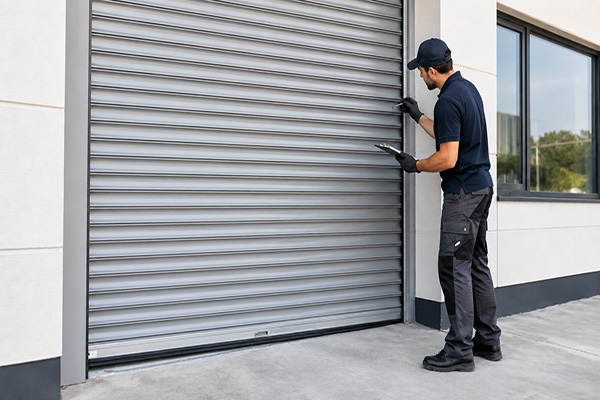
Once the aluminum roller shutter is operating again, the next goal is preventing the same fault from returning. A clean retail entrance may require a different maintenance frequency from a dusty warehouse, coastal loading bay, or high-cycle factory opening.
| Interval | Recommended Check |
| Before daily operation | Remove obstacles and listen for unusual noise |
| Weekly | Clean guide rails and the floor area |
| Monthly | Inspect slats, bottom bar, fixings, switches, and visible hardware |
| Periodically | Test limits, safety functions, drive components, and wear parts |
| High-cycle or dusty sites | Shorten the interval to match operating conditions |
The correct schedule depends on size, cycles, wind, dust, moisture, control type, and manufacturer requirements.
5 Daily Maintenance Tips for Aluminum Roll Up Doors
1. Keep the Guide Rails Clean
Clean rails reduce friction and help the aluminum roller shutter stay aligned. In warehouses and workshops, remove packaging straps, metal chips, and compacted dust before they enter the guides.
2. Act on Small Noises Early
A light scraping sound may reveal a rail or slat problem before the aluminum roller shutter becomes completely stuck. Record where the sound occurs and inspect that height.
3. Protect the Rails and Bottom Bar
Use traffic markings, bollards, or operating rules where forklifts work close to the opening. Many repeated faults begin with a small collision that was never reported.
4. Do Not Cycle a Struggling Motor
If the aluminum roller shutter slows, pauses, or reverses, stop and inspect it. Repeated operation can turn a minor alignment fault into a motor or gearbox problem.
5. Keep a Maintenance Record
For commercial roll up doors, record the inspection date, fault symptom, stopping position, noise location, work completed, parts replaced, and whether the problem returned. This creates useful evidence for future diagnosis.
Common Maintenance Mistakes That Make the Problem Worse
Applying Too Much Lubricant
More lubricant does not always mean smoother movement. Thick grease can collect dust and form an abrasive paste. Use only the product and method approved for the specific aluminum roller shutter.
Forcing the Curtain into Alignment
Pulling, striking, or levering the curtain can damage interlocking slats, end locks, and guides. A visibly misaligned aluminum roller shutter should be isolated and professionally checked.
Resetting Controls Without Checking Resistance
A reset may restore movement temporarily, but it will not remove a bent rail, damaged slat, or blocked guide.
Installing Unmatched Replacement Parts
Roll up door rollers, end locks, slats, motors, and controls are not universally interchangeable. Incorrect parts can alter clearances, load, or safety behavior.
Ignoring Repeat Faults
If an aluminum roller shutter works after cleaning but soon jams again, the rolling shutter door system may have an underlying alignment or drive problem.
Aluminum Roller Shutter Troubleshooting Checklist
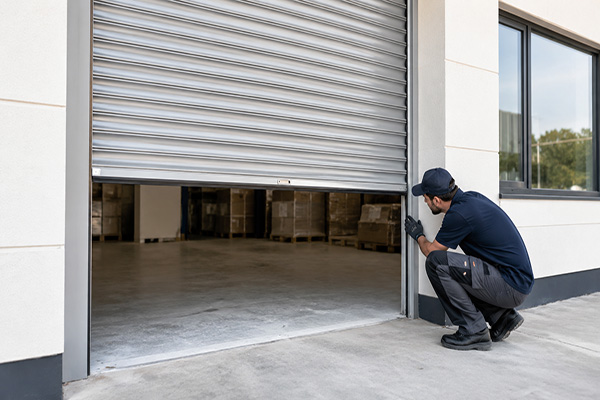
- The area below the door is clear.
- Both guide rails are free from debris.
- Neither rail is bent or pushed inward.
- The curtain is level.
- No slat is dented, separated, or protruding.
- The bottom bar is straight.
- No new scraping or impact sound is present.
- The motor and control panel show no obvious fault.
- The emergency stop and isolator are correctly positioned.
- The door does not repeatedly stop at the same height.
- No curtain edge has left the guide rail.
- The inspection can be completed without standing below a suspended door.
If any structural or safety item fails, stop operating the aluminum roller shutter.
Frequently Asked Questions
Can I Force an Aluminum Roller Shutter Open When It Is Stuck?
No. Forcing an aluminum roller shutter can worsen misalignment, bend the rails, damage the barrel, or overload the motor. Remove only obvious external obstructions when it is safe.
Should I Lubricate Roll Up Door Rails?
Not automatically. Clean them first and check the manufacturer’s instructions. Some guide systems require little or no wet lubricant, while heavy grease can trap dust.
Why Does My Roller Shutter Door Stop at the Same Height?
A repeated stopping point often indicates rail debris, local deformation, a damaged slat, or a limit-control issue. Inspect that height on both rails and the curtain.
Why Is One Side of My Rolling Shutter Lower?
Uneven height may indicate curtain misalignment, loose hardware, a damaged bottom bar, or uneven barrel movement. Stop the aluminum roller shutter when the tilt is obvious.
How Often Should Commercial Roll Up Doors Be Serviced?
Frequency depends on operating cycles, opening size, environment, and manufacturer requirements. High-cycle industrial roll up doors and doors in dusty, wet, or coastal locations normally need more frequent inspection.
What Is the Difference Between a Roller Shutter Door and an Overhead Coiling Door?
The terms overlap. Both can describe a curtain that coils above an opening, but manufacturers and markets may use roller shutter door, roll up door, rolling door, coiling door, or overhead coiling door for different profiles and applications.
When Should I Request Commercial Roll Up Door Service?
Request professional service when the curtain is tilted, parts leave the rails, the drive is damaged, the motor overheats, the door drops unexpectedly, or the fault keeps returning.
Conclusion
When an aluminum roller shutter keeps getting stuck, inspect it in three stages: the guide rails and curtain alignment; the slats, bottom bar, rollers, and hardware; and the electrical drive, limits, and controls.
Minor debris can sometimes be removed safely, but tilted curtains, bent rails, damaged lifting parts, and recurring motor faults require professional attention. Regular cleaning, early response to unusual noise, collision prevention, and documented maintenance can reduce downtime and extend the working life of the aluminum roller shutter.
Need Help Diagnosing an Aluminum Roller Shutter Problem?
Send us the door size, application, control type, fault symptoms, photos, and a short operating video. Our technical team can review the available information and recommend the next inspection or repair step for your aluminum roller shutter.


