
Introduction
High-speed roll-up doors for produce receiving areas are the ultimate solution for food processing plants struggling to maintain hygiene and temperature stability. Every day, trucks, forklifts, pallets, and large volumes of raw materials enter the facility through the loading dock. While it may seem like just a logistics corridor, this exact area directly impacts pest control, dust prevention, and your food safety audits. If traditional doors are left open for extended periods, outdoor dust, flying insects, and hot moisture can easily ruin your fresh ingredients. Upgrading to a specialized rapid door is no longer an option—it is a mandatory step to secure your production line.
Contents
- 1 Why Fruit and Vegetable Receiving Areas Need Better Door Control
- 2 Common Problems in Fruit and Vegetable Raw Material Receiving Areas
- 3 How High-Speed Roll-Up Doors Help Control Dust and Insects
- 4 Why High-Speed Roll-Up Doors Are Suitable for Produce Processing Plants
- 5 High-Speed Roll-Up Door vs Traditional Roller Shutter Door
- 6 Key Configurations to Consider
- 7 Best Practices for Better Dust and Pest Control
- 8 FAQ
- 8.1 Q1: Why is the receiving area important in fruit and vegetable processing plants?
- 8.2 Q2: Can a high-speed roll-up door completely prevent insects?
- 8.3 Q3: Is a PVC high-speed roll-up door suitable for vegetable processing plants?
- 8.4 Q4: What door features are important for produce receiving areas?
- 8.5 Q5: How does a high-speed door support food safety audits?
Why Fruit and Vegetable Receiving Areas Need Better Door Control
For produce processing plants, the receiving area is more than just a logistics entrance. Before raw materials move into washing, sorting, cutting, or packaging zones, this is the very first contamination control point.
The sources of fresh produce are complex, and transport vehicles or pallets can easily bring in external contaminants. Because the receiving area directly connects the outdoor environment with internal processing workflows, it is a naturally high-risk point for pests, dust, and foreign materials. The FDA’s Produce Safety Rule establishes minimum food safety standards for growing, harvesting, packing, and holding fruits and vegetables. Furthermore, 21 CFR Part 112 explicitly requires reasonable measures to protect produce from pest contamination and mandates pest exclusion in fully enclosed buildings. Consequently, proper door control at the receiving area is a fundamental component of raw material hygiene management.
Common Problems in Fruit and Vegetable Raw Material Receiving Areas
During peak unloading times in many fresh produce facilities, large doors are frequently opened or left open for long periods. This typically leads to five major problems:
Dust and Outdoor Particles Enter the Facility: Frequent logistics activities easily introduce outdoor dust, dirt, and vehicle-borne pollutants into the building.
Insects Are Attracted by Fresh Produce: Vegetable and fruit raw materials are highly attractive to flying insects, especially fruit flies and mosquitoes. The risk of pest infestation skyrockets during the summer.
Temperature and Humidity Fluctuate During Unloading: Cold chain produce, fresh-cut ingredients, and cold storage staging areas are vulnerable to the intrusion of hot, humid outdoor air, causing severe temperature fluctuations.
Slow Doors Increase Exposure Time: Traditional slow-moving doors cause forklift wait times and keep doorways open for extended periods, significantly increasing the time raw materials are exposed to the outdoor environment and reducing unloading efficiency.
Poor Entrance Control May Affect Audit Readiness: During facility audits, the receiving area is heavily scrutinized for pest control, external opening management, and preventive hygiene. Poor entrance control can negatively impact performance in third-party audits such as HACCP, GMP, BRCGS, or IFS.
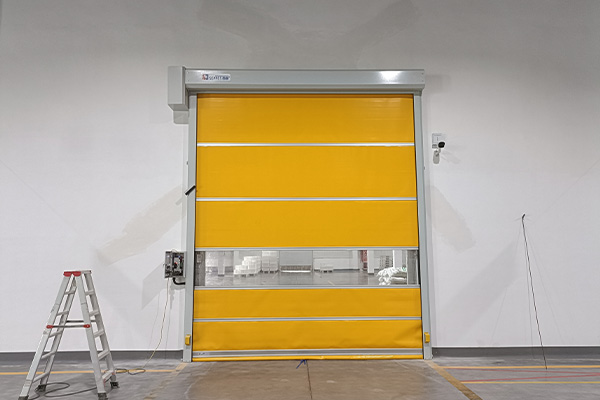
How High-Speed Roll-Up Doors Help Control Dust and Insects
A high-speed roll-up door is not a standalone “magic cure” for all problems, but rather a strategic solution that uses specific structures and functions to drastically reduce the entry of external contaminants:
Fast Opening and Closing: Blazing-fast speeds significantly shorten the doorway’s exposure time. The less time a door is open, the lower the chance for dust, insects, and outdoor pollutants to enter.
Tight Sealing Structure: Excellent side and bottom sealing structures minimize gaps, further reducing the likelihood of dust and flying insects sneaking in.
Automatic Sensor Operation: The door can automatically open via sensors when a forklift approaches and close immediately after it passes, preventing human error such as forgetting to close the door.
Transparent Vision Window: Clear vision panels improve visibility for traffic, reducing the safety risk of forklift and pedestrian collisions.
Easy-to-Clean PVC Curtain: The curtain material is perfectly suited for the daily cleaning and washdown requirements of the food industry.
Why High-Speed Roll-Up Doors Are Suitable for Produce Processing Plants
This door solution is widely applicable to various agricultural and food processing facilities, including:
Fruit and vegetable processing plants
Fresh-cut vegetable factories
Salad processing facilities
Juice production plants
Frozen vegetable processing plants
Central kitchens
Cold chain produce warehouses
Agricultural product sorting centers
High-Speed Roll-Up Door vs Traditional Roller Shutter Door
To clearly illustrate the benefits of upgrading, here is a detailed comparison for loading areas:
| Comparison Item | Traditional Roller Shutter Door | High-Speed Roll-Up Door |
| Opening Speed | Slow (<0.2 m/s) | Fast (Up to 1.5 – 2.0 m/s) |
| Exposure Time | Long | Extremely Short |
| Dust Control | Limited | Superior |
| Insect Prevention | Weak | Superior |
| Automation Level | Limited (Mostly manual) | High (Radar / Loop / Push-button) |
| Hygiene Management | General | Easy to clean and control |
| High-Frequency Use | No (Motor burns easily) | Yes (Designed for thousands of cycles) |
Key Configurations to Consider
When selecting the right high-speed roll-up door for your produce receiving area, pay attention to these configurations:
The specific dimensions of the doorway and daily opening frequency.
Whether the door connects to a refrigerated staging area (requires insulated panels).
Whether you need pest-proof yellow curtains or food-grade, easy-to-clean PVC.
Whether transparent vision windows are required for safety.
Whether radar or ground loop sensors are needed for automated traffic flow.
Whether integration with air curtains, dock seals, or airlocks is necessary.
Whether collision-proof columns and moisture-proof control boxes are required to extend the lifespan.
Best Practices for Better Dust and Pest Control
Professional contamination control relies on more than just a door. A properly selected high-speed door must be paired with the following site management practices to effectively support hygiene and pest exclusion:
Never prop doors open for extended periods; set a reasonable automatic closing time.
Regularly clean the door curtains and guide rails, and keep the floor dry to avoid juice, moisture, and organic residue buildup.
Install pest monitoring devices near the entrance and use the door in conjunction with air curtains or dock seals.
Regularly inspect the side weather seals for wear and tear, and train forklift drivers on proper traffic protocols.
Keep accurate records of maintenance and cleaning.
FAQ
Q1: Why is the receiving area important in fruit and vegetable processing plants?
A1: Because it is the first point where raw materials, vehicles, pallets, and outdoor air enter the facility. Poor entrance control may increase the risk of dust, insects, foreign materials, and cross-contamination.
Q2: Can a high-speed roll-up door completely prevent insects?
A2: No door can guarantee 100% insect prevention. However, a high-speed roll-up door can reduce the opening exposure time and improve sealing, which helps lower the chance of insects entering the receiving area.
Q3: Is a PVC high-speed roll-up door suitable for vegetable processing plants?
A3: Yes, it is commonly used in indoor receiving areas, workshop partitions, raw material passages, and areas that require fast access and environmental separation.
Q4: What door features are important for produce receiving areas?
A4: Important features include fast opening speed, automatic closing, good side sealing, easy-to-clean PVC curtain, safety sensors, vision windows, and reliable control systems.
Q5: How does a high-speed door support food safety audits?
A5: It helps demonstrate better control of external openings, pest prevention, dust reduction, and hygiene management when used together with proper cleaning, maintenance, and pest control procedures.


