
Food grade high-speed doors are the absolute lifeline of hygiene and efficiency in the wet areas of modern aquatic facilities. In the harsh micro-environments of rough processing and washdown areas—where heavy salt fog, daily high-pressure water jets, and strict temperature controls intersect—standard industrial doors simply cannot survive.
In our field experience outfitting rough processing areas and washdown zones in large salmon facilities, we consistently observe that up to 80% of logistics bottlenecks and sanitation audit failures in these specific wet areas stem from inadequate doorway equipment. If your processing zone is battling rusty frames, bacterial growth like Listeria, or frequent motor short-circuits, it is time to upgrade. This guide reveals the ultimate value of specialized entryway solutions tailored specifically for these intensive areas.
Contents
Why Standard Industrial Doors Fail Over Food Grade High-Speed Doors
When outfitting a wet zone or cold storage transition area, facility managers often attempt to use standard galvanized steel or low-grade stainless steel doors. This is a costly mistake. The processing zone produces airborne salt and highly corrosive organic matter. Combined with the strong acidic or alkaline foaming agents used during daily cleaning of the area, standard metals experience severe salt fog corrosion within months.
By investing in true food grade high-speed doors, you are choosing equipment purposefully engineered for this extreme spatial environment. These doors eliminate the risk of flaking rust falling into raw materials within the zone, replacing vulnerability with unyielding durability.
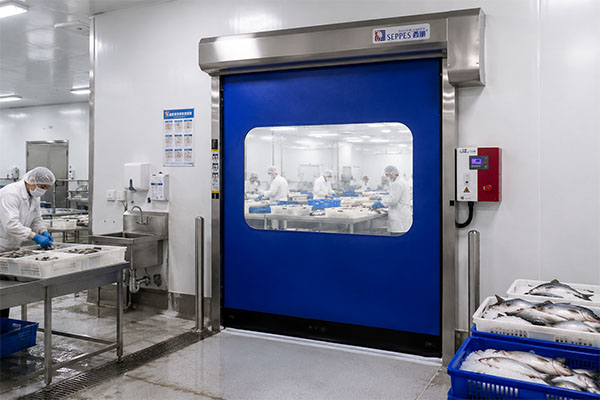
The 5 Core Engineering Secrets of Food Grade High-Speed Doors
To truly understand how these systems protect your specific processing areas, we must look at the specific engineering that makes them essential. Here are the 5 core features that define premium food grade high-speed doors:
1. Extreme Anti-Corrosion Construction
To combat heavy salt and chemical exposure in the wet zone, industry-leading food grade high-speed doors utilize full 304 or 316L stainless steel for the guide rails, top roll covers, and bottom beams. These custom 304/316L high-speed doors are highly resistant to oxidation, ensuring decades of structural integrity even when subjected to corrosive fish blood and seawater daily.
2. IP Rating and Absolute Motor Protection
Cleaning crews in the rough processing areas use high-pressure water guns to blast away debris. Standard door motors easily succumb to water ingress, causing electrical shorts and workflow downtime. Specialized washdown rapid doors for seafood plants feature IP65 to IP69K rated waterproof motor enclosures and sealed control boxes, allowing them to withstand direct, high-pressure, high-temperature washdowns without missing a beat.
3. Zero Hygiene Dead Zones
Traditional doors use brush seals inside the tracks, which become breeding grounds for bacteria, fish scales, and blood in the processing area. Properly designed food grade high-speed doors feature a “Washdown Design.” They utilize smooth, seamless rubber seals and sloped top covers that prevent water pooling. This effectively cuts off the source of cross-contamination in the zone and ensures you pass FDA and GFSI hygiene audits with ease.
4. High-Speed Action for Cold Chain Control
Temperature fluctuations in the rough processing zone directly degrade seafood quality. These doors operate at high opening speeds of up to 1.8m/s. By minimizing the time the doorway is open between the freezing areas and the washdown zones, they lock in cold air and significantly reduce HVAC energy waste within that specific footprint.
5. Durability for High-Frequency Logistics
Aquatic processing zones require constant movement of materials. Premium food grade high-speed doors are designed to handle up to 800 daily cycles effortlessly. Furthermore, they feature a flexible curtain with a self-repairing mechanism; if accidentally struck by a forklift operating in the zone, the curtain derails and automatically re-inserts itself into the track on the next cycle, drastically reducing maintenance downtime.
Conclusion and Next Steps
Upgrading to food grade high-speed doors is not just an equipment purchase; it is a strategic investment in your specific area’s operational continuity and food safety compliance. By eliminating rust, preventing contamination, and facilitating smooth logistics within the wet zone, these doors provide a rapid return on investment.Do not let standard doors compromise your next area HACCP audit. Contact our engineering team today to request a customized site evaluation and discover the ideal stainless steel roll-up doors for wet zones tailored to your specific processing layout.
3 FAQs About Wet Zone Doors
To further clarify the application of food grade high-speed doors in extreme environments, here are the most common questions from facility engineers:
FAQ 1: How do these doors prevent cross-contamination at the floor level of the processing zone?
Answer: Unlike standard doors with rigid bottom edges that trap debris, cross-contamination prevention doors utilize a soft, flexible bottom edge. This creates a tight seal against uneven floors in the washdown area without offering crevices for organic matter to hide, making them exceptionally easy to sanitize with a floor hose.
FAQ 2: Can the PVC curtain material withstand low temperatures in transition zones?
Answer: Yes. For doorways connecting the washdown zone to cold storage, the door curtains of our food grade high-speed doors are manufactured with specialized low-temperature resistant PVC containing anti-freeze additives. This prevents the curtain from becoming brittle or cracking, even when exposed to near-freezing ambient temperatures in the transition areas.
FAQ 3: How do these doors safely integrate with Automated Guided Vehicles (AGVs) in a busy wet zone?
Answer: Strict safety and isolation are paramount in automated food processing areas. It is crucial to note that during standard operations, the doors remain entirely closed to maintain the environmental barrier between zones. They do not sit open and only close when a worker approaches. Instead, these normally-closed systems utilize precision radar sensors or magnetic loop detectors to detect authorized AGVs approaching the zone. They open rapidly at 1.8m/s to let the machinery pass and immediately close behind them, ensuring maximum area isolation without interrupting automated workflows.


