
Choosing the right factory doors is a critical decision for any industrial setting. Not only do they play a key barrier to safety protection of your facility. But they also influence operational efficiency and durability. Among the many options available, heavy-duty aluminum rolling shutter doors are a versatile and reliable choice. But how can you determine whether they meet your specific needs? This guide is designed to help you make an informed decision by exploring the essential features, benefits, and factors to consider when selecting factory doors.
Factory managers face continuous challenges:
- In extreme weather, can the door effectively resist strong winds and maintain a stable internal production environment?
- Faced with long-term continuous production rhythms, can the door achieve fast and reliable opening and closing without making logistics a production bottleneck?
- In industries such as precision manufacturing, food, and pharmaceuticals, how can the door meet special requirements like cleanliness and airtightness?

Contents
- 1 Essential Features of Aluminum Rolling Doors System in Manufacturing Workshops
- 2 Comparison: Traditional Industrial Doors vs.Aluminum Rolling Shutter Doors
- 3 Why Choose Aluminum? Key Benefits of Rolling Shutter Doors
- 4 Versatile Applications Across Industries
- 5 Case Study: Automotriz do Brasil Boosts Efficiency with High-Performance Rolling Doors
- 6 Maintenance and Longevity Tips for Your Rolling Shutter
Essential Features of Aluminum Rolling Doors System in Manufacturing Workshops
Analysis of Industrial-Grade Aluminum Alloy Profile Specifications
The harsh material requirements of manufacturing workshop environments render ordinary civil aluminum profiles completely inadequate. Industrial-grade heavy-duty rolling doors are core-equipped with high-quality aluminum alloy profiles. This material, subjected to special heat treatment and reinforcement, achieves an optimal balance between strength and corrosion resistance.
- High Performance: Industrial-grade heavy-duty aluminum alloy profiles boast a tensile strength exceeding 205MPa, equivalent to 60%-70% of ordinary steel with the same thickness, yet weigh only one-third of steel. This significantly reduces the load on building structures and motors while bearing equal loads.
- Corrosion Resistance: After powder coating surface treatment, the profiles can withstand salt spray testing for over 1,000 hours without red rust. This provides superior protection against acidic atmospheres in metalworking workshops and salt spray erosion in coastal plants.
- Structural Design: Modern industrial rolling doors adopt a hollow multi-cavity structure, reducing self-weight while forming a stable mechanical framework through internal reinforcing ribs. Some high-end blade cross-sections are even designed with water guide grooves and sealing strip slots, achieving structural and functional unity.
Wind Pressure Resistance Design Principles
Workshop doors, especially large openings, are inherently the weakest link in building envelopes. Professional wind-resistant design is not a simple “thickening” but a systematic project:
| Wind Pressure Resistance Class | Corresponding Wind Pressure (Pa) | Applicable Scenarios | Design Key Points |
|---|---|---|---|
| Class 3 | 600-800 Pa | Inland low-rise workshops, non-typhoon areas | Basic reinforced guide rails, standard profiles |
| Class 5 | 1200-1600 Pa | Most manufacturing workshops, medium wind pressure areas | Double-row rollers, reinforced end plates, wind bracing system |
| Class 8 | ≥2500 Pa | Coastal workshops, high-rise industrial buildings, strong wind areas | Multi-layer reinforced structure, heavy-duty guide rails, multi-point locking |
Three Core Elements of Wind-Resistant Design:
- Blade Interlocking System: Precision hook-shaped structures on each blade edge interlock under wind pressure, distributing local pressure across the entire door surface.
- Wind Bracing Reinforcement: Adjustable horizontal/vertical wind braces installed on the door back, acting like “beams and columns” of a building, effectively preventing door deformation and bulging under strong winds.
- Reinforced Guide Rail-Roller Matching: Double-row or multi-row nylon-reinforced rollers operate within heavy-duty steel guide rails. Roller spacing is optimized through mechanical calculations to ensure uniform pressure distribution.
Durable Guide Rail System
Guide rails are the operational core of rolling doors, and their strength directly determines system stability and service life. Industrial-grade solutions include:
Material Upgrade:
Upgraded from ordinary galvanized steel to high-strength structural steel, with wall thickness increased from 2.0mm to 3.0mm or even 4.0mm. Hot-dip galvanizing treatment enhances rust resistance by more than 5 times.
Structural Innovation:
- Embedded Guide Rails: Guide rails are embedded into the building structure to avoid forklift collision risks.
- Dual-Rail System: Extra-wide doors (width >8 meters) adopt internal and external dual rails to eliminate sagging deformation in the middle.
- Bottom Wind-Resistant Ground Rail: A fixed rail with sealing strips is added at the door opening bottom. Under strong winds, the door bottom embeds into the ground rail to form a sturdy closed framework.
Installation Precision Control:
Laser calibrators are used to ensure guide rail verticality error ≤1mm/m, the foundation for smooth door operation and reduced wear.
Comparison: Traditional Industrial Doors vs.Aluminum Rolling Shutter Doors
For a long time, many industrial plants have still been using traditional sliding doors, swing doors, or ordinary rolling doors. However, these solutions have increasingly revealed their limitations in manufacturing environments:
| Comparison Dimension | Common Limitations of Traditional Industrial Doors | Solutions of Professional Aluminum Alloy Rolling Doors |
|---|---|---|
| Space Efficiency | Sliding doors require lateral opening space, occupying valuable plant area | Vertical rolling design, zero floor space occupation, maximizing space utilization |
| Opening/Closing Speed | Manual or low-speed electric operation, resulting in obvious logistics bottlenecks | High-speed electric drive with an opening speed of 0.8-1.2 m/s |
| Sealing Performance | Large door gaps, poor thermal insulation, easy intrusion of dust and noise | Multi-layer sealing system with protection class IP54+ |
| Wind Resistance | Large-area single-panel structure with limited wind resistance | Segmented aluminum alloy profiles + reinforced guide rails, wind resistance class up to Grade 8+ |
| Maintenance Cost | Vulnerable hardware leading to frequent repairs | Corrosion-resistant aluminum alloy and modular design for easy maintenance |
| Intelligent Integration | Difficult to connect with intelligent systems | Reserved standard communication interfaces, supporting PLC/IoT integration |
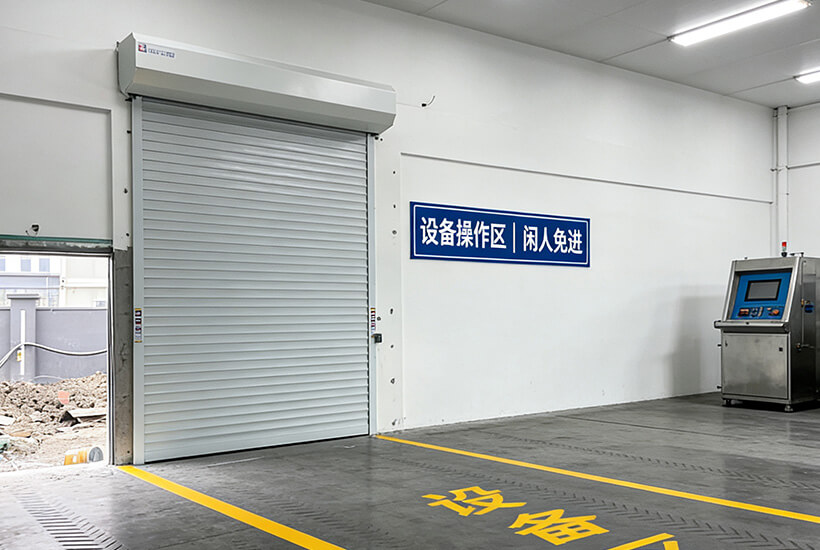
Why Choose Aluminum? Key Benefits of Rolling Shutter Doors
Lightweight Strength
Aluminum offers a unique combination of durability and lightness. Unlike steel, which is heavier, aluminum provides significant resistance to impact while being easier to handle and install. This lightweight property reduces strain on the operating mechanism, ensuring smoother functionality and longer-lasting performance. Additionally, its strength-to-weight ratio makes it ideal for industrial and commercial applications.
Corrosion Resistance
Factory gates are frequently exposed to corrosion risks such as outdoor sun and rain, humid moisture in workshops, and salt spray in coastal areas. Aluminum alloy inherently possesses excellent corrosion resistance—its surface naturally forms an oxide film (Al₂O₃) with a thickness of approximately 5-10μm, which effectively isolates erosion from air, moisture, and chemical substances. On this basis, corrosion resistance can be further enhanced through industrial treatments such as anodizing and powder coating.
This characteristic makes aluminum alloy rolling doors particularly suitable for outdoor installation or factory environments with high humidity and high corrosion.Detail how aluminum naturally resists rust and corrosion, making it ideal for exterior installations and humid or coastal environments. This leads to a longer lifespan and lower maintenance costs.
Aesthetic Versatility
Aluminum rolling shutters are not just functional, but also visually appealing. They can be anodized or powder-coated in various colors and finishes, allowing them to blend seamlessly with various architectural styles. Whether you prefer a sleek modern look or a textured finish, aluminum roller doors can be customize d to match your brand aesthetics or building design.
Energy Efficiency
Insulated aluminum slats are a game-changer for energy conservation. These shutters help maintain indoor temperatures by reducing heat transfer, keeping interiors cooler in summer and warmer in winter. This results in lower heating and cooling costs, making them an eco-friendly and cost-effective solution. Studies show that aluminum shutters can reduce heating costs by up to 30% during colder months.
These benefits make insulated roller shutter doors a versatile, durable, and sustainable choice for both residential and industrial applications.
Versatile Applications Across Industries
Commercial and Retail
For business owners, balancing security with an inviting appearance is a daily priority. Aluminum rolling shutters masterfully solve this challenge. In storefronts and shopping malls, they provide a formidable barrier against unauthorized entry and vandalism after closing time. Their durable construction deters potential intruders, giving owners peace of mind.
Aluminum shutters offer a sleek and professional way to secure the area without detracting from the aesthetic of the space.
Industrial and Warehouse
In the fast-paced environment of a warehouse or industrial facility, efficiency and reliability are paramount. Aluminum rolling shutter doors are an excellent fit for applications where the extreme weight and heavy-duty nature of steel are unnecessary. They are ideal for high-traffic internal doorways that separate different zones within a facility, such as between the main warehouse floor and a packaging area. Their lightweight nature allows for faster and quieter operation, minimizing disruption and improving workflow.
These doors are also well-suited for loading docks that handle lighter goods. Their use as partition walls allows for flexible space management, enabling facilities to adapt layouts as operational needs change.
High-End Residential
Modern home design emphasizes clean lines, seamless integration, and a sophisticated aesthetic. Aluminum rolling shutters align perfectly with this architectural philosophy, offering a sleek and secure alternative to traditional doors and window coverings. In upscale homes, they are increasingly used for garages, providing a minimalist look that complements contemporary exteriors. Available in a wide range of custom colors and finishes, aluminum shutters integrate flawlessly into high-end residential designs, enhancing both security and style.
Case Study: Automotriz do Brasil Boosts Efficiency with High-Performance Rolling Doors
Automotriz do Brasil is a major player in South America’s automotive manufacturing sector, with a sprawling production facility in São Paulo. The plant operates around the clock, assembling thousands of vehicles monthly. To maintain its competitive edge, the company continuously strives to optimize every aspect of its production line. However, their existing facility doors—a combination of slow, fabric roll-up doors and heavy, manually operate d steel doors—were creating significant bottlenecks, compromising both efficiency and security.
The Solution: Implementing High-Performance Aluminum Rolling Doors
After a thorough evaluation, Automotriz do Brasil partnered with a leading provider of high-performance doors to overhaul their facility. The solution involved the strategic installation of 15 high-speed aluminum rolling shutter doors across the plant.
The implementation was phase d to minimize disruption to the production schedule. The project focused on key areas:
- Exterior Loading Docks: Heavy-duty, insulated aluminum rolling doors were installed to provide robust security and weather protection. Their high-speed operation minimized the time dock bays were open, securing the facility and stabilizing the indoor environment.
- Internal High-Traffic Zones: Lightweight, high-speed aluminum doors were installed between the stamping, body shop, and assembly lines. These doors were equipped with motion sensors to allow touchless, rapid opening and closing, facilitating the seamless flow of AGVs and forklifts.
- Paint and Finishing Areas: To protect the sensitive painting process from contaminants and maintain strict climate control, insulated aluminum rolling doors with tight seals were installed. Their fast cycle times ensured that air pressure and temperature remained stable, improving finish quality and reducing energy waste.
Maintenance and Longevity Tips for Your Rolling Shutter
he long-term stable operation of aluminum alloy rolling doors relies on scientific maintenance. Through simple daily care and regular professional inspections, potential failures can avoid effectively, service life extended (3-5 years under proper maintenance), and operational costs reduced. Below are practical, easy-to-operate maintenance key points for core components such as curtains, guide rails, and motors:
| Maintenance Type | Specific Operation Guidelines | Frequency Recommendation | Core Value |
|---|---|---|---|
| Regular Cleaning | Curtain Cleaning: Wipe gently with a soft cloth dipped in neutral detergent to remove dust and oil stains. Avoid steel wool, strong acid/alkali cleaners. Guide Rail Cleaning: Use a vacuum cleaner to remove dust and debris from guide rails, ensuring unobstructed curtain operation. Dry the surface with a clean cloth after cleaning, especially focusing on edges and gaps to avoid residual moisture. | Daily Use: 1-2 times/month; Harsh Environments (dust/coastal areas): 1 time/week | Prevent dust accumulation from affecting operational smoothness, avoid coating corrosion and guide rail jamming, and maintain a clean curtain appearance. |
| Visual Inspection | 1. Curtain: Check for deformation, scratches, or loose joints. Minor deformation can be manually corrected; replace immediately if severe. 2. Sealing Strips: Inspect side and bottom sealing strips for aging, cracking, or detachment. Replace damaged strips promptly. 3. Motor & Transmission System: Observe for abnormal noise/vibration during motor operation, check for loose terminals, and inspect chains/gears for wear. 4. Safety Devices: Verify that infrared sensors and emergency stop buttons function normally, ensuring no obstruction and sensitive response. | 1 time/month | Proactively identify potential failures to prevent minor issues from escalating (e.g., energy loss due to damaged sealing strips, production downtime caused by motor malfunctions). |
| Component Lubrication | 1. Apply industrial-grade lubricant (e.g., lithium-based grease) to moving parts such as guide rail inner sides, curtain reels, and chains/gears per manufacturer guidelines. 2. Avoid lubricant contact with curtain surfaces and sealing strips. Apply a thin, even layer—excess is unnecessary. 3. Do not lubricate motor bearings yourself; contact professionals if abnormal noise occurs. | Regular Use: 1 time/3-6 months; High-Frequency Scenarios (≥50 openings/day): 1 time/2 months | Reduce mechanical friction and motor load, ensure smooth door operation, and extend the service life of the transmission system. |
| Professional Maintenance | 1. Contact professional service providers like SEPPES for annual comprehensive inspections: including spring tension testing and adjustment (to prevent door sagging due to insufficient tension), motor performance testing (speed, load capacity), and safety system linkage verification. 2. Inspect electrical wiring for aging and replace outdated wires or components. 3. Maintain the curtain coating (e.g., touch up minor scratches) to extend corrosion resistance. | 1 time/year | Professional equipment and technology can detect invisible hazards, ensuring equipment safety performance and operational stability, and avoiding sudden fa |
Frequently Asked Questions
Which material is best for rolling shutters?
The best material for a rolling shutter depends on your specific needs, such as security, insulation, and budget. Each material offers distinct advantages.
- Aluminum: This is a popular all-around choice.
- Pros: Lightweight yet strong, naturally resistant to rust and corrosion, and requires minimal maintenance. It offers a sleek, modern appearance and can be powder-coated in various colors. Insulated aluminum options provide excellent energy efficiency.
- Cons: Can be more expensive upfront than PVC.
- Steel: This is the go-to material for maximum security.
- Pros: Extremely durable, secure, and provides a high level of resistance against forced entry and physical damage.
- Cons: Very heavy, which can put more strain on operating mechanisms. It is also susceptible to rust if the protective coating is compromise d, requiring more maintenance, especially in wet climates.
- PVC (Polyvinyl Chloride): A budget-friendly option for light-duty applications.
- Pros: The most affordable option, lightweight, and resistant to corrosion.
- Cons: Offers the least security and is not as durable as metal. It can become brittle over time with sun exposure and may not be suitable for high-security or high-impact environments.
What is the difference between an aluminum roll-up door and an overhead door?
While both cover an opening, their design and operation are quite different.
An aluminum roll-up door (or rolling shutter) consists of many narrow horizontal slats that are hinge d together. When opened, the door coils tightly into a compact box or housing directly above the opening. This design is extremely space-efficient, as it requires almost no headroom inside the building.
An sectional overhead door with several larger, rigid panels hinged together. When opened, these panels slide along tracks that run up the wall and then parallel to the ceiling. This requires significant headroom and ceiling space to accommodate the door when it is open.
Key Use Cases:
- Roll-up doors are ideal for storefronts, warehouses, and garages where ceiling space is limited or needs to be kept clear for lighting or storage.
- Overhead doors are common in residential garages and loading docks where headroom is sufficient and larger, insulated panels are preferred.
Can I use a roller shutter as a garage door?
Yes, absolutely. A roller shutter is an excellent choice for a garage door, especially for homeowners looking to maximize space and security.
The primary benefit is the space-saving design. Since the door coils into a compact box above the opening, you don’t lose any ceiling space inside your garage. This allows you to use the overhead area for storage or install taller light fixtures. It also means you can park your vehicle closer to the door without obstructing its path.
From a security standpoint, aluminum and steel roller shutters provide a robust barrier against intruders. Their interlocking slat design makes them very difficult to pry open. Additionally, they offer a clean, modern aesthetic that can enhance your home’s curb appeal.


