
High speed doors help central kitchens maintain clear environmental boundaries between receiving, processing, cold storage, and high-hygiene areas. In a facility where ingredients, trolleys, employees, racks, and packaging materials move continuously, every open doorway can allow insects, dust, warm air, moisture, or uncontrolled airflow to pass from one area to another.
The problem is not solved by installing the same fast-opening door at every entrance. A doorway between an ambient preparation room and a cleaner corridor has a different task from a freezer entrance. A buffer passage leading to a cooked-food packaging room needs another level of control again.For this reason, the most effective solution starts with one question: what must this doorway keep under control?
Contents
- 1 How High Speed Doors Protect Three Critical Boundaries in a Central Kitchen
- 2 Challenge 1: Insects, Dust, and Cross-Contamination at Hygiene Boundaries
- 3 Challenge 2: Temperature Loss, Condensation, and Frost in Cold-Chain Areas
- 4 Challenge 3: Airflow Disturbance and Pressure Fluctuation in High-Hygiene Areas
- 5 Matching High Speed Doors to Each Central Kitchen Zone
- 6 Four Conditions That Determine the Right Door Configuration
- 7 Building a Practical Doorway Strategy for a Central Kitchen
- 8 Frequently Asked Questions
- 8.1 Are Airtight High Speed Doors Suitable for Washdown Areas?
- 8.2 Is a Zipper High Speed Door Suitable for an Exterior Receiving Entrance?
- 8.3 Is Insulation More Important Than Opening Speed in a Cold Room?
- 8.4 Do All Freezer Doors Need Frame Heating?
- 8.5 Can One High Speed Door Protect a High-Hygiene Packaging Room?
- 8.6 How Does a 2 Door Interlock System Work During an Emergency?
- 9 Conclusion
How High Speed Doors Protect Three Critical Boundaries in a Central Kitchen
Most central kitchen doorway problems can be grouped into three environmental boundaries:
| Transition area | Main problem | Recommended solution |
| Receiving or ambient processing area to a cleaner zone | Insects, dust, and contamination transfer | Airtight zipper high speed door |
| Chilled room, meat-cutting room, or freezer entrance | Cold-air loss, condensation, and frost | High speed cold storage door |
| Buffer passage to cooked-food packaging or another high-hygiene area | Direct airflow and pressure fluctuation | Two-door interlock system |
Each solution controls a different risk. The zipper door focuses on sealing and impact recovery. The cold storage door combines thermal insulation with short opening times. The interlock system controls the opening sequence so that two hygiene zones are not directly connected at the same time.
Challenge 1: Insects, Dust, and Cross-Contamination at Hygiene Boundaries
A Small Doorway Can Become a Constant Contamination Route
Raw material receiving areas, ambient preparation rooms, and external corridors usually have a higher exposure to dust, insects, and unfiltered air. When these areas connect directly with a cleaner processing zone, the doorway becomes part of the hygiene barrier.
In a busy central kitchen, the door may open repeatedly throughout the shift. Ingredient carts, waste bins, tray racks, and packaging trolleys all need to pass quickly. If the door is slow or inconvenient, employees may hold it open. If the curtain or guide is damaged by a trolley, the opening may remain exposed until maintenance arrives.
The result is more than an untidy entrance. It can increase pest-control pressure, add cleaning work, interrupt production, and weaken the separation between raw and cleaner areas.
How the Zipper-Sealed Door Protects the Hygiene Boundary
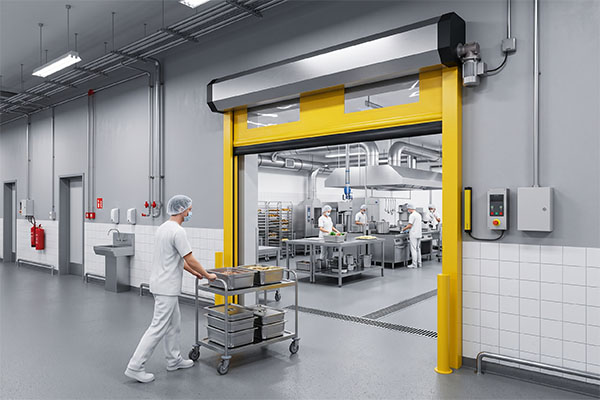
An airtight high speed door uses a zipper-style side-guide structure to keep the curtain closely engaged with the tracks during operation. This minimizes open gaps along both sides of the doorway and helps limit the movement of insects, dust, and unfiltered air into the cleaner area.
Because the door opens and closes quickly, staff do not need to choose between smooth trolley traffic and keeping the doorway closed. The opening remains available only for the time needed to complete each passage.
A climate control airtight high speed door also works well with radar, pull-cord, push-button, or access-control activation. The sensor can be adjusted according to the way people and trolleys approach the entrance, preventing the door from opening too early or remaining open because of unrelated movement nearby.
This makes the doorway easier to manage during busy production periods while keeping the cleaner side separated for more of the working day.
Fewer Shutdowns After Trolley Impact
Trolley impact is common in central kitchens. Operators may be pushing tall racks, turning through narrow corridors, or moving loads that partially block their view. With a conventional door, a collision can pull the curtain out of position or damage the side guides, causing the doorway to stop working.
A high speed zipper door with a self-reinserting curtain provides a more practical response. During an accidental impact, the curtain can release from the side guide instead of transferring the full force to the door structure. On the following cycle, the curtain is guided back into position.
This reduces the likelihood that a minor trolley collision will stop material flow, leave the doorway exposed, or require immediate repair.
For a central kitchen operating on a fixed production schedule, avoiding this kind of interruption is often just as important as the opening speed itself.
Where This Solution Fits Best
This self-reinserting rapid door is well suited to:
- Ambient processing rooms leading to cleaner corridors
- Internal trolley passages between hygiene zones
- Ingredient preparation areas
- Packaging-material transfer points
- Entrances where accidental cart impact is likely
- Internal doorways that require frequent washdown
For an entrance directly exposed to outdoor wind and rain, the doorway may need a different arrangement. A weather-resistant exterior door can handle wind and outdoor exposure, while an internal sealed rapid door creates a second boundary before traffic enters the preparation area.
This two-stage layout is especially useful at busy receiving points where doors open frequently but the internal processing environment still needs protection from outdoor contaminants.
Challenge 2: Temperature Loss, Condensation, and Frost in Cold-Chain Areas
Every Opening Adds a New Load to the Cold Room
Cold dish rooms, chilled meat-cutting rooms, refrigerated holding areas, blast-freezing rooms, and frozen storage areas all depend on stable temperatures. Their entrances, however, are opened repeatedly for ingredient delivery, rack movement, finished-product transfer, and cleaning.
Whenever the doorway opens, dense cold air can flow outward while warmer and more humid air enters. The refrigeration system must then remove the additional heat and moisture.
Frequent air exchange can lengthen temperature recovery, increase condensation around the entrance, and contribute to frost on cold surfaces. The problem becomes more serious when a slow door remains fully open while staff wait for a trolley or rack to pass.
Over time, this repeated temperature disturbance can affect both energy consumption and daily cold-room operation.
Why Insulation and Speed Must Work Together
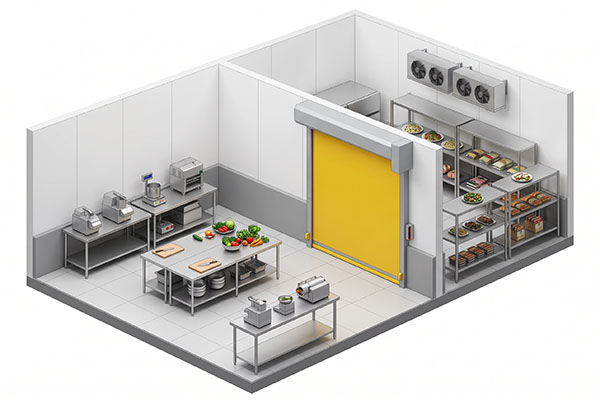
A high speed door for cold storage controls two different forms of energy loss.
When the door is closed, the insulated curtain or panel reduces heat transfer between the two spaces. Perimeter seals reduce leakage around the sides, head, and bottom of the opening.
When the door is open, operating speed becomes critical. A shorter cycle reduces the time available for cold air to escape and warm, humid air to enter. Correct sensor positioning and opening height also prevent the doorway from opening earlier or higher than necessary.
This is why high speed cold storage doors combine thermal insulation, reliable sealing, and responsive operation. A thick curtain alone cannot control air exchange while traffic is passing, while a fast but poorly insulated door cannot maintain the temperature boundary when closed.
For a busy central kitchen, the best result comes from balancing both sides of the problem.
Controlling Condensation and Frost at Freezer Entrances
Freezer entrances face a larger temperature difference than ordinary chilled rooms. Warm air can release moisture when it reaches the cold frame, seals, or floor around the doorway. Over time, this moisture may freeze and interfere with the bottom seal or moving components.
Depending on the operating temperature and humidity, a cold storage high speed door can be equipped with heated side frames, heated contact areas, or other anti-frost features. Low-temperature-compatible curtain materials and seals also help the door remain flexible during repeated cycles.
A cold dish room and a deep-freezer entrance have very different operating conditions. The chilled room may mainly need rapid closing and moderate insulation, while a frozen storage entrance may also require frame heating and stronger frost protection.
Matching these features to the actual room condition keeps the doorway operating reliably without adding unnecessary complexity.
Smarter Opening for Trolleys and Racks
A high-speed roll-up door for cold storage should respond to actual traffic rather than every movement near the entrance.
A correctly adjusted sensor can open the door as a trolley approaches and close it immediately after the load clears the threshold. This avoids the common situation in which the door opens too early and remains exposed while the operator is still several metres away.
For smaller loads, partial-height opening can further reduce unnecessary air exchange. For AGV traffic, the door can be linked to the vehicle control system so that opening and closing follow the planned route instead of relying only on motion detection.
These details have a direct effect on daily performance. A cold-room door may have excellent insulation, but poor sensor settings can still leave it open for much longer than necessary.
Where This Solution Fits Best
High-speed cold storage doors are suitable for:
- Chilled ingredient rooms
- Cold dish preparation areas
- Meat and seafood cutting rooms
- Refrigerated holding areas
- Frozen storage entrances
- Blast-freezing transfer points
- Cold-chain passages used by racks, carts, or AGVs
The configuration can then be matched to the actual temperature difference, humidity, traffic frequency, opening size, and type of materials moving through the doorway.
Challenge 3: Airflow Disturbance and Pressure Fluctuation in High-Hygiene Areas
A Single Opening Can Connect Two Different Hygiene Conditions
Cooked-food packaging rooms and ready-to-eat processing areas usually require tighter separation from surrounding spaces. The cleaner room may operate under a controlled pressure relationship so that air movement follows the intended direction.
When one door opens directly between the two spaces, that separation is temporarily lost. Air can move through the doorway under the effect of pressure difference, temperature difference, people movement, and trolley motion.
A single fast door shortens the opening time, but it still creates a direct connection while open. During busy periods, the door may reopen repeatedly before the airflow in the room has stabilized.
For high-hygiene areas, this repeated direct connection can weaken the protection created by the ventilation and zoning system.
How a Door Interlock System Controls the Transfer Process
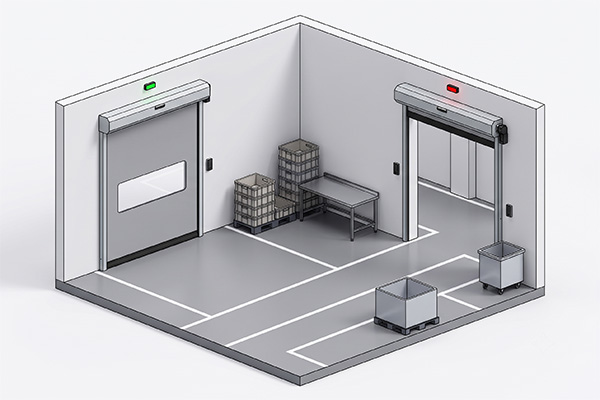
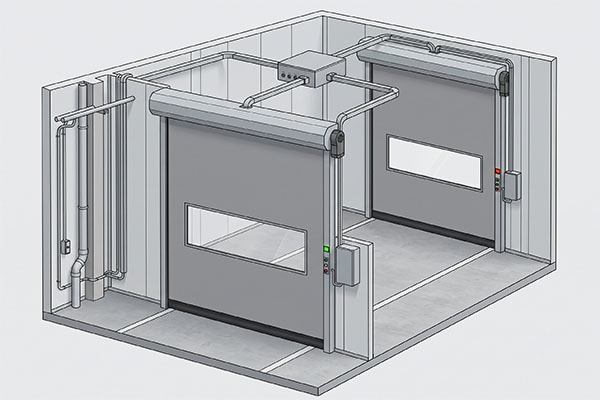
A door interlock system uses two rapid doors positioned on opposite sides of a buffer room. The control logic allows only one door to open at a time.
A normal transfer sequence works as follows:
- The first door opens and allows the employee, trolley, rack, or AGV to enter the buffer area.
- The first door closes.
- The control system confirms that the first door is fully closed.
- The second door is released.
- The load moves into the high-hygiene area.
- The second door closes and the buffer returns to standby.
This sequence removes the direct open path between the two hygiene zones. It also gives the ventilation system time to restore the intended airflow condition inside the buffer area.
Instead of moving directly from a less-clean corridor into a cooked-food packaging room, employees and materials pass through a controlled intermediate space.
A Smoother Experience for Employees and Material Flow
A well-designed interlocking door system should feel simple to use.
Status lights show which door is available. Sensors detect when the person or trolley has cleared the opening. Audible or visual signals guide the operator without requiring complicated manual steps.
For controlled-access areas, the interlock can be connected to card readers, push buttons, or production-line signals. For AGV transfer, the door interlocking system can exchange opening and position signals with the vehicle control system.
An alarm can be triggered if a door remains open too long or if an object blocks the closing path. Maintenance and sanitation modes can also be included so the doors can be operated conveniently during cleaning or servicing.
The aim is not to slow down production. The system creates a controlled transfer sequence while allowing people and materials to continue moving efficiently.
Supporting the Existing Pressure Strategy
The ventilation system establishes the pressure difference between rooms. The 2 door interlock system helps preserve that condition during passage by preventing both doorways from standing open at the same time.
This cooperation is especially useful at:
- Cooked-food packaging rooms
- Ready-to-eat production areas
- High-hygiene ingredient transfer points
- Personnel buffer passages
- Trolley and rack airlocks
- AGV transfer chambers
The buffer area should be large enough for the complete trolley, rack, or AGV to enter and clear the first doorway before the second door opens.
A correctly sized buffer avoids congestion and keeps the transfer sequence efficient during busy production periods.
Matching High Speed Doors to Each Central Kitchen Zone
| Central kitchen area | Main operating concern | Suitable solution | Most important design focus |
| Raw material receiving to an internal corridor | Insects, dust, and outdoor exposure | Exterior-rated entrance plus internal zipper door where needed | Wind exposure, sealing, traffic flow |
| Ambient processing to a cleaner zone | Contamination transfer | Airtight high speed door | Side-guide sealing, bottom contact, fast closing |
| High-frequency trolley passage | Accidental impact and downtime | High speed zipper door | Self-reinserting curtain, sensor position |
| Chilled preparation room | Temperature fluctuation | Insulated rapid door | Thermal curtain, sealing, short opening time |
| Frozen storage entrance | Heat and moisture entry | High speed cold storage doors | Low-temperature materials, frame heating, frost control |
| Cooked-food packaging buffer | Direct air exchange | Door interlock system | Opening sequence, door-position signals |
| High-hygiene AGV transfer | Pressure protection and automatic traffic | Interlocking door system | AGV communication, buffer size, safety detection |
This zone-based approach gives every doorway a clear purpose. Lower-risk internal entrances remain simple and efficient, while critical cold-chain and high-hygiene boundaries receive the additional sealing, insulation, or control logic they need.
Four Conditions That Determine the Right Door Configuration
1. The Hygiene Relationship Between the Two Areas
The first consideration is what happens on each side of the opening.
A passage from raw material receiving into a general preparation area has a different hygiene role from an entrance leading into cooked-food packaging. The greater the difference between the two zones, the more important the sealing structure and opening sequence become.
At a raw material entrance, the priority may be reducing outdoor contaminants. At a cooked-food packaging room, the priority shifts to preventing a direct connection with the surrounding corridor.
2. Temperature and Humidity Difference
The temperature on both sides affects insulation requirements, condensation risk, frost prevention, and material selection.
Humidity is equally important because warm, moist air entering a cold room can create water or ice around the entrance. A larger temperature and humidity difference normally requires stronger insulation, tighter sealing, and more attention to frost control.
3. Traffic Type and Frequency
People, hand trolleys, tall racks, pallet trucks, and AGVs approach a doorway in different ways.
The activation method, opening height, safety sensors, and buffer size should match the real traffic pattern. A sensor designed around pedestrian movement may not provide the best response for tall racks or slow-moving trolleys.
High-frequency traffic also increases the value of impact recovery and reliable automatic closing.
4. The Surrounding Building Conditions
Exterior exposure, available headroom, floor flatness, drainage, washdown procedures, airflow direction, and emergency access all influence the final design.
A floor that is uneven can affect the bottom seal. A doorway exposed to direct wind needs a different structure from an internal corridor entrance. A wet processing room may require corrosion-resistant frames and electrical components suited to frequent cleaning.
The door performs best when it becomes part of the room and production process rather than an isolated piece of equipment.
Building a Practical Doorway Strategy for a Central Kitchen
A central kitchen normally needs more than one type of rapid door. The most effective arrangement controls each environmental boundary according to its specific risk.
At a raw material entrance, the priority may be reducing outdoor contaminants before they reach the preparation area. An exterior door handles wind and weather, while an internal climate-control airtight high-speed door restores the hygiene boundary after each trolley passes.
At a chilled or frozen entrance, the priority shifts to temperature and moisture. An insulated door with fast operation limits heat gain and reduces the time warm, humid air can enter the room.
At a cooked-food packaging buffer, the priority is no longer only sealing or speed. The two openings must work as one controlled transfer system. An interlock keeps the cleaner and less-clean zones from being directly exposed to each other.
This layered approach gives each doorway a clear function and avoids expecting one type of door to solve every environmental problem.
Frequently Asked Questions
Are Airtight High Speed Doors Suitable for Washdown Areas?
Yes, when the frame, fasteners, control enclosure, curtain, and electrical components are suitable for the cleaning method used in the room.Stainless steel construction is often preferred in wet or high-hygiene areas because it is easier to clean and more resistant to corrosion. The frame layout can also be designed to reduce dirt traps and keep routine cleaning areas accessible.
Is a Zipper High Speed Door Suitable for an Exterior Receiving Entrance?
It depends on the wind exposure, doorway size, weather protection, and door design.A protected internal entrance is a typical application for this door type. A fully exposed receiving entrance may require an exterior-rated model or an additional outer entrance to handle wind, rain, and larger temperature changes.
Is Insulation More Important Than Opening Speed in a Cold Room?
Both affect performance.Insulation reduces heat transfer while the door is closed, while fast opening and closing reduce air exchange during traffic. In a busy cold room, these functions need to work together.
Do All Freezer Doors Need Frame Heating?
Frame heating is useful where low temperatures and humidity create a realistic risk of condensation or frost around the frame and seals.The required heating area depends on the room temperature, surrounding conditions, and door construction. A chilled preparation room may need a simpler configuration than a deep-freezer entrance.
Can One High Speed Door Protect a High-Hygiene Packaging Room?
A single door can shorten the opening time, but the two areas are still directly connected whenever it opens.Where the hygiene design requires controlled transfer and more stable airflow, a buffer space with two interlocked doors creates a stronger separation.
How Does a 2 Door Interlock System Work During an Emergency?
The emergency sequence can be connected to the building’s safety system.Emergency release, fire-alarm linkage, authorized override, and clear exit controls allow the doors to respond to evacuation requirements without relying on the normal hygiene sequence.
Conclusion
High speed doors help central kitchens maintain stable and practical boundaries between receiving, preparation, cold-chain, and high-hygiene areas.
An airtight zipper high speed door reduces the entry of insects, dust, and uncontrolled air at busy internal passages. A high speed door for cold storage combines insulation and short opening times to limit heat and moisture exchange. A door interlock system prevents two connected hygiene entrances from opening together, helping the ventilation system maintain the intended airflow direction.The key is to match each doorway to the risk it controls. When sealing, insulation, activation, traffic flow, and control logic are planned around the actual production process, the door becomes part of the kitchen’s daily environmental control rather than simply another entrance.


