
Contents
- 1 The Ultimate Guide to Stainless Steel Rapid Doors for Food Wet Zones
- 2 Why Traditional Doors Fail in Vegetable Washing Areas
- 3 Top 5 Benefits of Stainless Steel Rapid Doors in Wet Environments
- 4 Key Technical Specifications: Beyond Generic Marketing
- 5 Real-World Example: Upgrading a Food Wet Zone
- 6 Conclusion
- 7 FAQ: Stainless Steel Rapid Doors in Food Processing
- 7.1 Q1: What is the difference between SUS304 and SUS316L for stainless steel rapid doors?
- 7.2 Q2: Can these high speed doors for wet environments be washed directly with high-pressure hoses?
- 7.3 Q3: How do hygienic rapid doors prevent cross-contamination compared to standard doors?
- 7.4 Q4: What happens if a forklift hits the door curtain in a slippery wet zone?
- 7.5 Q5: Do these food grade doors meet HACCP and FDA compliance standards?
The Ultimate Guide to Stainless Steel Rapid Doors for Food Wet Zones
When upgrading a vegetable cleaning facility or any food processing wash-down area, selecting the right stainless steel rapid doors is not just an operational choice; it is a critical food safety requirement. In environments where high humidity, chemical detergents, and constant water spray are the norm, standard industrial doors simply cannot survive.
Facility managers often struggle with rusting tracks, waterlogged motors, and failed health inspections. This guide explains why upgrading to purpose-built stainless steel rapid doors is the ultimate solution for optimizing your food wet zones.
Why Traditional Doors Fail in Vegetable Washing Areas
The primary processing area (wet zone) of a vegetable plant is notoriously harsh. With ambient humidity frequently exceeding 85% and daily high-pressure water wash-downs, traditional galvanized steel doors deteriorate rapidly.
Within months, non-specialized doors develop rust. Flaking iron oxide not only destroys the structural integrity of the door but poses a severe cross-contamination risk to the food products below. Furthermore, standard door tracks have wide gaps that harbor bacteria, making it nearly impossible to maintain strict hygiene standards and pass rigorous FDA regulations.
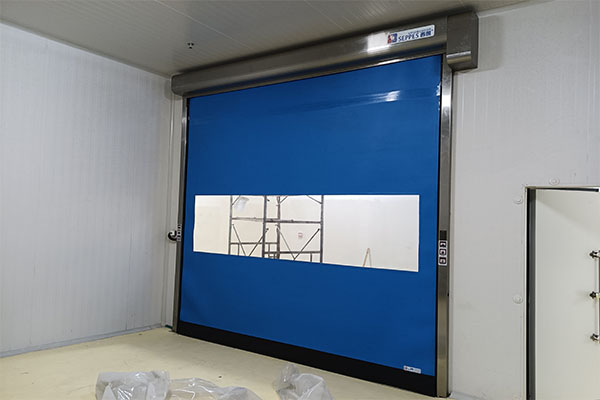
Top 5 Benefits of Stainless Steel Rapid Doors in Wet Environments
To solve these persistent industry pain points, specialized stainless steel rapid doors offer a combination of structural durability and intelligent engineering.
1. Unmatched Corrosion Resistance
The foundation of reliable stainless steel rapid doors for food processing lies in their material composition. By utilizing 2.0mm thick SUS304 or SUS316L grade stainless steel for the entire frame and guide rails, these doors offer complete rust-proof performance. They easily withstand prolonged exposure to weak acid/alkaline cleaning agents without degrading.
2. 100% Wash-Down Ready Design
In a true wash-down environment, electrical components are usually the first to fail. Our washdown stainless steel rapid doors feature an IP65 or IP67 waterproof motor and control box enclosure. The sloped top cover design prevents water droplets from pooling, allowing your sanitation crew to use high-pressure hoses directly on the door structure safely.
3. Superior Moisture Control and Speed
Vegetable cleaning areas require strict environmental separation from adjacent dry processing zones. Operating at blistering speeds of up to 2.0m/s, these high speed doors for wet environments minimize the open-time of the doorway. This rapid action effectively blocks humid air, airborne water droplets, and flying insects from migrating into clean rooms.
4. Ensuring HACCP and FDA Compliance
Hygiene is non-negotiable. Our hygienic rapid doors for vegetable cleaning utilize a seamless, food-grade PVC door curtain that prevents dirt accumulation. The fully enclosed zip-track design eliminates the brushes found in standard doors—which are notorious bacterial traps—making it much easier to maintain HACCP compliance and secure high scores during third-party hygiene audits.
5. Self-Repairing Zipper Technology
Forklift collisions in slippery wet zones are inevitable. These corrosion resistant rapid roller doors feature an advanced self-repairing zipper mechanism. If accidentally dislodged by a forklift, the curtain automatically re-inserts itself into the stainless steel track during the next open cycle, ensuring zero downtime.
6. Strict Temperature Control and Energy Savings
Food processing wet zones are often temperature-controlled to preserve vegetable freshness. The rapid opening and closing cycles (completing in mere seconds) drastically reduce the escape of chilled air. Combined with an airtight full-perimeter seal, these doors significantly lower the load on your HVAC systems, cutting energy costs month over month.
7. Minimal Maintenance and Long-Term ROI
Unlike traditional rolling shutters that rely on complex spring systems prone to rusting and snapping, premium custom stainless steel fast doors utilize a direct-drive servo motor system. With fewer moving parts and no springs to maintain, the ongoing maintenance costs drop sharply, delivering a superior Return on Investment (ROI) over the door’s lifespan.
Key Technical Specifications: Beyond Generic Marketing
To truly understand the performance of premium stainless steel rapid doors, you must look at the hard parameters. When evaluating custom stainless steel fast doors for your facility, ensure they meet these professional benchmarks:
Frame Material: 2.0mm wall thickness, SUS304/316L stainless steel (Laser-cut and seamlessly welded).
Operating Speed: Adjustable opening speed from 1.2m/s to 2.0m/s.
Motor Protection: IP65 fully enclosed servo motor, completely protected against dust and low-pressure water jets.
Safety Sensors: Equipped with IP-rated infrared photoelectric safety edges and radar sensors optimized to ignore water spray interference.
Sealing Performance: High-density zip-track sealing system, providing a tight barrier that resists drafting and pressure differences up to Class 8 wind resistance.
Real-World Example: Upgrading a Food Wet Zone
A high-volume vegetable processing plant recently replaced their standard aluminum roller shutters with our food grade doors. Previously, their old doors required motor replacements every six months due to water ingress, and the tracks required intensive manual scrubbing.
After installing our stainless steel rapid doors, the facility reported a 100% elimination of rust-related product rejections. The automated high-speed operation improved forklift traffic flow by 30%, and the sanitation team cut their daily wash-down time by 45 minutes thanks to the IP65 waterproof, easy-to-clean design.
Conclusion
Investing in high-quality stainless steel rapid doors is not a cost; it is a strategic asset for any food processing business. By prioritizing hard physical parameters and sanitary design, you permanently eliminate the headache of rust, motor failures, and cross-contamination.Ready to upgrade your facility’s hygiene and efficiency? Contact our engineering team today to discuss the perfect door configurations for your wet zones.
FAQ: Stainless Steel Rapid Doors in Food Processing
Q1: What is the difference between SUS304 and SUS316L for stainless steel rapid doors?
A: For most vegetable cleaning and standard food processing wet zones, 304 grade stainless steel offers excellent rust resistance against daily moisture and standard cleaning agents. However, if your wash-down process involves harsh chemicals, high salinity environments (like seafood processing), or heavy industrial detergents, upgrading to 316L custom stainless steel fast doors provides superior corrosion resistance to ensure maximum equipment longevity.
Q2: Can these high speed doors for wet environments be washed directly with high-pressure hoses?
A: Yes, absolutely. Our washdown stainless steel rapid doors are engineered specifically for strict sanitation routines. The servo motors and control panels are housed in IP65 or IP67-rated waterproof enclosures. The slanted top cover design also prevents water pooling, meaning your sanitation crew can safely spray down the entire door structure daily without risking electrical failure.
Q3: How do hygienic rapid doors prevent cross-contamination compared to standard doors?
A: Traditional industrial doors often use brush seals in their guide rails, which are notorious for trapping moisture, mold, and bacteria. Our hygienic rapid doors for vegetable cleaning eliminate brushes entirely, utilizing a tightly sealed, full-perimeter zip-track system. Combined with high operational speeds (up to 2.0m/s), they drastically reduce the open-time of the doorway, effectively blocking humid air, odors, and flying insects from migrating into clean processing zones.
Q4: What happens if a forklift hits the door curtain in a slippery wet zone?
A: Collisions are a common reality in fast-paced, wet environments. Our stainless steel rapid doors feature an advanced self-repairing zipper track design. If a forklift accidentally knocks the PVC curtain out of the track, the door will automatically re-align and re-insert the curtain into the guide rails during its next opening cycle. This zero-downtime feature eliminates the need for emergency repair calls and keeps your production line moving.
Q5: Do these food grade doors meet HACCP and FDA compliance standards?
A: Yes. The combination of rust-proof stainless steel frames, easily cleanable PVC curtains, crevice-free zip-track designs, and enclosed wash-down capabilities makes our doors fully compliant with stringent global food safety standards, including HACCP, FDA, and GMP guidelines. They are designed to help you easily pass rigorous third-party hygiene audits.


