
Contents
- 1 Introduction: Why Traditional Industrial Doors Are No Longer Enough
- 2 What Is a High Speed Door?
- 3 Main Types of High Speed Doors
- 4 1. PVC High Speed Roll Up Door
- 5 2. Rigid High Speed Door
- 6 3. Cold Storage High Speed Door
- 7 4. Cleanroom High Speed Door
- 8 How Does a High Speed Door Work?
- 9 1. Drive System
- 10 2. Control System
- 11 3. Safety System
- 12 Core Benefits of High-Speed Doors
- 13 1. Improved Traffic Efficiency
- 14 2. Energy Saving
- 15 3. Better Working Environment
- 16 4. Enhanced Safety
- 17 5. Lower Long-Term Maintenance Cost
- 18 High Speed Door vs Traditional Roller Shutter Door
- 19 Applications of High Speed Doors
- 20 Application Case: Warehouse Entrance Optimization Project
- 21 How to Choose the Right High Speed Door
- 22 1. Installation Location: Indoor or Outdoor?
- 23 2. Is Thermal Insulation Required?
- 24 3. What Is the Usage Frequency?
- 25 4. What Is the Wind Pressure Requirement?
- 26 5. Which Opening Method Is Best?
- 27 Practical Selection Recommendations
- 28 How Much Does a High Speed Door Cost?
- 29 Conclusion: Why High Speed Doors Are Essential for Industrial Upgrades
- 30 FAQ About High Speed Doors
Introduction: Why Traditional Industrial Doors Are No Longer Enough
In modern industrial environments, efficiency matters more than ever. Whether in manufacturing plants, logistics warehouses, food processing facilities, or cold chain operations, the movement speed of people, forklifts, and goods directly affects overall productivity.
However, many companies are still using traditional roller shutter doors or sliding doors. These doors may work in low-frequency applications, but they often create problems in busy industrial environments.
Common issues include:
- Serious temperature loss between indoor and outdoor areas
- Dust, insects, and pollutants entering the workshop
- Longer waiting time for workers and forklifts
- Increased energy consumption
- Higher long-term operating costs
This is why the high speed door, also known as a rapid door or industrial fast door, has become a standard solution in many modern industrial facilities.
During the selection process, many buyers often ask:
What is a high-speed door? What is the difference between a high-speed door and a traditional roller shutter door? Which type of rapid door is suitable for my application? How much does a high-speed door cost?
This guide will answer these questions and help you choose the right high speed industrial door for your factory, warehouse, or cold storage facility.
What Is a High Speed Door?
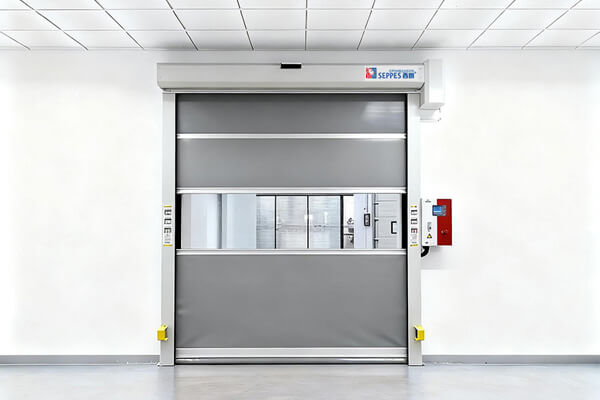
A high speed door is an industrial door designed for frequent opening and closing. Its biggest feature is its fast operating speed, which is much higher than that of traditional industrial doors.
In most applications, a high-speed door can open at a speed of around 0.8 m/s to 2.0 m/s, or even faster depending on the door type and configuration.Compared with traditional doors, high-speed doors offer significant advantages in passage efficiency, sealing performance, safety, and automation.
Key Features of High Speed Doors
A high-speed door usually has the following characteristics:
- Fast opening and closing speed
- Excellent sealing performance
- Automatic control system compatibility
- Suitable for high-frequency operation
- Customizable size and functions
- Improved safety protection
- Better environmental control
Because of these features, high-speed doors are widely used in factories, warehouses, logistics centers, food processing plants, pharmaceutical workshops, and cold chain facilities.
Main Types of High Speed Doors
Different industrial environments require different types of high-speed doors. Below are the most common options.
1. PVC High Speed Roll Up Door
A PVC high-speed roll-up door is one of the most widely used types of rapid doors. It is usually designed with a flexible PVC curtain and is mainly used for indoor environments.
Suitable Applications
PVC high-speed roll-up doors are commonly used in:
- Internal warehouse passages
- Workshop partitions
- Logistics sorting areas
- Factory production areas
Forklift traffic passages
Advantages
The main advantages of PVC rapid roll doors include:
- Relatively lower cost
- Fast opening speed
- Simple installation
- Easy maintenance
- Good sealing performance
- Suitable for frequent use
For many warehouses and manufacturing workshops, a PVC high speed door is a practical and cost-effective solution.
2. Rigid High Speed Door
A rigid high speed door is usually made with aluminum alloy or steel door panels. Compared with PVC doors, it has a stronger structure and better resistance to wind pressure.
Suitable Applications
Rigid high-speed doors are suitable for:
- Exterior factory entrances
- Outdoor industrial openings
- High-wind areas
- Areas with higher security requirements
- Large industrial facilities
Advantages
The main benefits of rigid high-speed doors include:
- Strong wind resistance
- Higher safety level
- Durable structure
- Longer service life
- Better protection for exterior openings
If the door is installed at an outdoor entrance or exposed to strong wind, a rigid high-speed door is usually a better choice.
3. Cold Storage High Speed Door
A cold storage high speed door, also known as an insulated rapid door, is specially designed for low-temperature environments.It helps reduce cold air loss, prevent condensation, and improve energy efficiency in refrigerated or frozen areas.
Suitable Applications
Cold storage high speed doors are commonly used in:
- Cold rooms
- Refrigerated warehouses
- Freezer storage areas
- Food cold chain logistics
- Temperature-controlled production areas
Advantages
The main advantages include:
- Reduced cold air loss
- Better thermal insulation
- Lower refrigeration energy consumption
- Improved temperature stability
- Reduced frost and condensation risk
For cold chain businesses, a high speed door for cold storage can help reduce energy costs and maintain product quality.
4. Cleanroom High Speed Door
A cleanroom high speed door is designed for environments that require strict air cleanliness and contamination control.
It usually has better sealing performance and can be used together with air pressure control systems.
Suitable Applications
Cleanroom rapid doors are widely used in:
- Pharmaceutical production
- Electronics manufacturing
- Dust-free workshops
- Medical device manufacturing
- Clean production areas
Advantages
The main benefits include:
- Dust prevention
- Contamination control
- Better air pressure stability
- Improved cleanroom management
- Support for airtight design
For industries with strict hygiene or cleanliness requirements, a cleanroom high-speed door is an important part of the environmental control system.
How Does a High Speed Door Work?
A high-speed door operates through the cooperation of several key systems. These systems allow the door to move quickly while maintaining safety and reliability.
1. Drive System
The drive system is the core power source of a high speed door.
Most high-speed doors use high-performance motors, such as servo motors, to ensure fast, stable, and smooth operation.
A good drive system helps improve opening speed, reduce noise, and extend the service life of the door.
2. Control System
The control system allows the high speed door to open and close automatically.
Common opening methods include:
- Radar sensor
- Ground loop detector
- Remote control
- Bluetooth control
- Push button
- Pull cord switch
- Access control system
For warehouses and logistics centers, radar sensors and ground loop detectors are commonly used because they allow forklifts and vehicles to pass through quickly without manual operation.
3. Safety System
Because high speed doors operate quickly, safety protection is very important.
A reliable high speed door is usually equipped with:
- Photoelectric safety sensors
- Safety bottom edge
- Automatic reverse function
- Anti-collision protection
- Emergency stop system
These safety devices help prevent accidents involving workers, forklifts, and goods.
Core Benefits of High-Speed Doors
Choosing a high speed door is not just about replacing an old industrial door. It is also an investment in efficiency, safety, energy savings, and environmental control.
1. Improved Traffic Efficiency
High speed doors open and close much faster than traditional doors.
This reduces waiting time for forklifts, workers, and transport vehicles, especially in areas with frequent traffic.
For busy warehouses or production workshops, improved passage efficiency can directly improve overall workflow.
2. Energy Saving
A high speed door has good sealing performance and short opening time.
This helps reduce the loss of cold air, warm air, or conditioned air, especially in air-conditioned workshops, cold storage rooms, and temperature-controlled areas.
As a result, the workload of air-conditioning or refrigeration systems can be reduced, helping companies lower energy costs.
3. Better Working Environment
High speed doors help block dust, insects, wind, and pollutants from entering the workshop.
This is especially important for industries such as food processing, pharmaceuticals, electronics, and precision manufacturing.
By improving the workshop environment, high-speed doors can also support product quality control and workplace comfort.
4. Enhanced Safety
Modern high-speed doors are equipped with multiple safety protection systems.
Photoelectric sensors, safety bottom edges, and automatic reverse functions can help reduce the risk of accidents.
This is especially useful in areas where forklifts, workers, and goods frequently pass through the same entrance.
5. Lower Long-Term Maintenance Cost
Although the initial investment of a high speed door may be higher than that of a traditional roller shutter door, it is better suited for high-frequency use.In busy industrial environments, a high-quality rapid door can reduce downtime, lower maintenance frequency, and improve long-term reliability.
High Speed Door vs Traditional Roller Shutter Door
Many companies compare high speed doors with traditional roller shutter doors when choosing an industrial door.
From actual use, the differences are clear.
| Item | High Speed Door | Traditional Roller Shutter Door |
| Opening Speed | Fast, usually 0.8–2.0 m/s | Slow |
| Sealing Performance | High | General |
| Energy Control | Better | Poorer |
| Usage Frequency | Suitable for high-frequency use | Mainly for low-frequency use |
| Service Life | Better for intensive operation | Easier to wear in frequent use |
| Automation | Strong compatibility | Limited |
| Environmental Control | Better | Limited |
If your facility has frequent traffic or strict environmental requirements, a high-speed industrial door is usually a better option than a traditional roller shutter door.

Applications of High Speed Doors
High speed doors are widely used across many industries.
Common application industries include:
- Manufacturing plants
- Food processing factories
- Pharmaceutical workshops
- Cold chain logistics
- Warehousing and distribution centers
- Electronics manufacturing
- Packaging workshops
- Automotive factories
In general, any environment that requires high-frequency access and environmental control can benefit from high-speed doors.
Application Case: Warehouse Entrance Optimization Project
A logistics warehouse center in the United States had a high daily forklift traffic frequency. The facility originally used traditional roller shutter doors.
Problems Before the Upgrade
The warehouse faced several operational issues:
- Long waiting time during peak traffic hours
- Serious loss of conditioned air
- Increasing energy consumption
- Unstable entrance environment
- Low passage efficiency
Solution
The company installed PVC high speed doors at the main traffic entrances and equipped them with radar or ground loop sensor systems.
This allowed the doors to open automatically when forklifts approached and close quickly after vehicles passed through.
Results After About Two Months
After approximately two months of operation, the warehouse achieved:
- Around 25% improvement in vehicle traffic efficiency
- Around 15% reduction in air-conditioning energy consumption
- More stable entrance environment
- Less manual operation
- Smoother logistics flow
This case shows that in high-frequency traffic areas, high-speed doors can provide clear benefits in both efficiency improvement and energy cost reduction.
How to Choose the Right High Speed Door
When selecting a high-speed door, you should consider the actual application environment, traffic frequency, and functional requirements.
1. Installation Location: Indoor or Outdoor?
If the door is installed indoors, a PVC high-speed roll-up door is usually suitable.
If the door is installed outdoors or exposed to wind pressure, a rigid high-speed door is often recommended.
Simple Selection Guide
Indoor workshop or warehouse passage: PVC high-speed door Outdoor factory entrance: Rigid high-speed door High-wind area: Wind-resistant rigid high-speed door
2. Is Thermal Insulation Required?
If the door is used in a cold room, freezer, or temperature-controlled environment, you should choose an insulated high speed door.
A high speed door for cold storage can help reduce cold air loss and maintain stable temperature.
This is especially important for food cold chain logistics, frozen food storage, and refrigerated warehouses.
3. What Is the Usage Frequency?
High-frequency applications require better motors, stronger control systems, and more durable components.
If the door opens many times per hour or is used continuously throughout the day, you should choose a model designed for intensive operation.
4. What Is the Wind Pressure Requirement?
For exterior openings or windy areas, wind resistance is very important.
In such cases, a rigid high speed door or a wind-resistant rapid door may be more suitable than a standard PVC door.
5. Which Opening Method Is Best?
Different sites may require different opening methods.
Common options include:
- Radar sensor for people or vehicles
- Ground loop detector for forklifts
- Remote control for flexible operation
- Push button for simple access
- Access control system for restricted areas
For logistics passages with forklift traffic, radar and ground loop systems are often preferred.
Practical Selection Recommendations
From an application perspective, you can choose as follows:
| Application Scenario | Recommended Door Type |
| Internal warehouse passage | PVC high speed door |
| Workshop partition | PVC rapid roll door |
| Outdoor factory entrance | Rigid high speed door |
| High-wind environment | Wind-resistant rigid high speed door |
| Cold chain or cold storage | Insulated high speed door |
| Cleanroom workshop | Cleanroom high speed door |
If your facility has frequent traffic, such as multiple openings per hour, it is recommended to choose a high-speed door with stable motor performance and reliable safety protection.If you are not sure which model to choose, it is best to consult a professional industrial door supplier for a customized solution.
How Much Does a High Speed Door Cost?
The price of a high-speed door depends on the door type, size, configuration, and application environment.
Main Factors That Affect High Speed Door Price
High-speed door cost is usually affected by:
- Door width and height
- Usage frequency
- Curtain or panel material
- Motor and control system
- Opening method
- Safety configuration
- Installation environment
- Indoor, outdoor, cold storage, or cleanroom application
- Custom requirements
General Price Reference
A standard PVC high-speed door may start from a few thousand dollars depending on size and configuration.
Customized or high-configuration models, such as rigid high-speed doors, insulated rapid doors, or cleanroom doors, may cost significantly more.However, a high-speed door is a long-term industrial investment. In high-frequency applications, the benefits from improved efficiency, energy savings, and reduced waiting time can often offset the initial investment over time.
Conclusion: Why High Speed Doors Are Essential for Industrial Upgrades
With the development of industrial automation and refined factory management, traditional industrial doors are no longer enough for many modern facilities.
A high speed door can improve traffic efficiency, reduce energy loss, enhance safety, and support better environmental control.
For companies that want to upgrade their factory, warehouse, cold storage, or cleanroom entrance system, high speed doors are a practical and valuable investment.
When choosing a high-speed door, you should consider the application scenario, traffic frequency, environmental requirements, safety needs, and long-term operating cost.If you are looking for a reliable high speed industrial door solution for your factory or warehouse, contact a professional manufacturer to get a customized recommendation based on your actual site conditions.
FAQ About High Speed Doors
1. How long does a high speed door last?
Under normal use and regular maintenance, a high-speed door can usually last 8–10 years or longer.
The actual service life depends on usage frequency, motor quality, door material, installation quality, and daily maintenance.
2. Does a high speed door require regular maintenance?
Yes. Regular maintenance is recommended.
Important inspection items include:
Motor operation
Door curtain or panel condition
Safety sensor function
Track and sealing system
Control system performance
Regular maintenance can extend service life and reduce failure rates.
3. Can high speed doors be customized?
Yes. Most high-speed doors can be customized according to the opening size, door height, door width, control method, operating speed, color, material, and application requirements.
Customized design is especially common for cold storage, cleanrooms, outdoor entrances, and special industrial environments.
4. Which is better, a high speed door or a roller shutter door?
It depends on the application.
For low-frequency use, a traditional roller shutter door may be enough.
For high-frequency traffic, temperature control, dust prevention, pest control, or clean production environments, a high-speed door is usually more suitable.
In logistics centers, cold chain facilities, food factories, and clean workshops, high-speed doors offer more obvious advantages.
5. What industries are high speed doors suitable for?
High-speed doors are suitable for many industries, including:
Manufacturing
Warehousing and logistics
Food processing
Pharmaceutical production
Cold chain transportation
Electronics manufacturing
Packaging and printing
Automotive production
Any facility that needs frequent access, environmental control, and improved efficiency can consider using high-speed doors.


