
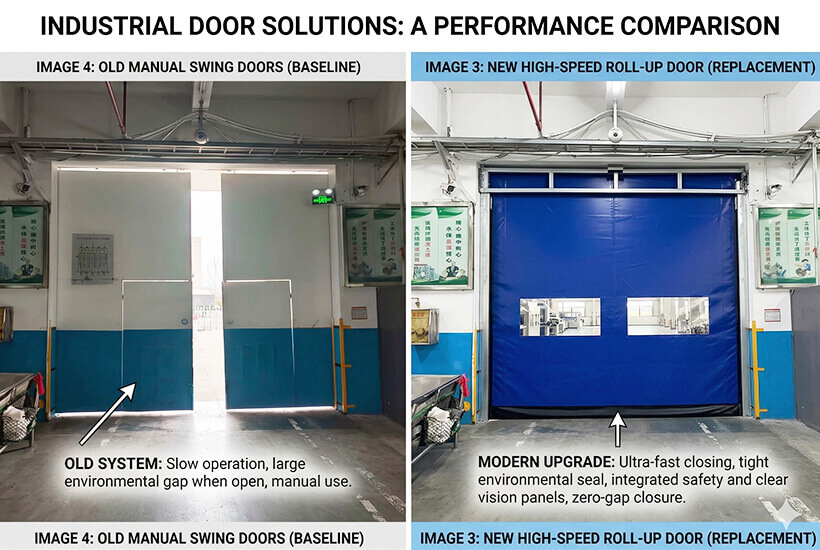
In today’s high-pressure supply chain, the limitations of manual swinging doors represent a significant operational bottleneck. This inefficiency leads to increased labor costs and frequent interruptions in the workflow. Furthermore, the prolonged opening times of traditional doors result in substantial energy loss, making it nearly impossible to maintain a stable indoor temperature. To remain competitive, modern logistics facilities require a more dynamic solution. The transition to high-speed zipper doors addresses these challenges directly, offering the rapid cycle times and innovative self-repairing functionality necessary to ensure seamless productivity and superior thermal management.
While steel swinging doors were once the standard, the shift toward Automatic Fast Speed Zipper Doors is transforming warehouse operations. This upgrade isn’t just about speed, it’s about creating a seamless, energy-efficient environment that meets the demands of high-frequency traffic. In this article, we’ll dive into a head-to-head comparison between traditional industrial swing doors and the fast speed zipper doors.
Contents
The Industrial Swinging Door: A Growing Operational Bottleneck
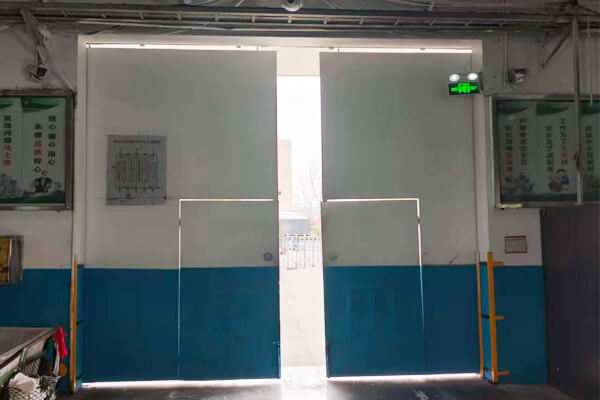
Traditional industrial swing doors are increasingly becoming a liability in high-traffic environments. If your facility requires frequent forklift passage while maintaining strict temperature zones, you likely face these three challenges:
- Thermal Energy Loss: Because swinging doors open slowly and lack an airtight seal, they allow massive amounts of conditioned air to escape. This forces HVAC systems to overwork, spiking energy bills.
- Logistical Inefficiency: Drivers must stop, often manually unlatch doors, and wait for the wide swing radius to clear. In a high-traffic environment, this wastes hours of cumulative labor every week.
- High Impact Risk: Rigid panels are prone to expensive damage from forklift collisions, leading to “door-down” time that halts your entire operation.
Key Advantages of Zipper Doors: The Superior Upgrade
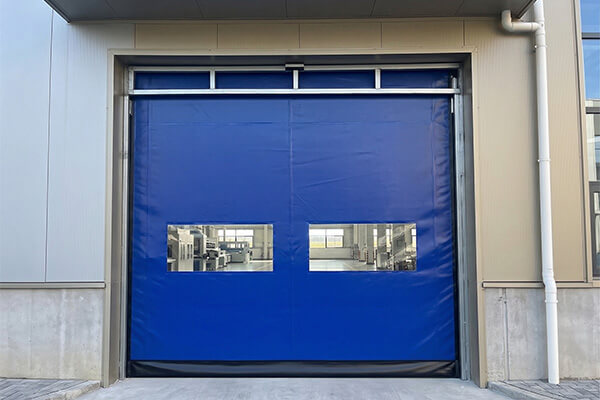
The transition from traditional swinging doors to fast-speed zipper doors offers significant improvements in efficiency, environmental control, and operational reliability. These systems are engineered to meet the rigorous demands of modern logistics through three core advantages:
High-Speed Automation
Unlike manual or slow-moving rigid doors, zipper doors operate at speeds up to 2.0 m/s. This rapid cycle ensures that vehicle traffic remains continuous, eliminating the need for drivers to wait for access. By minimizing the “door-open” time, the workflow becomes significantly more fluid and productive.
Superior Seal & Insulation
The innovative zipper track design eliminates the gaps commonly found in traditional door frames. By effectively “zipping” the curtain into the side tracks, the door creates a high-performance airtight seal. This prevents drafts and thermal transfer, ensuring that indoor temperatures remain stable and energy costs are kept to a minimum.
Self-Repairing Technology
Maintenance downtime is one of the costliest aspects of warehouse management. If a forklift accidentally impacts the door, the flexible curtain is designed to safely “unzip” from its track rather than break. The system then automatically resets the curtain back into the guides during the next closing cycle, allowing operations to continue without manual repairs or technician call-outs.
Comparison of Fast Speed Zipper Doors and Industrial Swing Doors
| Key Point | Zipper Door (Fast) | Swing Door (Industrial) |
| Speed | 2.0 m/s | Very Slow |
| Operation | Automatic | Manual |
| Seal | Airtight | Poor Seal |
| Impact | Self-Reset | Damaged |
| Traffic | Intensive | Occasional |
| Energy | Low Loss | High Loss |
| Cost | Higher | Lower |
| Life Span | High Cycle | Low Cycle |
| Safety | Advanced | Basic |
| Cleanliness | Excellent | Average |
Advantages and Disadvantages Overview
Fast Speed Zipper Doors
- Advantages: Dramatically improves logistics flow with rapid opening speeds; significantly reduces energy costs by minimizing air exchange; features a self-repairing mechanism that resets the curtain after forklift impacts; provides high hygiene and dust control.
- Disadvantages: Requires a higher initial investment and electricity to operate; maintenance, though infrequent, often requires specialized technical knowledge.
Industrial Swing Doors
- Advantages: Extremely low initial purchase price; requires no electrical power or complex control systems; offers a high level of physical security and resistance to forced entry when locked.
- Disadvantages: Creates a significant bottleneck for vehicles as drivers must manually open/close them; allows massive temperature loss during the slow opening cycle; susceptible to permanent structural damage from minor collisions.
Why Fast Speed Zipper Doors are the Best Replacement for Industrial Swinging Doors
Enhanced Operational Logistics and Speed
The most immediate benefit of replacing swinging doors is the drastic reduction in transit time. While manual swinging doors require drivers to stop, dismount, and physically move heavy panels. Fast speed zipper doors operate at speeds up to 2.0 m/s. This automation allows forklifts and AGVs to pass through without breaking momentum, eliminating traffic bottlenecks at warehouse entrances.
Superior Thermal Control and Energy Savings
Industrial swinging doors due to their slow closing cycles and gaps at the hinges. In contrast, the zipper structure design creates a continuous, airtight seal along the entire perimeter of the door track. By minimizing the time the warehouse is exposed to external elements, zipper doors prevent expensive conditioned air from escaping. This high-performance insulation directly lowers utility costs and helps facilities meet modern carbon footprint standards.
Self-Repairing Durability Against Vehicle Impact
A common failure point for rigid swinging doors is permanent structural damage caused by forklift collisions. Fast speed zipper doors utilize a flexible curtain and a “break-away” system. If a vehicle impacts the door, the curtain simply unzips from its track without damaging the motor or the frame. The system is designed to automatically reset the curtain into the guides on the next cycle, effectively eliminating maintenance downtime and emergency repair costs.
Improved Workplace Safety and Visibility
Traditional swinging doors create dangerous blind spots, as they often lack transparent sections and open horizontally into the path of travel. Zipper doors open vertically and can be equipped with large, clear vision panels and advanced safety sensors. This setup ensures the door only operates when clear, protecting personnel and preventing accidents in high-traffic zones.
Advanced Hygiene and Dust Protection
For warehouses dealing with food, pharmaceuticals, or sensitive electronics, maintaining a clean environment is critical. The rapid opening and closing action of a zipper door, combined with its superior sealing technology, acts as a highly effective barrier against dust, insects, and environmental pollutants. Replacing old-fashioned swinging doors with these airtight systems ensures your facility remains compliant with international hygiene and “clean room” standards.
The transition from traditional industrial swinging doors to Fast Speed Zipper Doors is a critical upgrade for any modern logistics facility. The future of industrial openings lies in intelligent, resilient technology. The combination of automated high-speed operation, superior airtight sealing, and self-repairing durability ensures your facility remains both productive and cost-effective. Investing in a zipper door system is not merely a hardware replacement; it is a strategic move toward a safer, cleaner, and more energy-efficient operational environment.
Frequently Asked Questions
How do zipper doors maintain indoor temperatures better than swinging doors?
Fast speed zipper doors feature a unique airtight seal along the entire track. Unlike swinging doors with gaps at the hinges and taking several seconds to close, zipper doors seal the opening instantly. This minimizes air exchange, keeping cold air in (for cold storage) or heat in (during winter), ensuring stable climate control.
Are zipper rapid doors safe for high-traffic warehouse environments?
Yes, they are significantly safer than opaque swinging doors. Our zipper doors are equipped with safety light curtains and motion sensors that prevent the door from closing if an object is detected. Additionally, large transparent vision panels allow forklift drivers to see oncoming traffic from the other side, preventing collisions before they happen.
Can I install a zipper door in an opening originally designed for a swinging door?
In most cases, yes. High-speed zipper doors have a compact footprint and can be surface-mounted to existing wall structures. The transition typically requires an electrical power supply for the motor and sensors, but the long-term ROI in energy savings and labor efficiency far outweighs the initial installation cost.


