
Contents
- 1 PVC high speed Door Maintenance Guide: Practical Tips to Extend Service Life
- 1.1 Introduction
- 1.2 Why Regular PVC high speed Door Maintenance Is Important
- 1.3 Daily Inspection Checklist for PVC high speed Doors
- 1.4 1. Check the Safety Protection System First
- 1.5 2. Observe the Door Running Condition
- 1.6 3. Listen for Abnormal Noise
- 1.7 Key Component Maintenance for PVC high speed Doors
- 1.8 Safety System Maintenance for PVC high speed Doors
- 1.9 Maintenance Focus by Application Scenario
- 1.10 How to Reduce Human-Caused Damage
- 1.11 Recommended PVC high speed Door Maintenance Schedule
- 1.12 Common PVC high speed Door Problems and Troubleshooting
- 1.13 Conclusion: Maintenance Determines Long-Term Cost
- 1.14 FAQ About PVC high speed Door Maintenance
PVC high speed Door Maintenance Guide: Practical Tips to Extend Service Life
Introduction
In modern industrial facilities, PVC high speed doors are widely used in food processing plants, logistics warehouses, cleanrooms, pharmaceutical workshops, and manufacturing areas.
These doors help improve traffic efficiency, reduce energy loss, maintain environmental separation, and support production safety. However, many companies often overlook one important point: even a high-quality PVC rapid roll door needs regular maintenance to perform reliably over the long term.
In many industrial sites, door failures are not caused by poor product quality alone. They are often the result of irregular inspection, improper operation, dust accumulation, worn components, or neglected safety systems.
This guide explains how to carry out proper PVC high speed door maintenance, including daily checks, key component care, safety system inspection, troubleshooting, and maintenance schedules.
Why Regular PVC high speed Door Maintenance Is Important
A PVC high speed door is designed for frequent opening and closing. In some factories or warehouses, the door may operate hundreds or even more than one thousand times per day.
Because of this high-frequency operation, components such as the motor, curtain, guide rails, sensors, and control system are exposed to much higher mechanical stress than ordinary industrial doors.
Without regular maintenance, a high speed door may gradually develop problems such as:
- Increased motor load
- Door curtain wear
- Dust buildup inside the guide rails
- Slower opening and closing
- Poor sealing performance
- Reduced safety sensor sensitivity
- Unexpected downtime
- Higher repair costs
Preventive maintenance helps reduce failure risks, extend service life, and keep the door operating safely.
In practical industrial use, a structured maintenance program can help lower failure rates, reduce unnecessary repair costs, and improve long-term operational efficiency.
Daily Inspection Checklist for PVC high speed Doors
For daily inspection, operators do not need to spend a long time. In most cases, a basic visual and functional check can be completed within one or two minutes.
The key is to focus on three actions: look, listen, and test.
Small abnormalities are often early warning signs of larger failures. Finding them early can prevent downtime and costly repairs.
1. Check the Safety Protection System First
The safety system should always be the first inspection point. A high speed door operates quickly, so any failure in the safety system may create risks for workers, forklifts, or goods.
Infrared Safety Sensor or Light Curtain
Check whether the infrared sensors or light curtain lenses are covered by dust, oil, water mist, or other contaminants.
When the beam is blocked manually, the door should stop or reverse immediately.
Bottom Safety Edge
During door closing, lightly touch or press the bottom edge to test whether the door reverses quickly.
If the bottom safety edge does not respond, the door should not continue operating until the issue is resolved.
Emergency Stop Button
Press the emergency stop button to confirm that it cuts off operation immediately.
After resetting the button, the system should return to normal working condition.
2. Observe the Door Running Condition
During daily operation, observe how the door moves during opening and closing.
Door Curtain Movement
The curtain should move smoothly inside the guide rails.
If you notice shaking, jumping, jamming, or obvious left-right deviation, the door may have guide rail contamination, curtain misalignment, or mechanical wear.
Opening and Closing Limit Position
Check whether the door stops at the correct upper and lower positions.
If the door does not close fully, leaves a gap, or opens too high, the limit setting or encoder may need adjustment.
Curtain Surface Condition
Inspect the PVC curtain for scratches, cracks, tears, holes, or loose reinforcement parts.
Also check whether the bottom weight bar is stable and properly aligned.
3. Listen for Abnormal Noise
Noise is often an early sign of mechanical wear.
During operation, listen carefully for:
- Sharp friction noise
- Unusual motor humming
- Strong vibration
- Chain or belt impact noise
- Excessive rubbing between the curtain and side brushes
If the door produces abnormal sound, stop and inspect the related components before the problem becomes more serious.
Key Component Maintenance for PVC high speed Doors
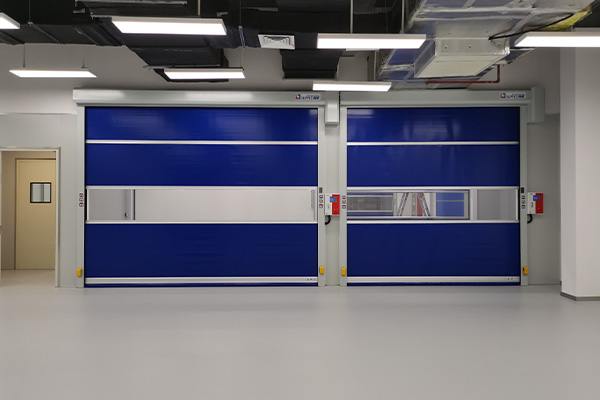
A complete PVC high speed roll up door maintenance program should cover the motor system, door curtain, guide rails, control system, and safety devices.
1. Motor System Maintenance
The motor is the core power source of a high speed door. Its maintenance focuses on temperature control, electrical reliability, and braking performance.
Monitor Motor Temperature
Avoid operating the door beyond the designed duty cycle.
If the motor runs continuously under high load, overheating may occur. Excessive heat can accelerate insulation aging and shorten motor life.
As a general practice, if the motor housing becomes abnormally hot or exceeds the recommended operating temperature range, the door should be stopped for inspection.
Check Electrical Connections
Vibration during long-term operation may loosen cables, terminals, or inverter connections.
Loose connections can increase contact resistance, cause local heating, and even damage electrical components.
Regularly inspect and tighten power cables, control wires, and inverter output terminals.
Inspect the Brake System
For doors with electromagnetic brakes, check the brake gap and wear condition.
A poorly adjusted brake may cause inaccurate stopping, door slipping, or delayed braking.
2. Door Curtain Maintenance
The PVC curtain is one of the most visible and frequently stressed parts of the door.
Good curtain maintenance helps preserve sealing performance, appearance, and service life.
Clean with Neutral Detergent
Use a soft cloth and neutral detergent to clean the curtain surface.
Avoid strong solvents, corrosive chemicals, or abrasive cleaning tools. These may damage the PVC coating, cause brittleness, or lead to cracking.
Check for Small Tears
Pay special attention to welded joints, transparent vision windows, reinforcement ribs, and high-stress areas.
Small tears should be repaired early. If ignored, they may expand quickly under wind pressure or frequent movement.
Keep the Curtain Flat and Clean
A clean and flat curtain helps improve air sealing and reduces unnecessary friction.
This is especially important in food processing, cleanroom, and temperature-controlled facilities.
3. Guide Rail Maintenance
The guide rail system controls the movement path of the door curtain. Poor guide rail maintenance is one of the most common causes of jamming and misalignment.
Remove Dust and Foreign Objects
Clean the guide rail grooves regularly.
Packaging film, paper scraps, dust, or small debris can increase running resistance and cause the door to jam.
For warehouses and logistics centers, guide rails should be inspected more frequently because forklift traffic often brings dust and debris into the area.
Use Suitable Lubrication
For some guide rail structures, dry lubricant such as PTFE-based spray may be suitable.
Avoid using heavy grease unless recommended by the manufacturer. Grease can attract dust and form an abrasive paste, which may accelerate wear inside the rail.
Check Alignment
Inspect whether the guide rails remain parallel and vertical.
If the rails are deformed due to forklift collision or wall movement, the curtain may run unevenly or come out of position.
For self-repairing zipper high speed doors, proper guide rail alignment is especially important.
4. Control System Maintenance
The control system manages door movement, sensor input, safety logic, and automatic operation.
Protect the Control Box
Make sure the control box is properly sealed.
In humid, dusty, or washdown environments, poor sealing may allow water vapor or dust to enter the box and damage electrical components.
Check whether the sealing strip is aging, cracked, or loose.
Test Sensor Response
Radar sensors, infrared sensors, ground loop detectors, and other automatic opening devices should be tested regularly.
The door should open accurately when people, forklifts, or vehicles enter the detection area.
Inspect Control Wiring
Over time, external control wires may age, loosen, or suffer insulation damage.
A wiring problem may cause false triggering, delayed response, or system errors.
Regular electrical inspection can help prevent unexpected downtime.
Safety System Maintenance for PVC high speed Doors
Safety system maintenance is essential for every industrial high speed door.
Since the door moves quickly, all safety devices must remain active and responsive.
1. Check the Multi-Sensor Safety System
Infrared Sensor or Light Curtain
Confirm that the transmitter and receiver are aligned correctly.
The protection beam should cover the door opening area without blind spots.
Bottom Safety Edge
Test the bottom edge by simulating an obstacle under the closing door.
The door should stop or reverse immediately after contact.
2. Check the Dynamic Response Time
The safety system should respond quickly after detecting an obstacle.
If the door reacts slowly, stops too late, or does not reverse properly, the sensor, control board, or wiring may need inspection.
A delayed response can increase the risk of collision or injury.
3. Test Emergency Stop and Fail-Safe Functions
The emergency stop button should lock the system immediately after being pressed.
The door should not restart until the button is manually reset.
Also check whether the system has false alarms caused by:
- Strong light interference
- Water condensation
- Dust on sensors
- Vibration from nearby equipment
- Misaligned detection devices
Reducing false triggers helps protect mechanical components from unnecessary impact.
Maintenance Focus by Application Scenario
Different working environments require different maintenance priorities.
A PVC high speed door installed in a cleanroom does not face the same risks as one installed in a busy warehouse or outdoor industrial area.
1. Cleanroom and Food Processing Areas
In cleanrooms, food factories, and pharmaceutical workshops, hygiene and contamination control are the main priorities.
Maintenance should focus on:
- Cleaning sealing brushes and rubber strips
- Removing water, dust, and organic residue
- Checking whether disinfectants affect the curtain or sealing parts
- Monitoring air leakage under positive or negative pressure conditions
- Keeping the curtain and guide rails easy to clean
For GMP or HACCP-related environments, door sealing performance and cleanliness should be checked regularly.
2. Warehouses and Logistics Areas
Warehouse doors usually face high traffic frequency and a greater risk of forklift impact.
Maintenance should focus on:
- Checking guide rail deformation
- Inspecting anchor bolts and wall fixing points
- Testing self-repairing functions if available
- Keeping vision windows clean
- Installing protective bollards near the door frame
In logistics areas, many door failures are caused by collision rather than component aging. Therefore, traffic management and physical protection are just as important as technical maintenance.
3. Outdoor or Heavy Industrial Environments
For doors installed outdoors or in harsh industrial areas, wind, rain, sunlight, and corrosion are major concerns.
Maintenance should focus on:
- Inspecting wind-resistant components
- Checking the curtain for UV aging
- Protecting the motor and control box from rainwater
- Checking anti-rust treatment on metal parts
- Inspecting seals before rainy or windy seasons
In high-salt, chemical, or dusty environments, metal parts may require more frequent anti-corrosion treatment.
How to Reduce Human-Caused Damage
A large portion of unnecessary repair costs comes from improper use.
Training operators and setting clear rules can significantly improve the average trouble-free operating time of a PVC high speed door.
1. Prevent Forklift Collision
Forklifts should not pass through the door before it is fully open.
To reduce collision risk, facilities can install steel protective bollards outside the guide rails.
These bollards absorb impact before it reaches the door structure.
2. Avoid Manual Force
Do not push or pull the door curtain manually while the system is powered.
If there is a power failure or emergency, switch to the correct manual operation mode according to the manufacturer’s instructions.
Forcing the door may damage the gearbox, curtain, guide rails, or drive system.
3. Avoid Abnormal Power-Off Operation
Do not stop the door by switching off the main power during operation unless it is an emergency.
Sudden power loss may cause inverter errors, parameter loss, or control logic problems.
Important control parameters, such as acceleration speed, deceleration speed, and automatic closing time, should only be adjusted by qualified personnel.
Recommended PVC high speed Door Maintenance Schedule
| Maintenance Period | Recommended Tasks |
| Daily | Visual inspection, running test, safety sensor check |
| Weekly | Guide rail cleaning, abnormal noise check, curtain surface inspection |
| Monthly | Curtain cleaning, sensor sensitivity test, guide rail maintenance |
| Quarterly | Motor inspection, electrical connection check, control system inspection |
| Annually | Full inspection, safety system test, structural adjustment, professional servicing |
For high-frequency applications, such as logistics centers or production lines, the inspection frequency should be increased.
Common PVC high speed Door Problems and Troubleshooting
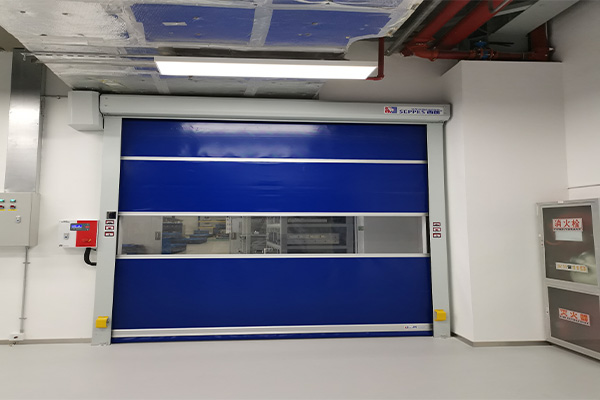
Many high speed door issues are soft faults that can be solved through standard inspection before replacing expensive parts.
1. The Door Does Not Open or Close
Possible causes include:
- Power failure
- Tripped circuit breaker
- Emergency stop button not reset
- Inverter fault code
- Motor overheating protection
- Control signal failure
Quick Check
First check the power supply and control box.
Then confirm whether the emergency stop button is released.
If the motor overheated due to continuous high-frequency use, allow it to cool down before restarting.
2. The Door Curtain Runs Off Track or Wrinkles
Possible causes include:
- Debris inside the guide rails
- Uneven bottom weight bar
- Loose guide rail structure
- External collision
- Curtain tension imbalance
Quick Check
Inspect and clean the guide rails.
Check whether the bottom bar is level.
For self-repairing doors, raise the door to the reset position according to the operating instructions.
If the guide rail is bent or damaged, professional adjustment may be required.
3. The Sensor Does Not Respond
Possible causes include:
- Dust or oil on the sensor lens
- Condensation on the radar or infrared sensor
- Obstruction in the detection area
- Wiring problem
- Sensor misalignment
- Signal interference
Quick Check
Clean the sensor surface first.
In many cases, sensor failure is caused by dust, oil, or water mist.
Then check whether the detection area is blocked by goods, pallets, or temporary equipment.
Conclusion: Maintenance Determines Long-Term Cost
A PVC high speed door is more than a traffic access device. It also affects production efficiency, energy control, environmental separation, and workplace safety.
Regular maintenance helps keep the door running smoothly, reduces failure risks, extends service life, and lowers long-term operating costs.
For facilities with strict requirements, such as food processing plants, pharmaceutical workshops, cold chain warehouses, and cleanrooms, a standardized maintenance plan is especially important.
If your factory or warehouse uses PVC high speed doors in high-frequency applications, consider creating a preventive maintenance checklist or working with a professional service team to keep the door system safe, reliable, and efficient.
FAQ About PVC high speed Door Maintenance
1. How often should a PVC high speed door be maintained?
A basic inspection should be done daily. More detailed maintenance can be carried out monthly, quarterly, and annually.
For high-frequency doors, the maintenance interval should be shorter.
2. How do I know if the high speed door motor needs replacement?
If the motor overheats frequently, produces abnormal noise, runs unstably, or still performs poorly after maintenance, it may need replacement.
A professional technician should inspect the motor before replacement.
3. Can a damaged PVC door curtain be repaired?
Small damage can often be repaired.
However, if the tear affects the curtain structure, sealing performance, or safe operation, replacing the curtain may be a better option.
4. Why does a high speed door run off track?
Common reasons include debris in the guide rails, loose structure, incorrect alignment, forklift impact, or installation deviation.
Regular guide rail cleaning and structural inspection can reduce this problem.
5. Can regular maintenance really reduce costs?
Yes. Preventive maintenance helps reduce downtime, avoid expensive component replacement, extend service life, and improve safety.
For facilities with high-frequency operation, maintenance is usually much cheaper than emergency repair.


